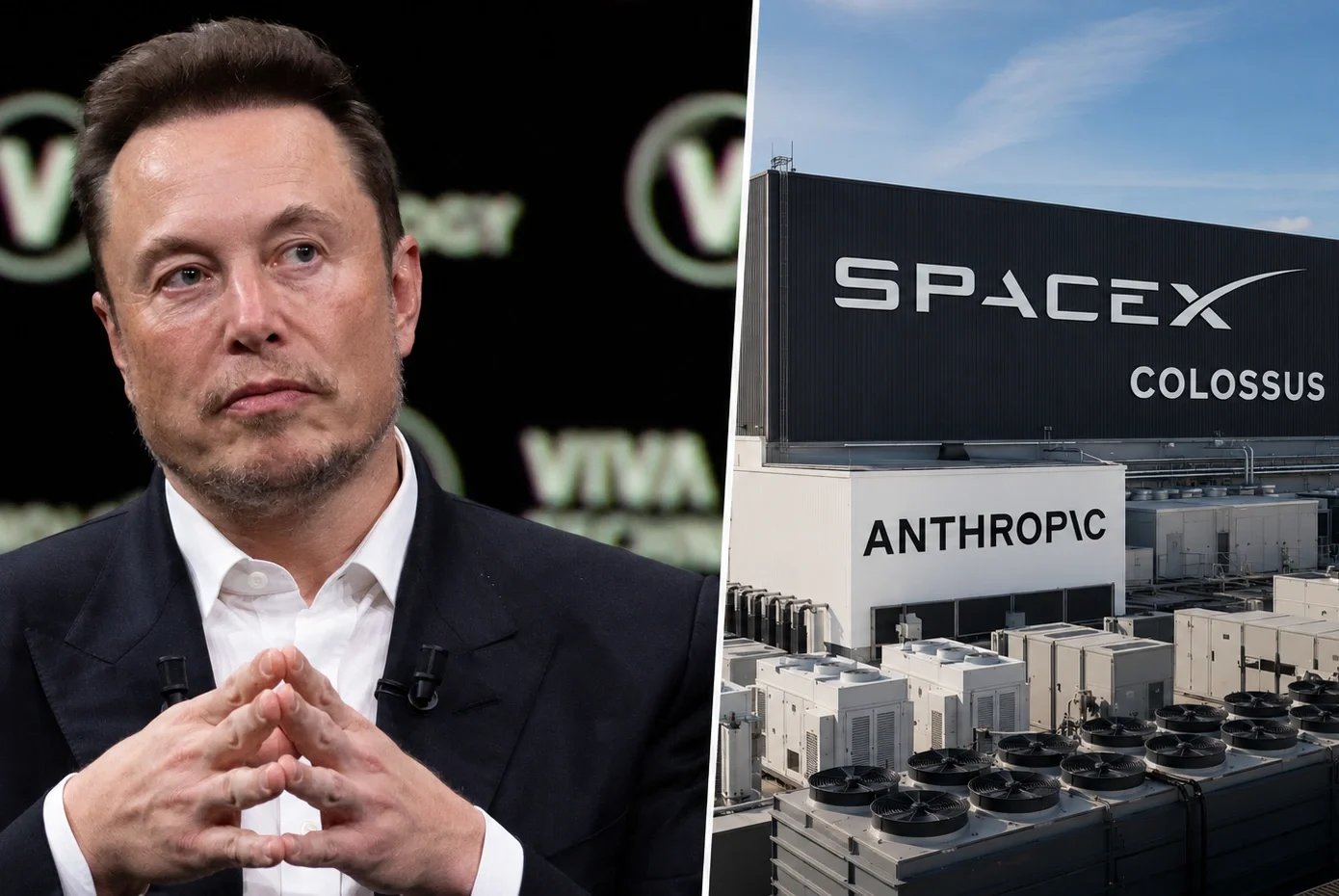
SpaceX presented key documents to U.S. regulators for its IPO, and among the most striking details is a million-dollar agreement with Anthropic. The artificial intelligence company will pay $1.25 billion per month starting in July, which amounts to about $15 billion a year, for access to SpaceX's cloud computing infrastructure.
This deal, announced earlier this month, allows Anthropic to use GPUs in the Colossus and Colossus II data centers, located between Tennessee and Mississippi. These centers exceed one gigawatt of power and were initially built for xAI, SpaceX's unit that develops Grok, although there was excess capacity.
The extraordinary amount reflects the strong demand for computing resources in the race to advance AI. Anthropic, creator of Claude, increasingly needs power for its tools, such as AI-assisted programming, which are gaining popularity. Its revenue for the second quarter of 2026 is expected to exceed $10 billion.
A strategic agreement for both
SpaceX indicated that Anthropic pays a reduced fee during May and June, before the full amount takes effect. The space company clarified that it has enough capacity for its own AI model training and inference needs, in addition to fulfilling these contracts.

Additionally, it anticipates signing more similar computing rental agreements. This “double monetization” strategy allows it to generate returns on infrastructure investments while continuing to use the centers for its internal projects.
The documents are part of the S-1 filing for what would be the largest IPO in history. SpaceX aims to raise around $75 billion with a valuation of $1.75 trillion. The company could debut on Nasdaq under the ticker SPCX as soon as June 12.
In the first quarter of this year, SpaceX, which includes X and xAI, generated nearly $4.7 billion in revenue but recorded losses of about $4.3 billion. During 2025, revenues reached $18.7 billion with losses of $4.9 billion, driven by spending on AI technologies and the development of a larger rocket.
Governance and risks in focus
The papers also highlight concerns about the concentration of power in Elon Musk. According to the excerpts, only Musk can fire himself and will maintain control over the board, with expanded voting power to block initiatives from activist shareholders. The company will also use provisions of Texas law to resist hostile takeovers.
In recent weeks, unions, AI security researchers, and environmental groups have urged investors to reconsider buying shares due to these governance issues. Pension funds from California, New York, and New York rated the structure as “novel and extreme,” the most favorable to management in the U.S. market at this scale.
Despite the criticisms, if the IPO proceeds smoothly, SpaceX will benefit from rules that require certain popular funds to buy and hold its shares, which could stabilize the price. The documents also mention other aspects such as the growth of Starlink and advancements in Starship, whose next test launch is scheduled for this week.
This agreement with Anthropic marks an interesting chapter in the industry: a company lends computing power to a direct competitor in AI, showing how access to GPUs has become one of the most critical bottlenecks in the sector.