Archaeologists discovered disarticulated bones alongside imported glass beads inside a large jar at site 75 of the mysterious funerary complex in Laos.
In northern Laos, a team of researchers discovered disarticulated bone remains from several generations of people inside one of the famous stone jars of the Plain of Jars. The discovery also includes imported glass beads, providing new data on the funerary practices of this enigmatic region.
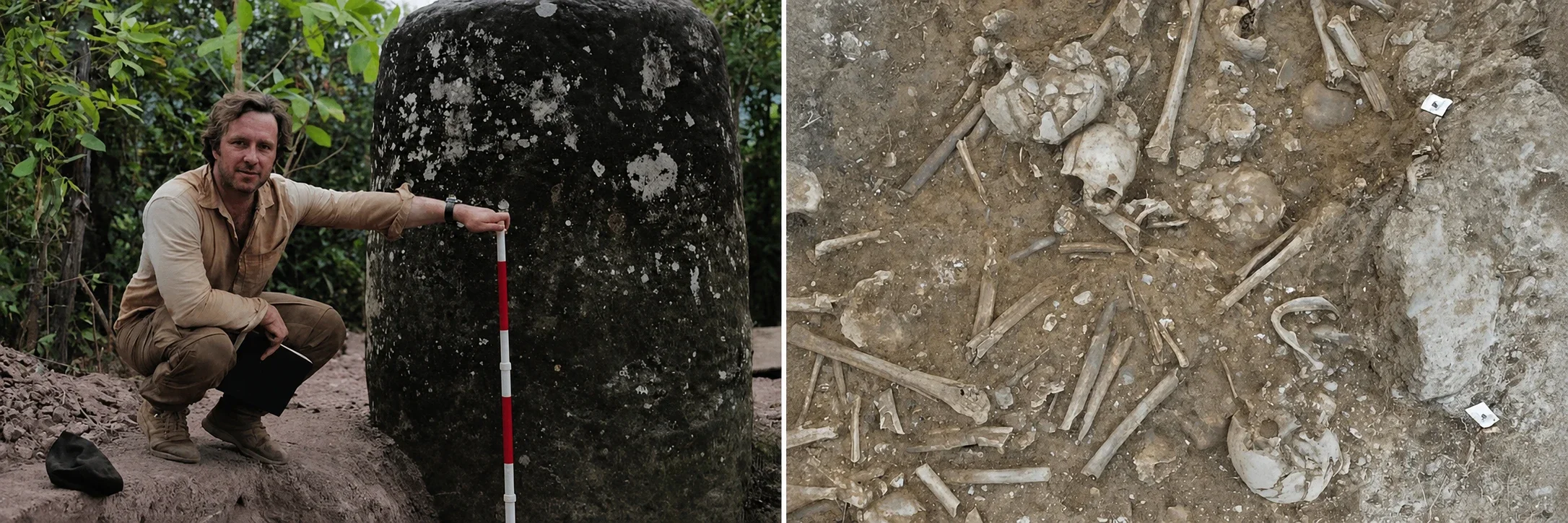
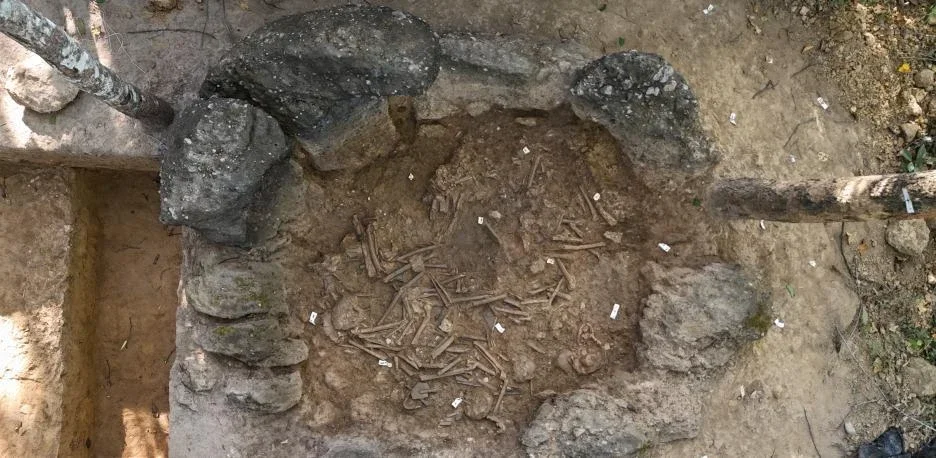
The finding occurred at site 75, where a large jar measuring nearly two meters in diameter was excavated, with thick walls and a wide base that gives it a bowl-like appearance. According to experts, the skulls were placed along the edges, while arm and leg bones were found grouped inside.
Radiocarbon dating performed on teeth extracted from the jar indicates that the remains were deposited between the years 890 and 1160 AD. This confirms that the space was used repeatedly over several generations.
A collective mortuary space
“Current evidence suggests that it was a collective mortuary space used repeatedly over generations, possibly by extended family groups or communities,” said Nicholas Skopal from James Cook University. The researcher added that DNA analysis could reveal the relationships among the deceased in the future.
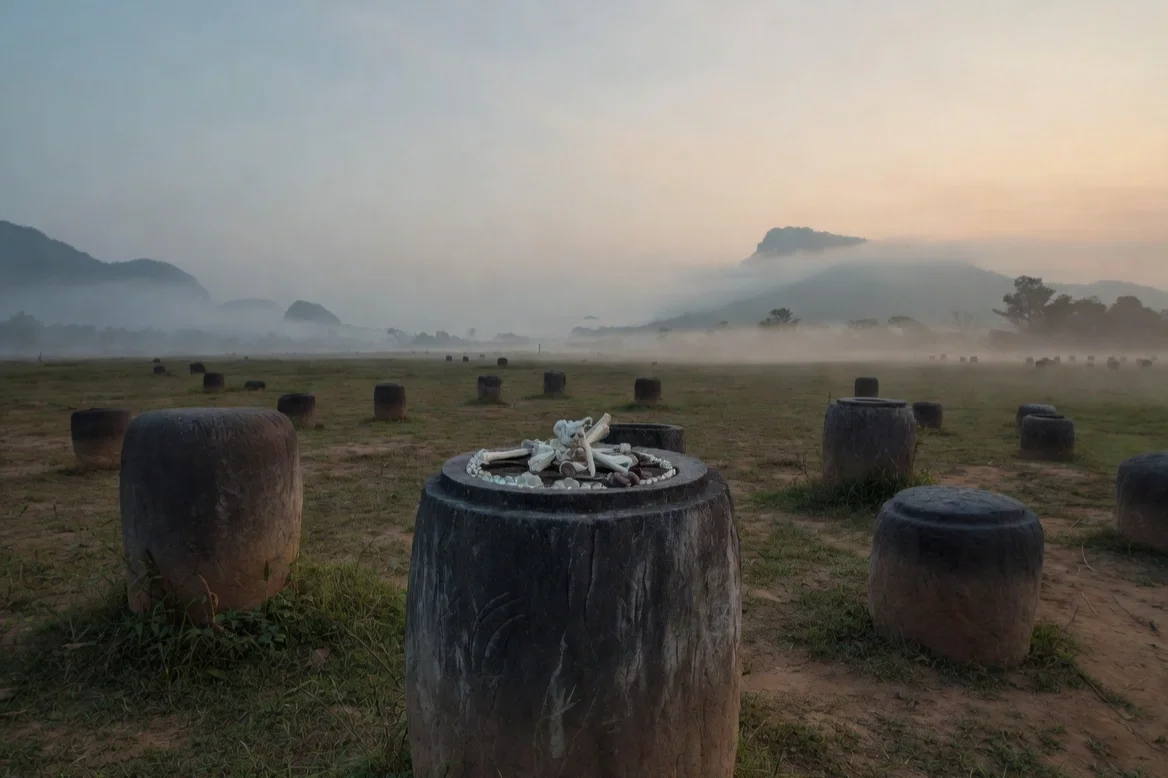
The Plain of Jars houses more than 2,000 stone containers that range from three to ten feet in height. It has long been suspected that these jars served funerary functions, although it is still unclear whether all were used in the same way.
This new finding reinforces the idea that some of these monuments served as containers for complex mortuary practices involving the accumulation of remains over time. The presence of imported glass beads also speaks to ancient trade networks that reached this mountainous area of Southeast Asia.
Researchers continue to analyze the material to better understand the customs of the societies that inhabited the region over a thousand years ago. The site is part of a unique funerary landscape that has been little studied due to its difficult access and the history of conflicts in Laos.
The discovery represents a significant advancement for the archaeology of the area and raises new questions about the cultural traditions and connections of these communities with other regions through the trade of goods such as glass beads.
The jars of the Plain continue to reveal secrets of a millennia-old past that combines elaborate funerary rituals and a complex social organization.