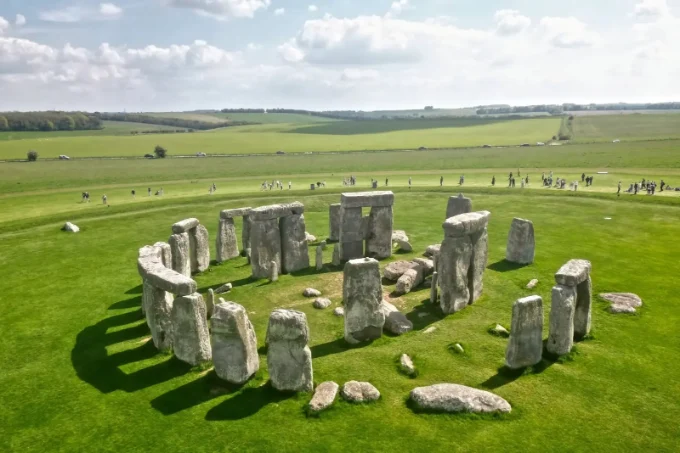

The altar stone of Stonehenge may have arrived from Scotland via glaciers

The altar stone of Stonehenge may have arrived from Scotland via glaciers
Imagen de Editorial Team
porEditorial Team
Argentina

A study suggests that the six-ton block was dragged to Dogger Bank by ice and then transported by Neolithic communities to the Salisbury Plain

Add La Derecha Diario on
Share:

The enigmatic altar stone of Stonehenge, a six-ton sandstone block, may have begun its long journey from the northeast of Scotland dragged by glaciers during the last ice age. A team of researchers from Sheffield Hallam University and Curtin University analyzed the ancient movement of ice and proposed that the material reached Dogger Bank, in the present North Sea, before prehistoric groups transported it hundreds of kilometers more to the Salisbury Plain.

Until now, it was known that this central megalith comes from the Scottish Orkney basin, about 700 kilometers from the monument. The distance raised a key question: how did such a massive rock move? By combining dating of mineral grains with computer models of the ice sheets, the scientists assessed both the origin and the feasibility of partial glacial transport.

Dr. Remy Veness, co-author of the work, explained that the finding offers a plausible explanation for part of the journey. “The exciting thing about these results is that they could imply that the people of Doggerland attributed cultural significance to the altar stone long before it was incorporated into Stonehenge,” he noted. Hypothetically, the block would have been valued enough to move it at least twice: first to rescue it from the advancing sea at the end of the ice age and then to its final destination.

Doggerland was a Neolithic landscape off the east coast of England that now lies underwater. Without natural rocky outcrops, any large stone found there must have come from elsewhere, possibly deposited by ice. From that intermediate area, human transport could have followed routes like the Berkshire Ridgeway, considered the oldest road in Europe and active during the time of Stonehenge's construction.
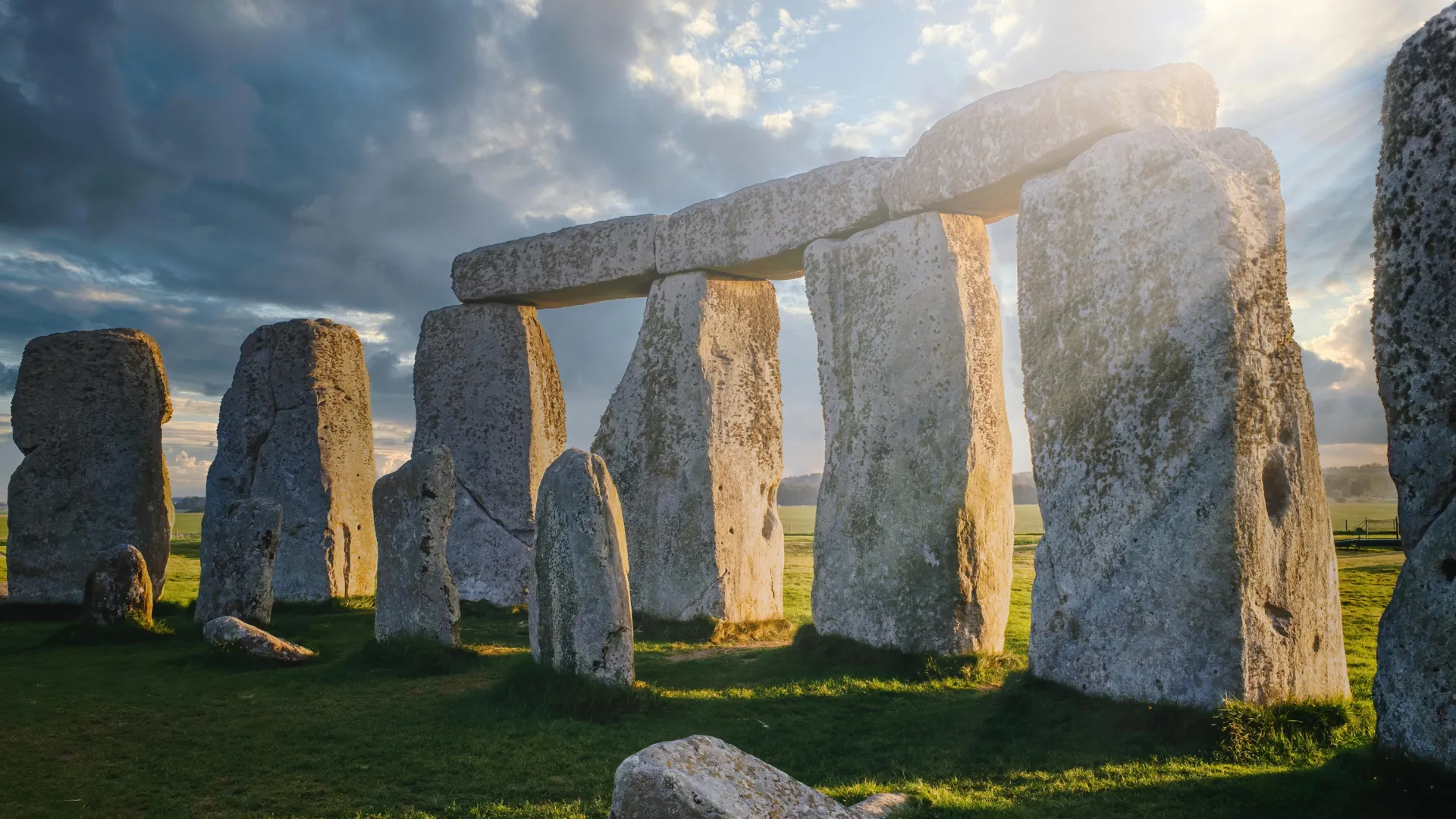

The altar stone of Stonehenge may have arrived from Scotland via glaciers

A multi-stage journey

Dr. Anthony Clarke from Curtin University emphasized that the evidence points to a complex and deliberate route. The models show that glaciers could have carried rocks to Dogger Bank, but not to southern England. Therefore, the stone still needed to be moved hundreds of kilometers by people, likely combining land dragging with river or coastal transport when possible.

There were no viable glacial routes connecting the region of origin directly to Stonehenge. This reinforces the conclusion that human transport was essential. Moving a block of that size across varied landscapes would have required careful organization, detailed knowledge of the routes, and remarkable cooperation among Neolithic communities.

Clarke highlighted that the effort reveals a level of planning and coordination that may not have been fully appreciated. “Transporting a stone of this size over such a long distance would have required planning, coordination, and a deep understanding of the landscape, in addition to enormous determination,” he stated. The study illustrates how the combination of geological analysis and computational modeling can shed light on ancient questions about the construction of the monument.

The researchers are now looking to further pinpoint the exact site in northeast Scotland and investigate in greater detail the routes that prehistoric communities may have used. The work was led by Sheffield Hallam and Curtin, with collaboration from the University of Sheffield, Wessex Archaeology, and the University of Bristol, and was published in the Journal of Quaternary Science.


La Derecha Diario logo
TwitterInstagramYouTubeTikTokFacebook
Derecha Diario TV

Nosotros

  • Quienes Somos
  • Autores
  • Donar

Privacidad

  • Protección de datos
  • Canales
  • Sitemap
  • RSS

Contacto

  • info@derechadiario.com.ar
PUBLICIDAD

Related news

First change in the lineup for the upcoming Formula 1 season: Esteban Ocon will not continue with Haas in 2027

First change in the lineup for the upcoming Formula 1 season: Esteban Ocon will not continue with Haas in 2027

The Supreme Court upheld the Government's DNU that allows the sale of land to foreigners

The Supreme Court upheld the Government's DNU that allows the sale of land to foreigners

Chaos in Rosario: stampedes, rubber bullets, and tension inside Newell's grounds

Chaos in Rosario: stampedes, rubber bullets, and tension inside Newell's grounds

Unusual: a goal celebration forced a draw to decide one of the semifinals of the Gulf Cup

Unusual: a goal celebration forced a draw to decide one of the semifinals of the Gulf Cup

DNI Account: all discounts and promotions for October 2026

DNI Account: all discounts and promotions for October 2026

Moria Casán revealed why Pity Álvarez chose her to break the silence

Moria Casán revealed why Pity Álvarez chose her to break the silence

La Derecha Diario logoLa Derecha Diario logo
ESX logoInstagram logoYouTube logoTikTok logoFacebook
ARGENTINAUNITED STATESECUADORISRAELMEXICOURUGUAY
DERECHA DIARIO TV
  • ES
    XInstagramYouTubeTikTokFacebook
  • DERECHA DIARIO TV
  • Sections
  • ARGENTINA
  • UNITED STATES
  • ECUADOR
  • ISRAEL
  • MEXICO
  • URUGUAY
  • Countries
  • La Derecha Diario logoLA DERECHA DIARIO
  • La Derecha Diario México logoLA DERECHA DIARIO MÉXICO
  • La Derecha Diario Uruguay logoLA DERECHA DIARIO URUGUAY
  • La Derecha Diario Ecuador logoLA DERECHA DIARIO ECUADOR
  • La Derecha Diario Israel logoLA DERECHA DIARIO ISRAEL
  • La Derecha Diario Estados Unidos logoLA DERECHA DIARIO ESTADOS UNIDOS
  • Topics
  • GUERRA EN IRÁN
  • The Newspaper
  • QUIENES SOMOS
  • AUTORES
  • PUBLICIDAD
  • DONAR