
According to an official report from the intervention management of OSPRERA to the Superintendence of Health Services (SSS), the health insurance fund for rural personnel and stevedores moved forward with a streamlining process that made it possible to reverse a large part of the critical situation.
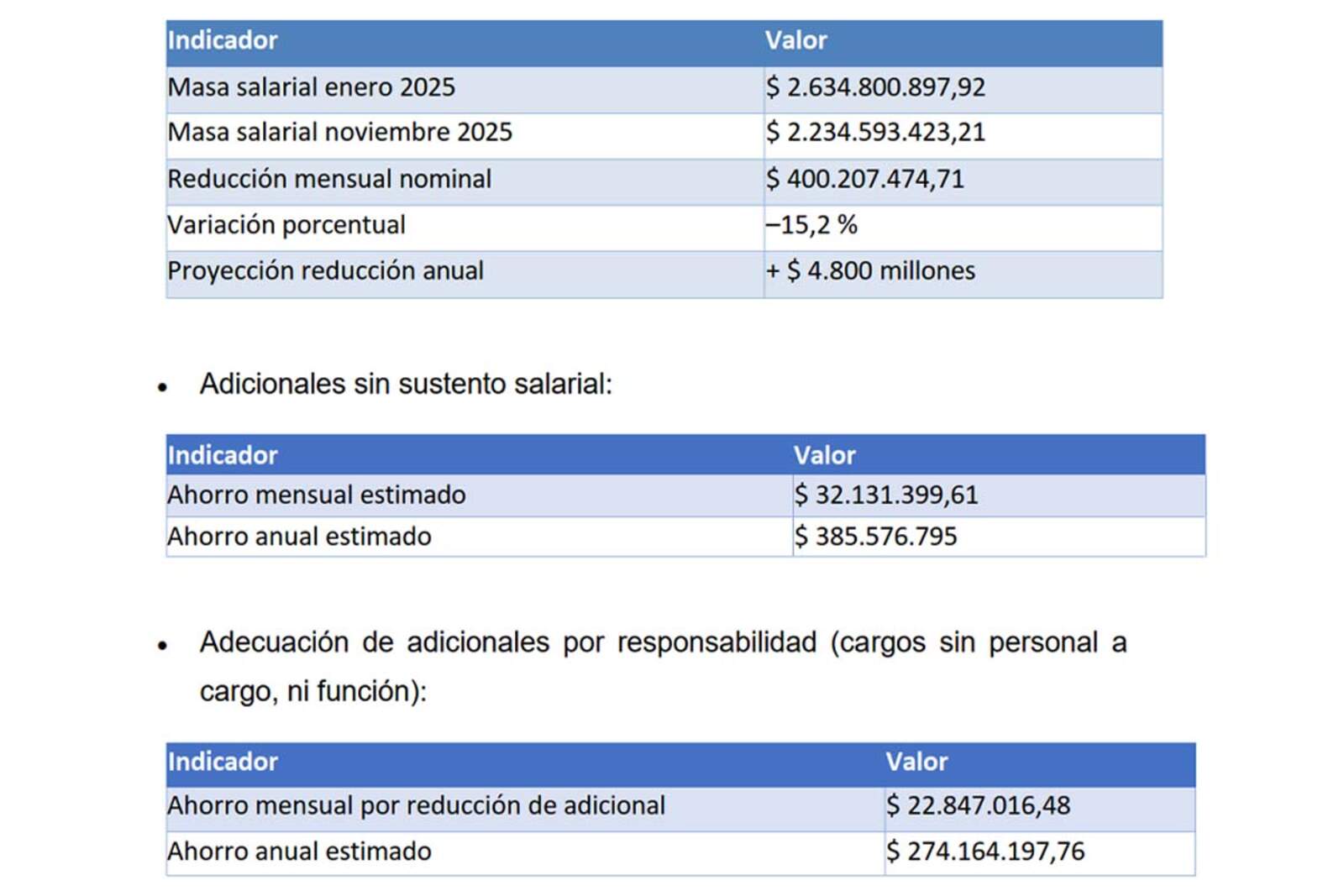
The intervention, aligned with the management orientation of the government of President Javier Milei, focused on the reduction of the deficit, the rationalization of spending, and the strengthening of controls, with a direct impact on the functioning of the health insurance fund system.

Sharp reduction of the deficit
According to the document prepared by the SSS, at the beginning of the intervention there was a monthly deficit of more than $5.5 billion, equivalent to approximately 25% of its income. That situation put at risk the continuity of the benefit system and the fulfillment of obligations with providers and suppliers.
After the implementation of spending control measures, contract reviews, internal reorganization, and changes in purchasing processes, the monthly deficit was reduced to an estimated range between $1 billion and $1.5 billion, which represents between 5% and 7% of income. In relative terms, the report indicates a structural reduction of more than 80%, without any medical services having been suspended.
Savings on high-cost medications
One of the central points of the report is the review of the high-cost medication supply scheme. The intervention implemented open price tenders, with competition among drug distributors and standardized rules.

According to official data, this mechanism made it possible to project savings of $1,148,008,312 in just four months, equivalent to more than $287 million per month. The report emphasizes that these savings did not result in cuts to treatments, but in greater traceability and predictability in the supply of medications, especially for complex pathologies.