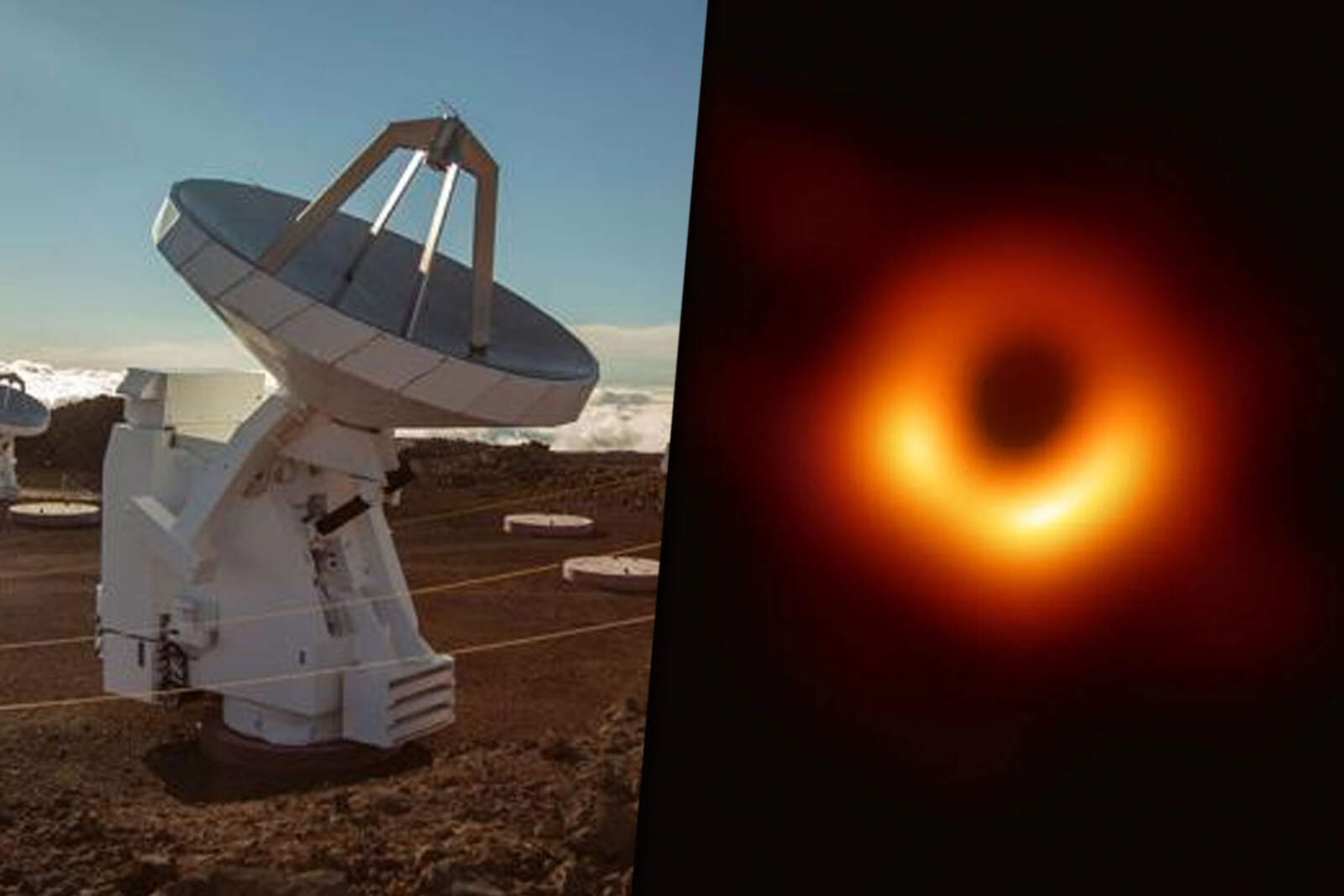
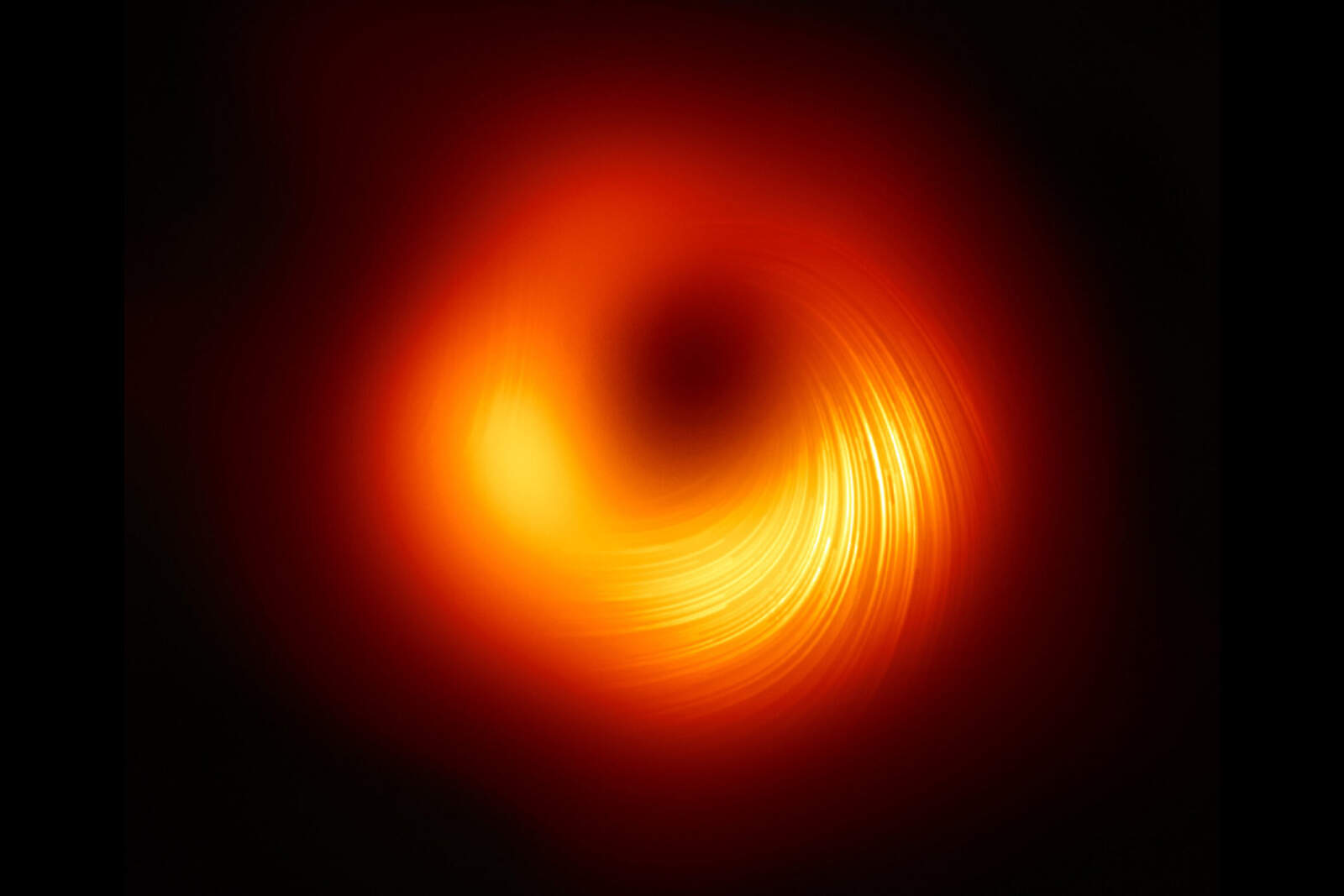
The supermassive black hole at the center of galaxy M87, known as M87*, shows a much more dynamic environment than previously thought. New observations from the Event Horizon Telescope (EHT) reveal changes in its magnetic fields and emissions near the main jet.
Researchersfrom INAF, INFN, and Federico II University of Naples published their findings in Astronomy & Astrophysics. They provided data on how matter and energy behave near these extreme phenomena.
Nuevas observaciones del EHT revelan cambios en sus campos magnéticos
A look at the M87* black hole
M87* is located 55 million light-years from Earth and its mass exceeds 6 billion times that of the Sun. The jets from this black hole regulate star formation and distribute energy on a large scale, functioning as a unique cosmic laboratory.
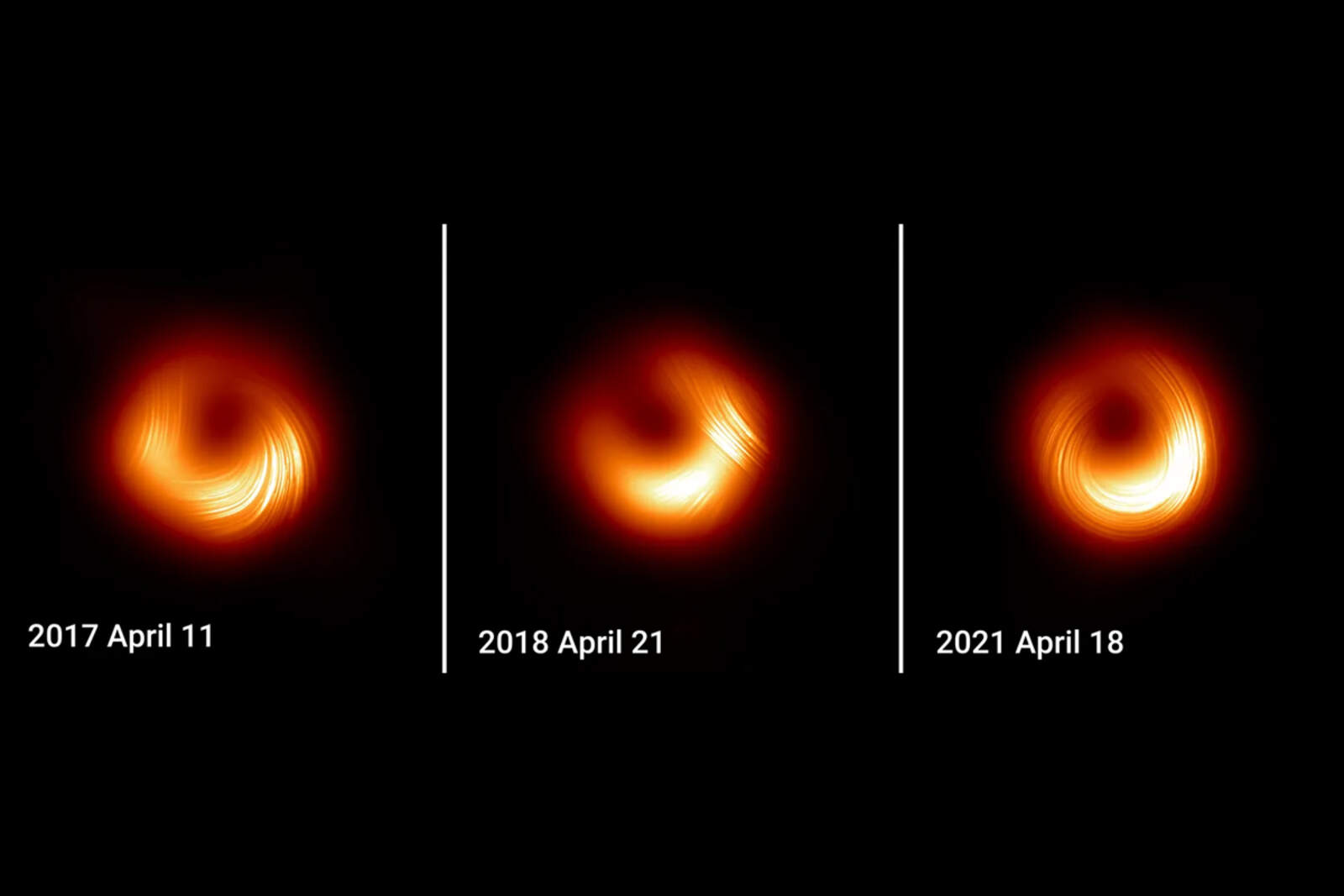
Thanks to observations from 2017, 2018, and 2021, scientists noticed that the polarization of the magnetic fields changes over time. In 2017 it was oriented in one direction, in 2018 it stabilized, and in 2021 it completely reversed, showing a turbulent and constantly evolving environment.
Impact of polarization and magnetized plasma
The changes could be due not only to the internal structure of M87*, but also to a magnetized plasma acting as a Faraday screen. This gas film alters the light signal before it reaches the telescopes.
Impacto de la polarización y el plasma magnetizado
Paul Tiede, from the Harvard Center for Astrophysics, explained: "The plasma near the event horizon is dynamic and complex, and it challenges our theoretical models." Although the ring of M87* remains stable, the polarization varies significantly.
Technology and telescopes
To obtain these images, the EHT used telescopes such as Kitt Peak in Arizona and Iram Noema in France. The combination made it possible to increase sensitivity and sharpness, as well as to apply independent image reconstruction techniques.
El EHT utilizó telescopios como Kitt Peak en Arizona
Rocco Lico, a researcher at INAF, emphasized that it was necessary to develop new analysis tools to interpret the data and ensure the robustness of the results.