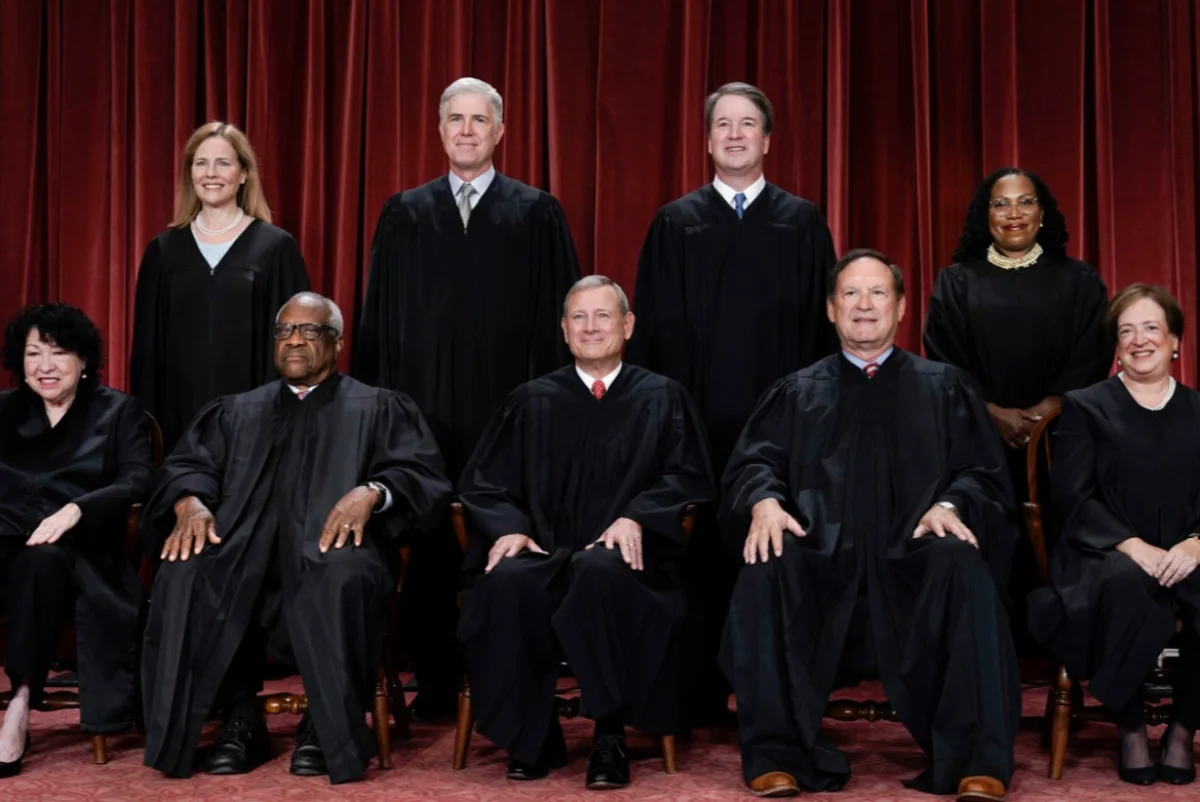

The Supreme Court of the United States has once again become an obstacle to President Donald Trump's immigration agenda by rejecting the executive order that sought to restrict automatic citizenship by birth for the children of immigrants in an irregular situation or with temporary status in the country.
With a vote of six justices against three, the highest court upheld the historical interpretation of the Fourteenth Amendment, frustrating one of the most important initiatives pushed by Trump to reform the U.S. immigration system.
The Supreme Court has once again blocked a Trump measure
The ruling represents a new judicial setback for the Republican administration, which had defended the need to limit automatic access to citizenship for those born to parents without permanent residency in the United States.
The majority of the court held that the traditional interpretation of the Fourteenth Amendment remains fully in effect, preserving the principle that most people born on U.S. soil automatically acquire citizenship.
The Chief Justice of the Supreme Court, John Roberts, wrote in the majority opinion:
"Citizenship, both before and now, was the right to have rights. The drafters of the Fourteenth Amendment extended that promise to all persons born free on this land. Today we uphold that promise."
What Trump's executive order proposed
The measure had been signed by Donald Trump on January 20, 2025, during his first day back in the White House.
The order stated that only children of at least one U.S. citizen or legal permanent resident parent would be U.S. citizens at birth, excluding:
Children of foreign students.
Children of workers with temporary visas.
Persons with legal presence but without permanent residency.
If it had come into effect, the measure would have affected approximately 250,000 births per year, according to estimates presented during the judicial process.
The debate over the Fourteenth Amendment
The discussion focused on the scope of the citizenship clause included in the Fourteenth Amendment, passed in 1868 after the Civil War.
The Trump administration argued that the phrase "subject to its jurisdiction" should be interpreted more restrictively, limiting citizenship only to the children of persons with legal permanent residency.
However, the majority of the Court reaffirmed the established jurisprudence since the late 19th century, especially the precedent of the case United States v. Wong Kim Ark (1898), which established that birth on U.S. soil is sufficient to acquire citizenship, except for very specific exceptions such as the children of foreign diplomats.
Another judicial obstacle for the immigration agenda
The ruling represents another example of how the Supreme Court has once again limited the scope of a key policy pushed by Donald Trump, nullifying one of the most ambitious immigration reforms of his second term.
The executive order never came into effect, as it was suspended by federal courts shortly after it was signed and remained blocked throughout the judicial process.
With this ruling, birthright citizenship remains fully in effect in the United States, maintaining a criterion that has been part of the U.S. constitutional framework for over a century and closing, at least for now, the possibility of modifying it through a presidential executive order.







