
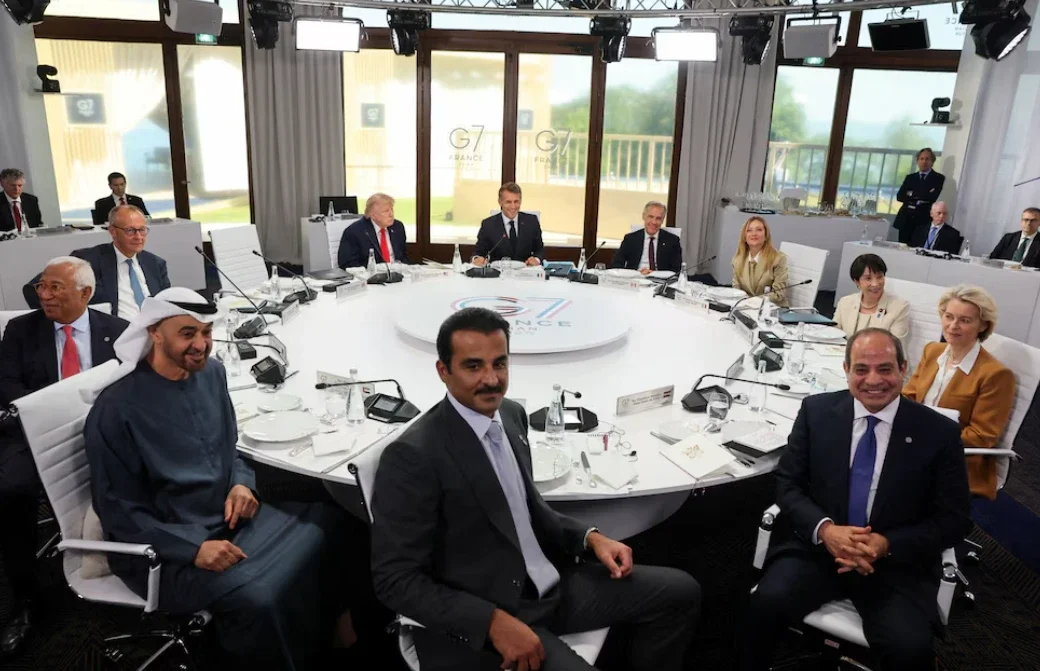
The Prime Minister of Japan, Sanae Takaichi, concluded her first participation in a G7 summit with significant international support for one of her main priorities: addressing Western dependence on critical minerals controlled by China.
During the meeting held in Evian, France, G7 leaders agreed to strengthen the resilience of supply chains for rare earths and other strategic resources, in a message directed straight at the Beijing regime.
“The G7 expressed a united and serious concern about export controls on critical minerals and economic coercion”, Takaichi stated after the meeting.
The G7 seeks to reduce dependence on China
One of the central points of the joint declaration states that by 2030, G7 countries will seek to reduce their dependence on any single external supplier to less than 60% for rare earths and permanent magnets.
Additionally, the plan includes the creation of strategic reserves equivalent to 90 days of demand, coordinated with the International Energy Agency to respond to potential supply disruptions.
The initiative primarily aims to counteract China's enormous dominance over the global market for critical minerals, essential for the technology, energy, and military industries.
Japan offered its strategic storage model
Takaichi highlighted that Japan is currently the only G7 country that has a national system for the storage of critical minerals for civilian use.
The Prime Minister made available to the bloc the experience of JOGMEC, the Japanese agency specialized in energy security and mineral resources, to help other countries develop similar mechanisms.
The Japanese concern has concrete precedents. In 2010, following a maritime incident in the disputed Senkaku Islands, China restricted rare earth exports to Japan, demonstrating its willingness to use these resources as a tool of political pressure.