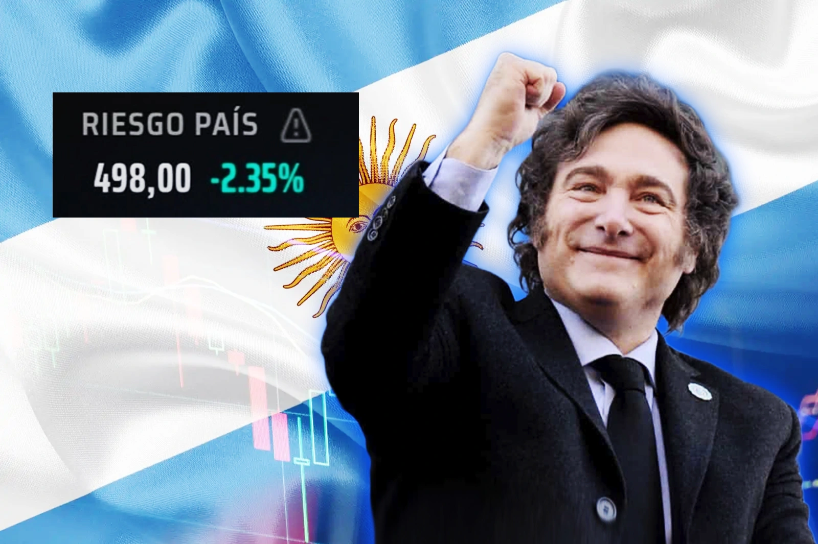
The Country Risk of Argentina has fallen again and is now below 500 basis points, reaching 498 points, its lowest level since February 2.
This drop occurs in a context of improvement in the pricing of sovereign bonds and a greater confidence reflected in the improvement of the debt as noted by international rating agencies, which highlight the great work done by the Government of Javier Milei.
Public bonds in dollars, both Bonares and Globals, recorded a 0.2% increase during the day, allowing them to accumulate a gain of nearly 3% so far in May. This performance directly contributed to the decline of the index prepared by JP Morgan, which measures the interest rate differential that Argentina's debt pays compared to U.S. Treasury bonds.
President Javier Milei.
Part of this favorable scenario is explained by Fitch Ratings' decision to upgrade the country's sovereign rating to “B-”. According to the analysis released, the agency identified an improvement in the solvency of Milei's Government, highlighting its firm commitment to fiscal balance and a reduction in the risk of default.
The Merval
On the local front, the S&P Merval index of the Buenos Aires Stock Exchange rose by 0.4% to reach 278,000 points, following the positive trend. Among the Argentine stocks listed on Wall Street, mixed movements were observed.
YPF rose by 0.8% to USD 42.69, while Tenaris gained 1.8%, increasing its accumulated rise in 2026 to 59%. In contrast, Vista Energy fell by 0.6%, and Mercado Libre dropped by 3.8%, after having recorded a decline of over 12% on Friday's session. The rebound of 7.2% in Bioceres shares was also notable.
President Javier Milei.
Internationally, markets continue to operate at high levels. The main indices on Wall Street remain at historic highs, with the S&P 500 rising by 0.1% and reaching 7,400 points for the first time. Meanwhile, the tech-heavy Nasdaq comfortably holds above 26,000 points.
In parallel, oil prices recorded a 2% rebound, driven by the lack of agreements between the United States and Iran regarding maritime traffic in the Strait of Hormuz and Tehran's nuclear program. The North Sea Brent crude barrel was priced at USD 103.50 for delivery in July.
In this global context of tension, the drop in country risk and the improvement in Argentine assets represent significant positive signals for the financial front.