The monetary authority purchased USD 15 million this Thursday and accumulated purchases of USD 58 million in the first three days of September, while the country risk fell below 500 points
This appetite for global growth strongly benefited national flagship assets. Among the most representative ADRs traded in dollars on the New York market, the state-owned oil company YPF recorded a formidable increase of 2.8%, reaching USD 52.41 per share.
The global firmness was supported by moderation in Treasury rates. Damián Vlassich, Team Leader of Investment Strategies at IOL, explained the international context in detail:
“Optimism has returned strongly to international markets driven by a marked relief in the U.S. Treasury yield curve, combined with less aggressive comments from Federal Reserve Governor Christopher Waller, after suggesting the possibility of keeping rates unchanged in September if inflationary slowdown is confirmed”.
Country Risk
In the international corporate arena, Damián Vlassich himself highlighted the momentum of the software sector, led by the company Snowflake (+16.6%) after raising its annual targets, and the official acquisition by the giant Nvidia (+1.8%) of the Artificial Intelligence platform Hugging Face for an amount of USD 12.930 billion.
The resounding success of monetary and fiscal discipline was clearly reflected in the pacification and decline of domestic exchange rates. In the wholesale exchange segment, the wholesale dollar decreased by three pesos or 0.2%, retreating to just $1,508.
This movement occurred under an impressive volume of operations in the spot market that reached USD 904 million. Enthusiastically, currency agent Gustavo Quintana from PR Corredores de Cambio noted: “The volume traded today in the spot segment is the second highest of the year, after that recorded on April 24”.
Milei and Caputo
For his part, operator Nicolás Merino from ABC Mercado de Cambios detailed how the free play of supply and demand bent exchange prices, stating that after a “maximum of $1,510, it began to operate with a marked supply that increasingly pressured the quotation, bringing it back to the opening zone, between $1,508 and $1,509”.
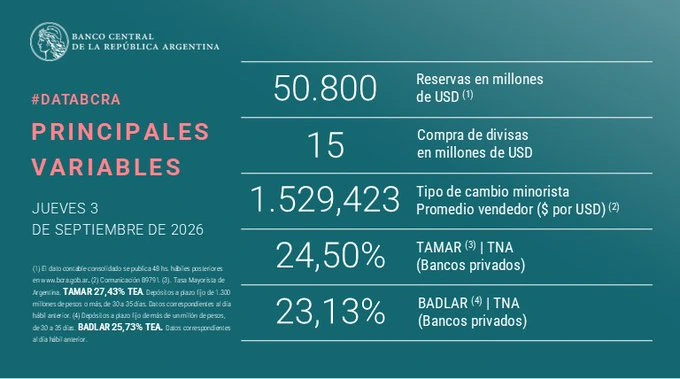
In perfect harmony, the public window quotation of the retail dollar ceded ground decisively in the official channel, dropping five pesos or 0.3% to close at $1,530 on the screens of Banco Nación. The BCRA reported that on average across financial institutions, the retail dollar was at $1,529.42 for sale and $1,477.98 for purchase. Finally, in the parallel market, the informal quotation or informal dollar or "blue" was traded at $1,545 for sale, accumulating a healthy and unequivocal loss of ten pesos so far in September.
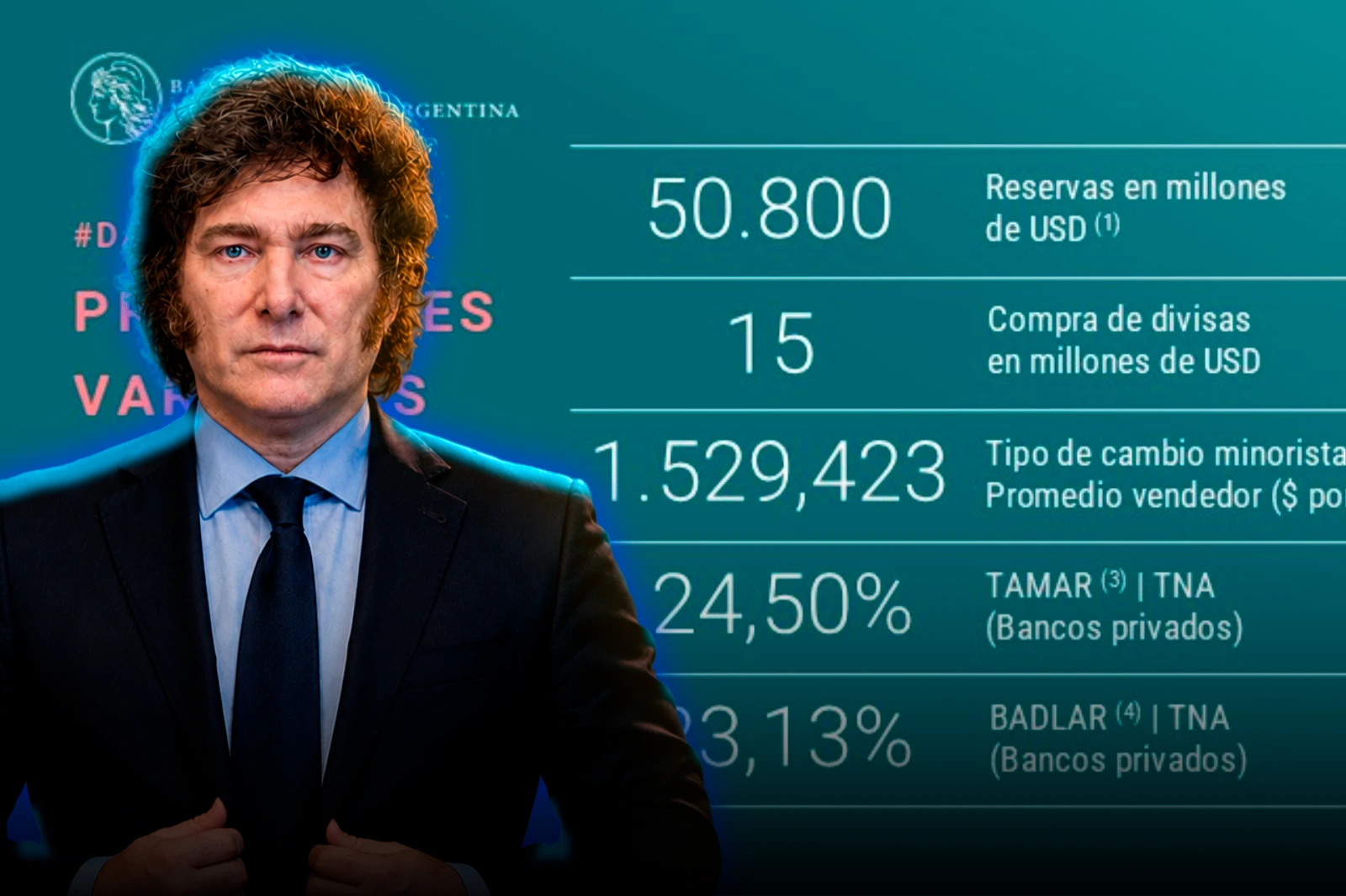
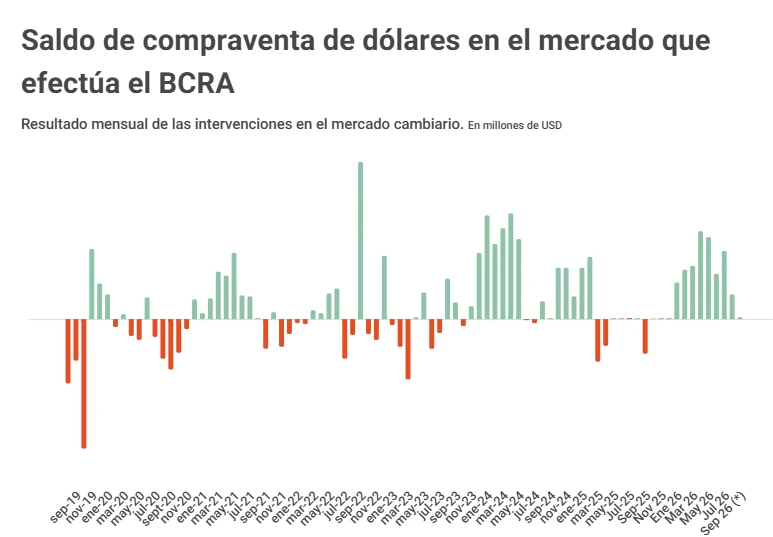
The reconquest of monetary sovereignty and financial stability under the leadership of the administration of Javier Milei marked a new absolute triumph on September 3. In a market fully energized by investor confidence, the Central Bank of the Argentine Republic (BCRA) acquired USD 15 million for its reserves in the foreign exchange market.
This strategic purchase represents 1.7% of the private offer. With this excellent result, the monetary authority has accumulated net purchases totaling USD 58 million in just the first three days of September. Additionally, the gross international reserves of the agency experienced a remarkable growth of USD 342 million, soaring to consolidate an impressive shield of USD 50.800 billion. This milestone was complemented by the pronounced appreciation of gold, which climbed 2.5% to reach USD 4,523.80 per ounce.
Central Bank of the Argentine Republic
This robust increase in assets acts as the foundation for a colossal takeoff in the debt markets. The confidence of global investors translated into a radiant day for Argentine fixed income, where sovereign bonds in dollars —both Bonares and Globales— ended trading with a firm average increase of 0.4%.
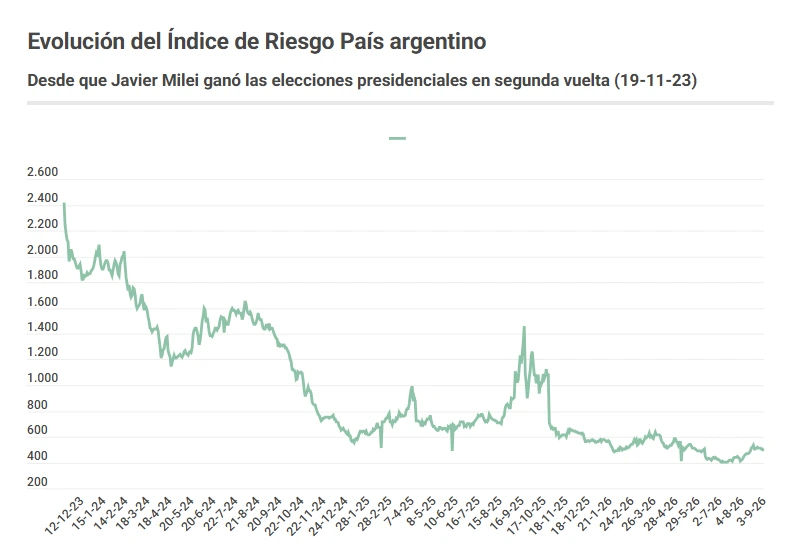
This overwhelming momentum caused the breaking of a key psychological barrier: the Country Risk calculated by the investment bank JP Morgan decreased by nine units for Argentina, plummeting definitively to 494 basis points, comfortably breaking the threshold of 500 points.
This drop in the risk premium constitutes a consolidated compression since Javier Milei won the presidential elections in the second round on November 19, 2023.
When analyzing the quality of this spectacular compression of rates, specialist Martín Mazza, director of MM Investments, highlighted the authenticity and solidity of this phenomenon by stating: “If the Treasury rate rises, the country risk can partially decrease due to the index's own construction, as it measures the spread against U.S. bonds. But in this case, Argentine bonds are also rising, so there is a genuine compression of the local risk premium and not just a mathematical effect”.
Buying and selling dollars
The local tailwind coupled with a climate of enormous optimism in international markets. On Wall Street, shares of technology companies boosted the main indicators of the New York stock exchanges, which closed in their most positive session of the last month with gains ranging from 1.1% to 1.4%. Among the leading global firms, gains from giants like SpaceX (+6.4%), Tesla (+5.4%), and Strategy Inc (+17.6%) stood out.