The budget reallocation of $5.1 trillion prioritizes pension benefits, hospitals, energy, salaries for the Armed Forces and Security, and the defense of Argentine sovereignty in the Malvinas
In parallel, administrative expenses were ordered, such as the transfer of credits to the General Secretariat of the Presidency for the Presidential Spokesperson's Office (created by Decree 571) and the transfer of three agents from the Ministry of Deregulation to the Ministry of Defense (Administrative Decision 10)
Finally, $210 billion from Jurisdiction 90 (Public Debt Service) was restructured, and Jurisdiction 91 was reinforced to finance key state entities such as the Argentine Aircraft Factory Brigadier San Martín, Radio and Television Argentina, and Enade.
President Javier Milei in national broadcast about the Malvinas
As a strategic pillar of national pride, the administration of Javier Milei secured sovereignty through DNU 867/2026 and Decree 868/2026, reinforcing the Defense budget by $521.558 billion to combat the illegal exploitation of resources in the area of the Malvinas Islands.
The net financial impact of this sovereignty investment is only $234.122 billion (less than 0.16% of the expanded Budget and only 5.1% of the fiscal surplus accumulated in the first eight months of the year). The expenditure also has a null effect on public finances, self-financing through internal reallocations of $288.475 billion and transparently accumulated Treasury resources from the latest privatizations amounting to $234.122 billion.
According to the 57 pages of Annex I of Decree 867, the funds are distributed with surgical precision:
In an unyielding display of macroeconomic order and administrative cleanliness, the government of Javier Milei has officially announced a profound restructuring of public accounts. Through Administrative Decision 26, signed by the Chief of Cabinet of Ministers, Diego Santilli, and the Minister of Economy, Luis Caputo, budget allocations totaling $5.1 trillion have been reassigned.
This historic measure, equivalent to 3.4% of the expanded Budget for the current year, raises the annual spending forecast to $152.3 trillion. However, the key to this success lies in the fact that the net fiscal impact on the financial result is absolutely null, as the increase in spending is fully offset by a projected increase in expected current and capital resources of $2.16 trillion, almost entirely provided by Anses.
The president, Javier Milei
The detailed breakdown of the 266 sheets of the regulation demonstrates a strong commitment to direct and transparent social protection. The Ministry of Human Capital received the most robust expansion, totaling $1.79 trillion.
These resources are strategically allocated to the National Institute of Social Services for Retirees and Pensioners (PAMI), for the payment of pension benefits under moratorium, and for unemployment insurance (resulting from the increase in the Minimum Vital and Mobile Wage set for December 2025).
Additionally, funds were allocated for the "1,000 Days Plan" (Law 27.611) and to strengthen revenue collection through the Revenue and Customs Control Agency (ARCA).
In line with the restructuring of liabilities from previous administrations, the regulation increased by $250 billion the limit established by article 40 of the Budget Law 27.798 to pay recognized pension debts in judicial and administrative proceedings (Law 27.260).
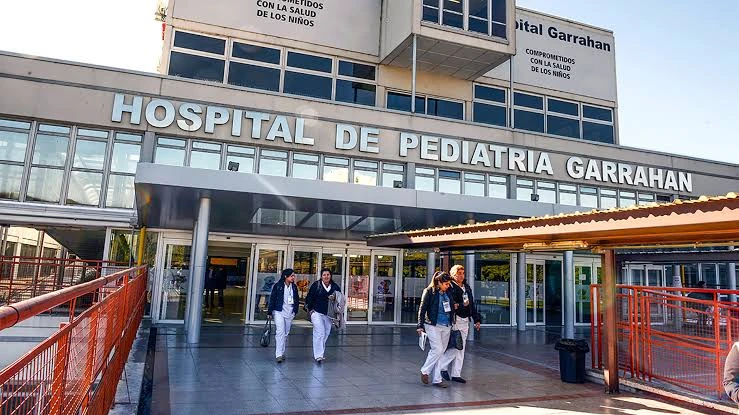
Garrahan Hospital
For its part, the Ministry of Health consolidated a priority restructuring:
$550 billion was allocated to non-contributory pensions for labor disability (Law 26.417 on Pension Mobility).
An additional $44 billion was allocated for the purchase of pharmaceutical and medicinal products.
The maintenance of high-complexity public hospitals such as Hospital Garrahan, Red El Cruce Dr. Néstor Carlos Kirchner, Hospital General de Agudos Dr. René Favaloro, and Hospital del Bicentenario Esteban Echeverría was guaranteed. These expenses are backed by a figurative transfer of $550 billion from Anses.
Under the leadership of Luis Caputo, the largest individual allocation within a single concept corresponds to the Electric Wholesale Market Administrator Company (Cammesa), which received $1 trillion in current transfers from the National Treasury for financing electricity policy.
In infrastructure, the National Road Administration (under the Ministry of Transport) received resources to keep connectivity and real development works active, such as the construction of the highway on National Route 40 (section Mendoza - San Juan) and road maintenance tasks in Santa Cruz.
The president, Javier Milei
The budget restructuring also honors the salary commitment made to those who protect citizens. Funds were allocated to support previously set increases:
The Retirement, Pensions, and Retirement Fund of the Argentine Federal Police received reinforcement derived from the increase in benefits from Resolution 630 of the Ministry of Security.
The Institute of Financial Assistance for Payment of Military Retirements and Pensions obtained the necessary financing following the salary increase determined by Joint Resolution 35 of the Economy and Defense ministries. To consolidate this scheme, Anses transferred $240 billion to the pension funds of the Armed Forces and the Federal Police.