In ancient Salona, the capital of the Roman province of Dalmatia, sixteen burials and cremated remains were recovered, deposited in the ground or in urns, alongside unusually shaped glass vials
Croatian archaeologists have unveiled a new set of findings in the western necropolis of the ancient city of Salona, near Split. Sixteen burial graves and several cremated remains were unearthed, illustrating the diversity of funerary practices in the capital of the Roman province of Dalmatia.
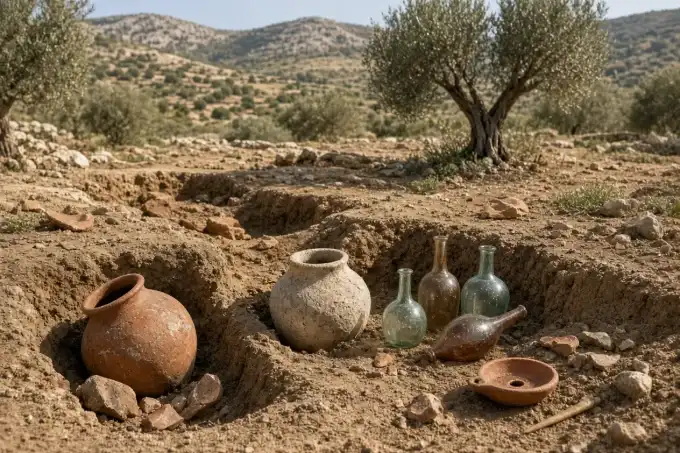
One of the burial graves particularly caught the researchers' attention. The body had been placed face down in the pit, an unusual position in Roman ritual. Alongside the remains, three glass bottles and a small glass container were recovered.
Among the objects was a set of three unguentaria, vessels intended to hold perfumes or oils. One of them had been shaped like a date, a detail that provides information about the level of craftsmanship of glasswork at the time.
The work was carried out by teams from the Croatian Institute for Conservation and the Croatian Academy of Sciences and Arts. This finding adds to an already extensive panorama: more than one hundred and fifty graves have been investigated in this necropolis to date.
A Roman necropolis with burials found in Croatia
Cremations in the ground and in urns
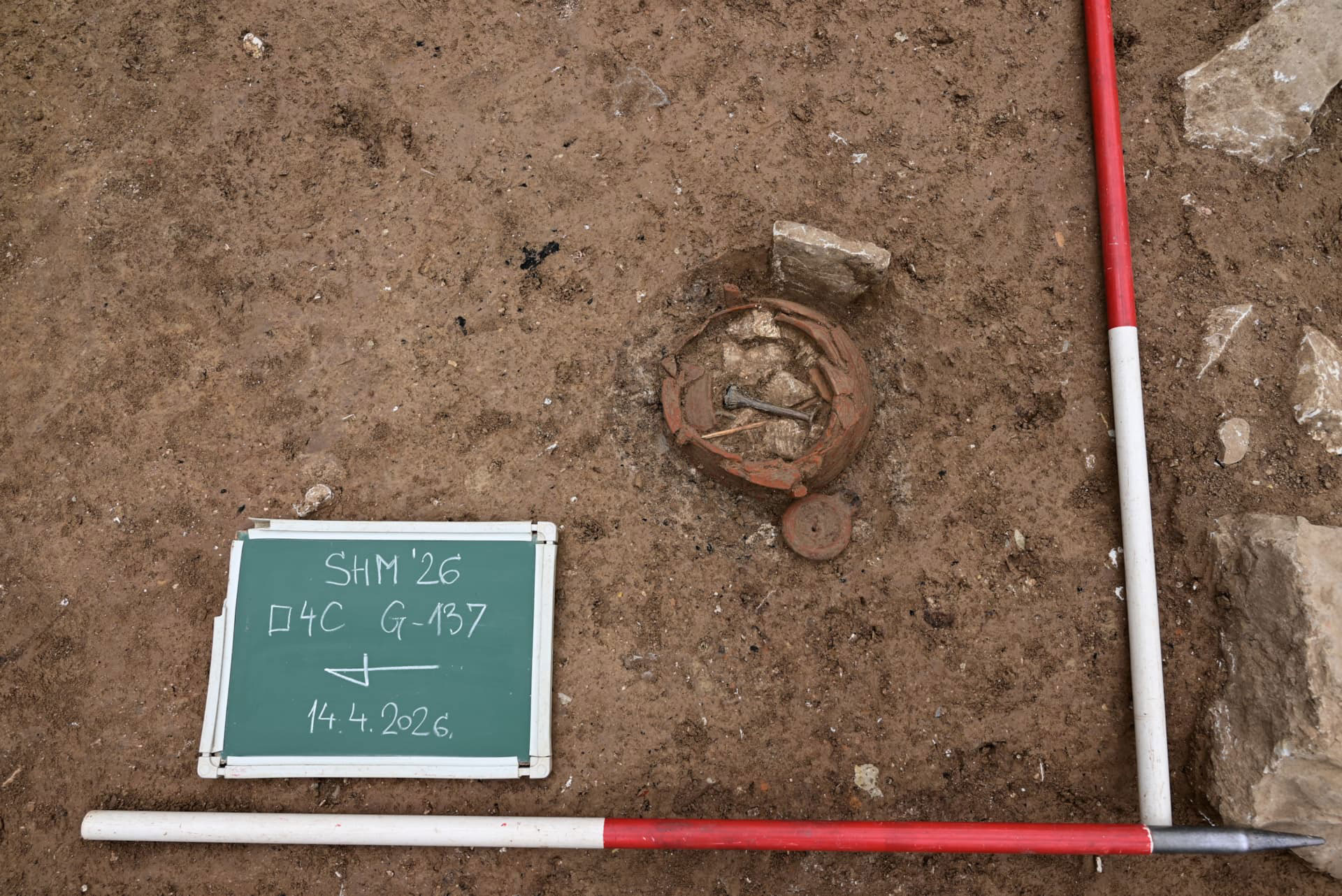
Twelve of the cremation burials consisted of incinerated remains deposited directly in the ground. In three other cases, ceramic urns were used to contain the ashes. Only one grave contained a stone urn with cremated remains inside.
One of these cremation burials provided a particularly complete grave goods. It contained a glass unguentarium, a bone needle, and a ceramic lamp. These elements allow us to observe the combination of everyday and ritual objects that accompanied the deceased.
The simultaneous presence of burials and cremations in the same sector of the cemetery reflects changes in funerary customs over time. Salona, as a significant urban center of the eastern Adriatic, concentrated a diverse population whose burial practices evolved during the centuries of Roman rule.
The study of these contexts provides concrete data on the organization of the funerary space and the materials that were part of the grave goods. Glass vessels, in particular, show both the diffusion of blowing techniques and the value placed on certain prestige objects at the time of death.
An expanding funerary panorama
The western necropolis of Salona continues to reveal valuable information about life and death in the province of Dalmatia. Each new excavation campaign adds pieces to the map of the city's ritual practices.
The remains placed face down, the unguentaria of special shapes, and the variety of containers for the ashes demonstrate that there was no single model of burial. Families chose among different options based on traditions, resources, or historical moments.