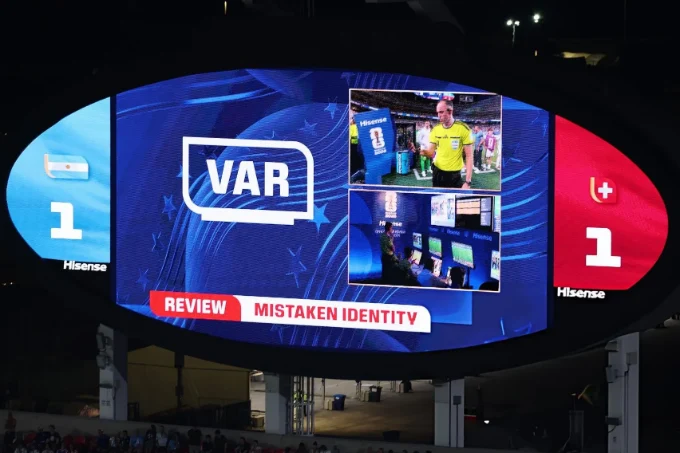
After some situations that raised doubts during the 2026 World Cup, the International Football Association Board (IFAB) published a clarification regarding the application of the VAR protocol.
Through circular No. 34, signed by its secretary Lukas Brud, the body responsible for developing the Laws of the Game disseminated a series of clarifications on various regulatory aspects and the pilot tests implemented during the World Cup. Among them, a reinterpretation of the section regarding "Mistaken Identity" cases stood out.
IFAB reminded that the VAR protocol only considers interventions in four situations: goals, penalties, direct red cards, and mistaken identity errors. In this regard, it clarified that "a yellow card (warning) that is not a second yellow card can only be reviewed to identify the player who committed the sanctioned infraction; the infraction itself cannot be reviewed or modified".
Additionally, the body stated that "the use of the mistaken identity clause to address simulations during the FIFA World Cup 2026 was well received and will be included in the detailed review of the VAR protocol announced in circular No. 32. However, it cannot be used as such until that review is completed".
Although the circular does not mention specific matches, the clarification came after two specific actions that occurred during the World Cup. The first was in the group stage, when the VAR overturned a warning given to American Tim Ream and ended up sanctioning Paraguayan Miguel Almirón for simulation. The second, and the most debated, occurred in the match between Argentina and Switzerland.
In that match, referee João Pinheiro initially booked Leandro Paredes for an alleged foul on Breel Embolo. After reviewing the action, the VAR determined that the Argentine midfielder had not committed a foul, overturned the card, and sanctioned the Swiss forward for simulation. Since Embolo already had a yellow card, he received a second and was sent off.
The regulations used during the World Cup established that, in cases of mistaken identity, the VAR could only intervene to correct the sanctioned player when the referee had incorrectly identified the offender. However, the new clarification from IFAB specifies that this criterion cannot be extended to the review of the infraction itself nor used to punish simulations until the protocol is officially modified.
With this publication, the body anticipated that it will thoroughly review the operation of the VAR in these types of actions before definitively incorporating any changes to the regulations.