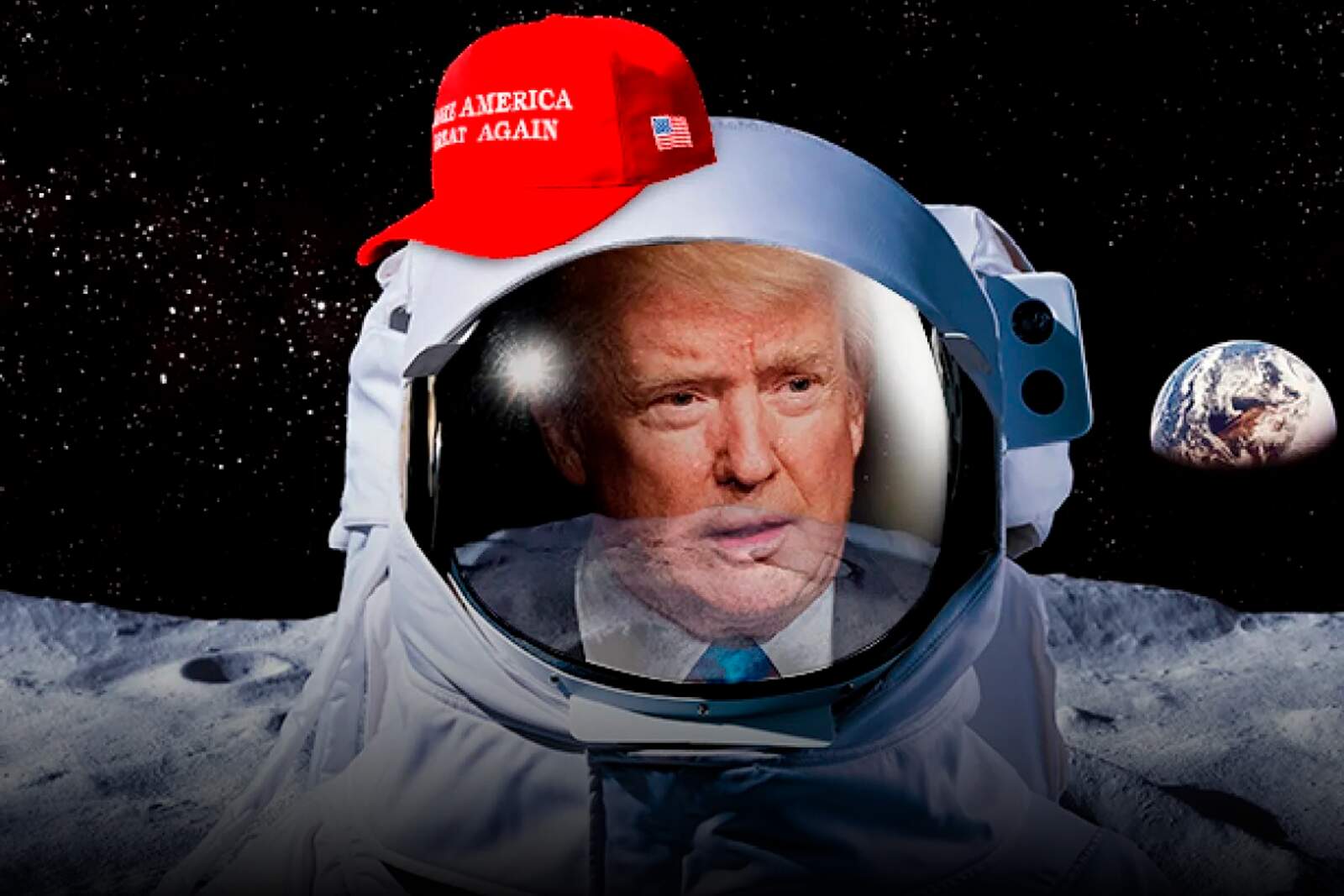
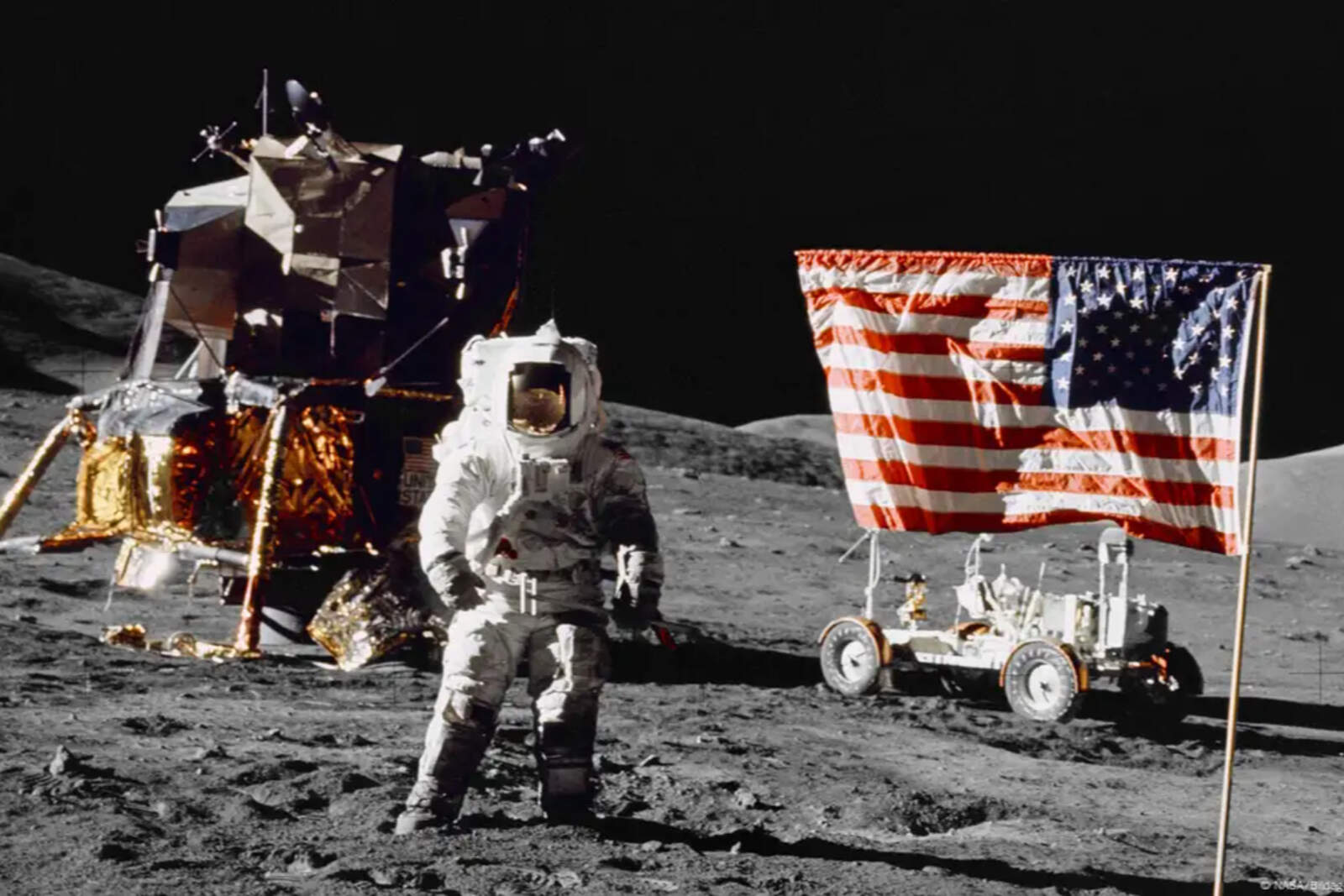
“Then, we will establish a base camp. We will stay on the Moon. What we learn on the Moon is what will take us to Mars,” he added. He also stated that this progress represents a new chapter in the global space race: “We will win the second space race against China.”
The Donald Trump administration has confirmed that the United States will return to the Moon with a crewed mission in early 2026, according to announcements made by Secretary of Transportation Sean Duffy.
The acting NASA administrator and secretary confirmed that the mission not only includes a lunar landing, but also the stay of astronauts for six days in a strategic region of the lunar south pole, where it is estimated that there are ice reserves and conditions of nearly permanent sunlight.
During an interview with Fox News, Duffy explained that the plan includes two key stages within Trump's term: “Next year we will return to the Moon. We won't land. We will go around the Moon and, about a year later, we will land again, under Donald Trump's administration,” he stated firmly.
Estados Unidos en la Luna.
The chosen landing site is considered a “critical terrain” by NASA, due to its location at the south pole, a region that combines the presence of water in the form of ice with solar exposure that could be used to generate energy. The United States plans to claim this sector as its own, establishing a permanent presence with the installation of a lunar base.
Donald Trump en la frontera con México.
The American return to the Moon is part of the Artemis program, launched in 2019. This initiative includes three main phases. The first, Artemis I, was successfully completed in December 2022 with an uncrewed flight of the Orion spacecraft around the Moon. The second stage, Artemis II, will consist of a crewed mission that will orbit the satellite without landing. Finally, Artemis III will take astronauts back to the lunar surface and will serve as a general rehearsal for future missions to Mars.
Originally, Artemis II and III were scheduled for 2022 and 2024, respectively, but were postponed to April 2026 and mid-2027. With the political support of the Trump administration, these deadlines now appear firm, in an effort to mark a new era of American space leadership in the face of advances by China and other powers.