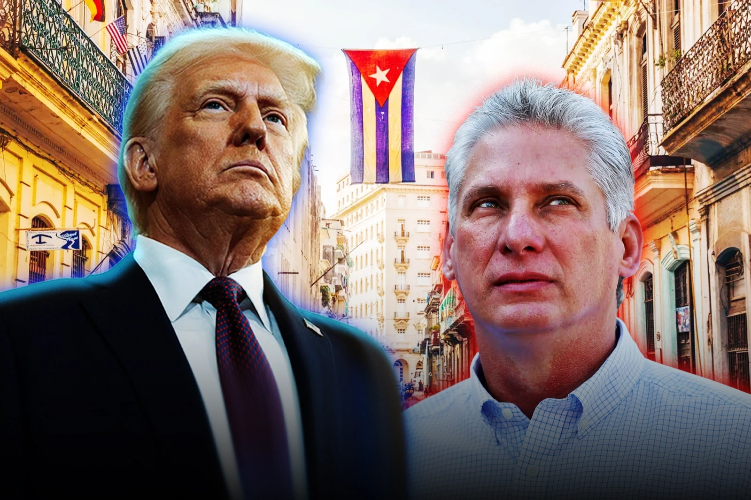
The president of the United States assured that Havana "is asking for help" while Washington tightens sanctions and deepens the economic isolation of the island.
Despite the pressure, the Trump administration left open the possibility of reaching diplomatic agreements with Cuba. According to various reports, Washington had offered humanitarian assistance, agricultural support, and even temporary access to technological services like Starlink in exchange for political reforms, the release of political prisoners, and greater economic openness.
Discussions between both countries are not entirely new. In March, Miguel Díaz-Canel himself confirmed that there were initial contacts between Cuban officials and U.S. representatives to discuss bilateral issues and possible negotiation pathways.
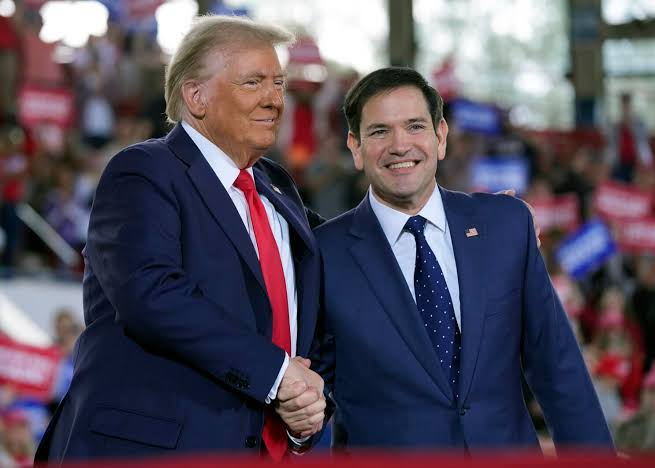
Donald Trump alongside Secretary of State Marco Rubio
However, the atmosphere between both governments remains extremely tense. In recent weeks, Trump has made increasingly harsh statements about Cuba, including claims that the United States could “do something” with the island “very soon.”
Meanwhile, the internal situation in Cuba continues to deteriorate. The island is facing one of the worst economic crises in recent decades, with daily blackouts, inflation, shortages of basic products, and growing social discontent.
In this context, Trump's announcement opens a new phase of uncertainty about the future of relations between Washington and Havana, while the United States maintains economic pressure on the Cuban regime and leaves the door open for political negotiations.
The President of the United States, Donald Trump, announced that he will hold talks with the Cuban regime amid the severe economic and energy crisis that the island is experiencing after months of sanctions and diplomatic pressure from Washington.
In a post on Truth Social, Trump stated that “Cuba is asking for help, and we are going to talk”, although he did not provide specific details about the content or scope of the future negotiations. The president also described Cuba as “a failed state” and maintained that the island “is only going in one direction: down.”
The statements come in the context of a strong economic deterioration in Cuba, marked by massive blackouts, fuel shortages, lack of food, and a deep financial crisis exacerbated by U.S. sanctions and the reduction of Venezuelan support following the fall of Nicolás Maduro.
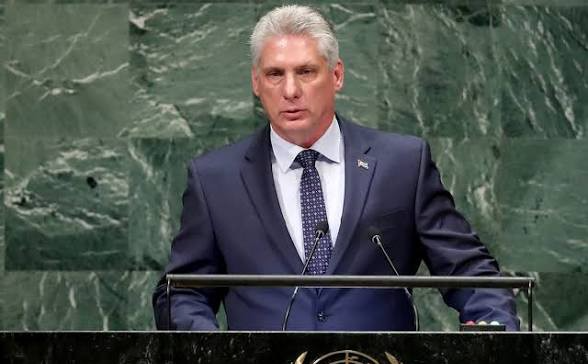
The Cuban dictator Miguel Díaz-Canel
Since his return to the White House, Trump has significantly hardened the policy towards Havana. His administration pushed for new financial sanctions, trade restrictions, and a blockade on fuel supplies to the island, particularly affecting sectors controlled by the military conglomerate GAESA, considered the main economic core of the Cuban regime.
Days ago, Secretary of State Marco Rubio announced sanctions against GAESA, its leadership, and companies linked to the Cuban mining sector. These measures are part of a strategy aimed at weakening the economic structure that supports the government of Havana.