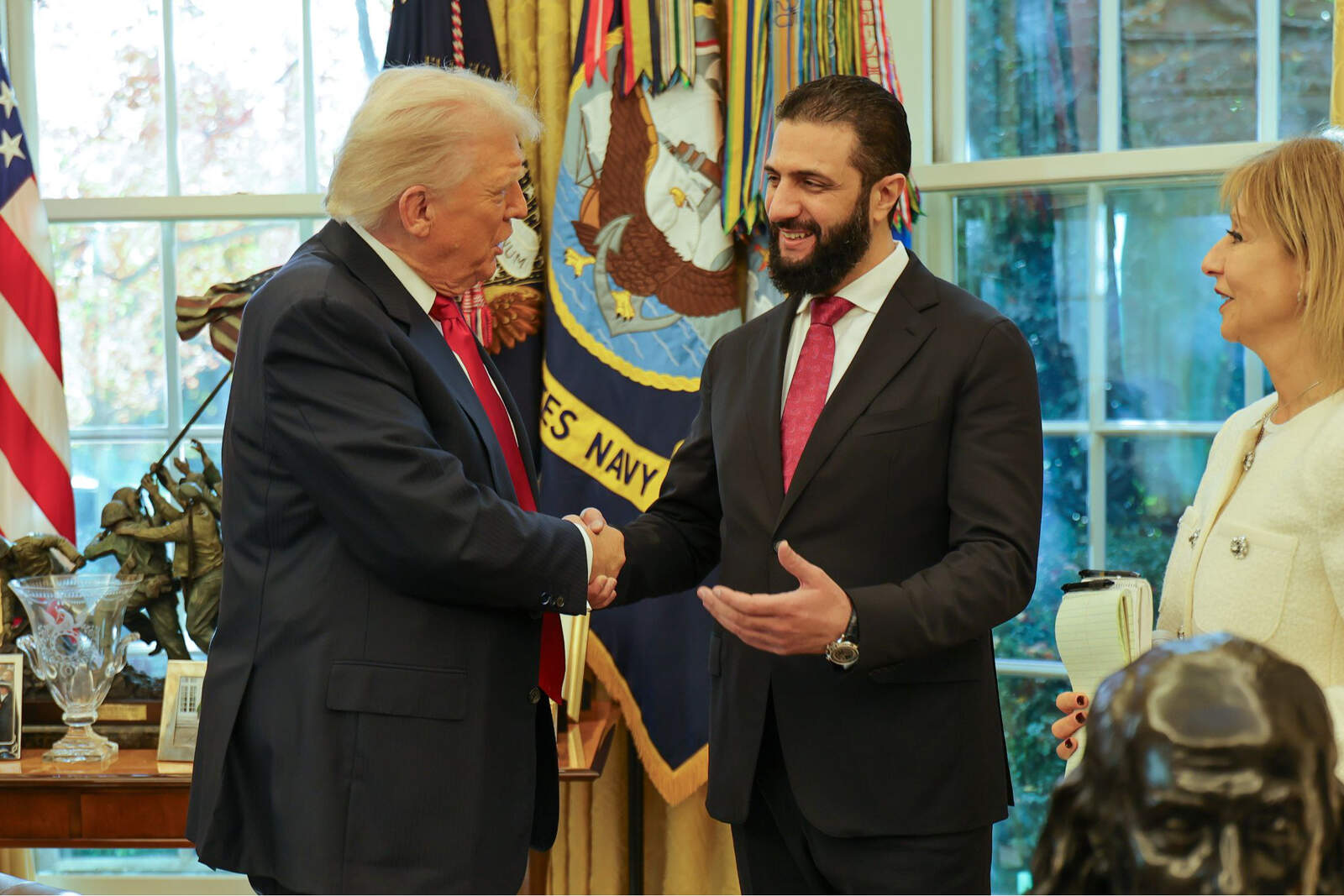

U.S. President Donald Trump received the Syrian leader Ahmad al-Sharaa at the White House on Monday, in a visit considered unthinkable just a few months ago and representing a historic shift in relations between Washington and Damascus.
The meeting symbolizes the end of more than a decade of diplomatic isolation and marks Syria's return to the international stage after the fall of Bashar al-Assad's regime.
Coinciding with the visit, the U.S. Department of the Treasury announced the temporary lifting of trade restrictions on Syria, allowing U.S. and foreign investments to enter the country's reconstruction.
OFAC (Office of Foreign Assets Control) specified that sanctions will remain in place against former president Bashar al-Assad, his associates, and those responsible for human rights violations or drug trafficking, but civil and economic channels will be opened to stimulate recovery.
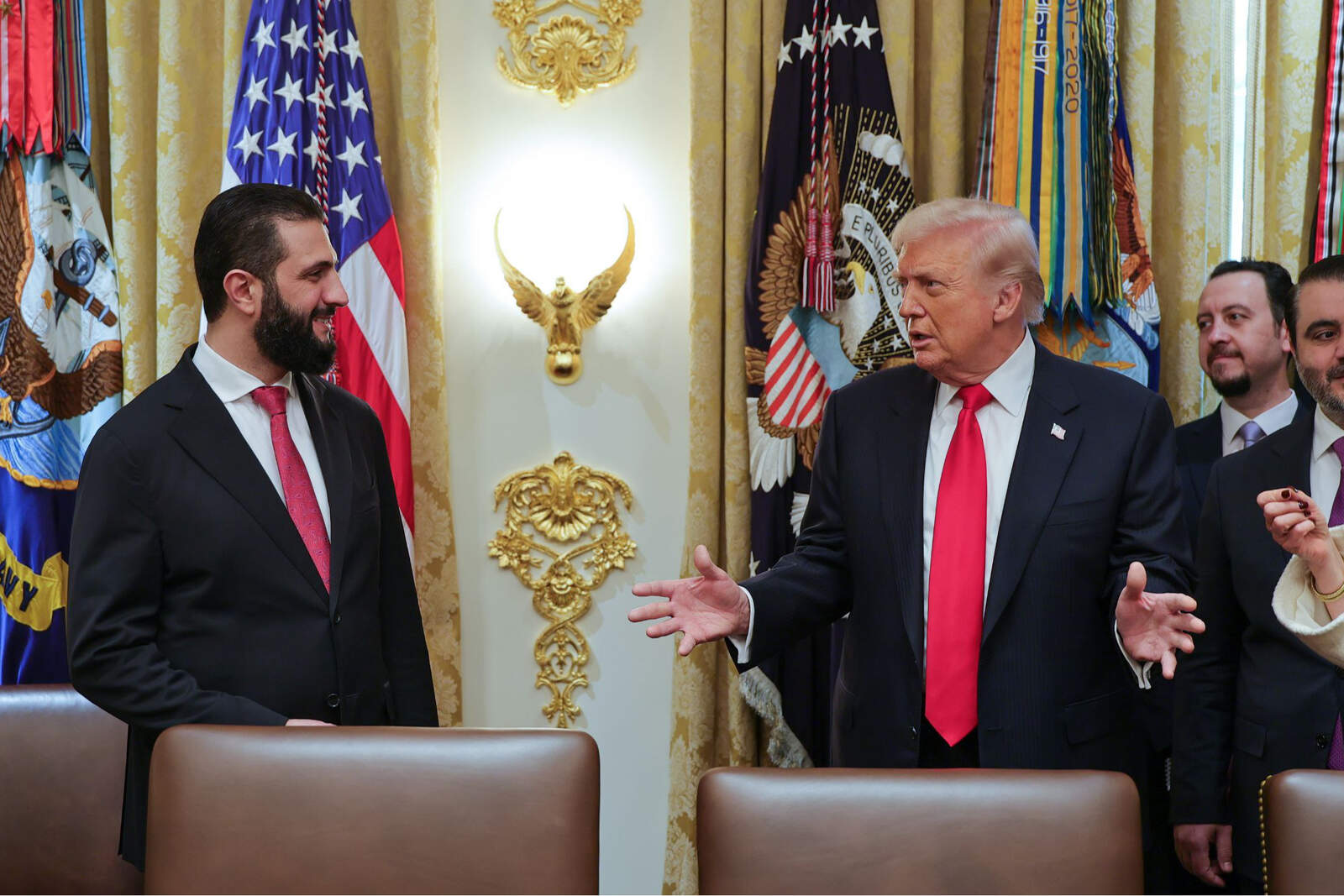
The meeting, which was held behind closed doors in the Oval Office, took place after Syria joined the U.S.-led international coalition against the Islamic State (IS). Diplomatic sources stated that the visit was the result of weeks of discreet contacts and represents the first official trip by a Syrian head of state to Washington since 1946, when Syria gained its independence.
Al-Sharaa, who in the past fought alongside Islamist groups and was an ally of Abu Bakr al-Baghdadi, arrived at the White House shortly before noon and remained with the U.S. president for about two hours. After the meeting, he greeted supporters at the west entrance of the presidential complex before leaving.
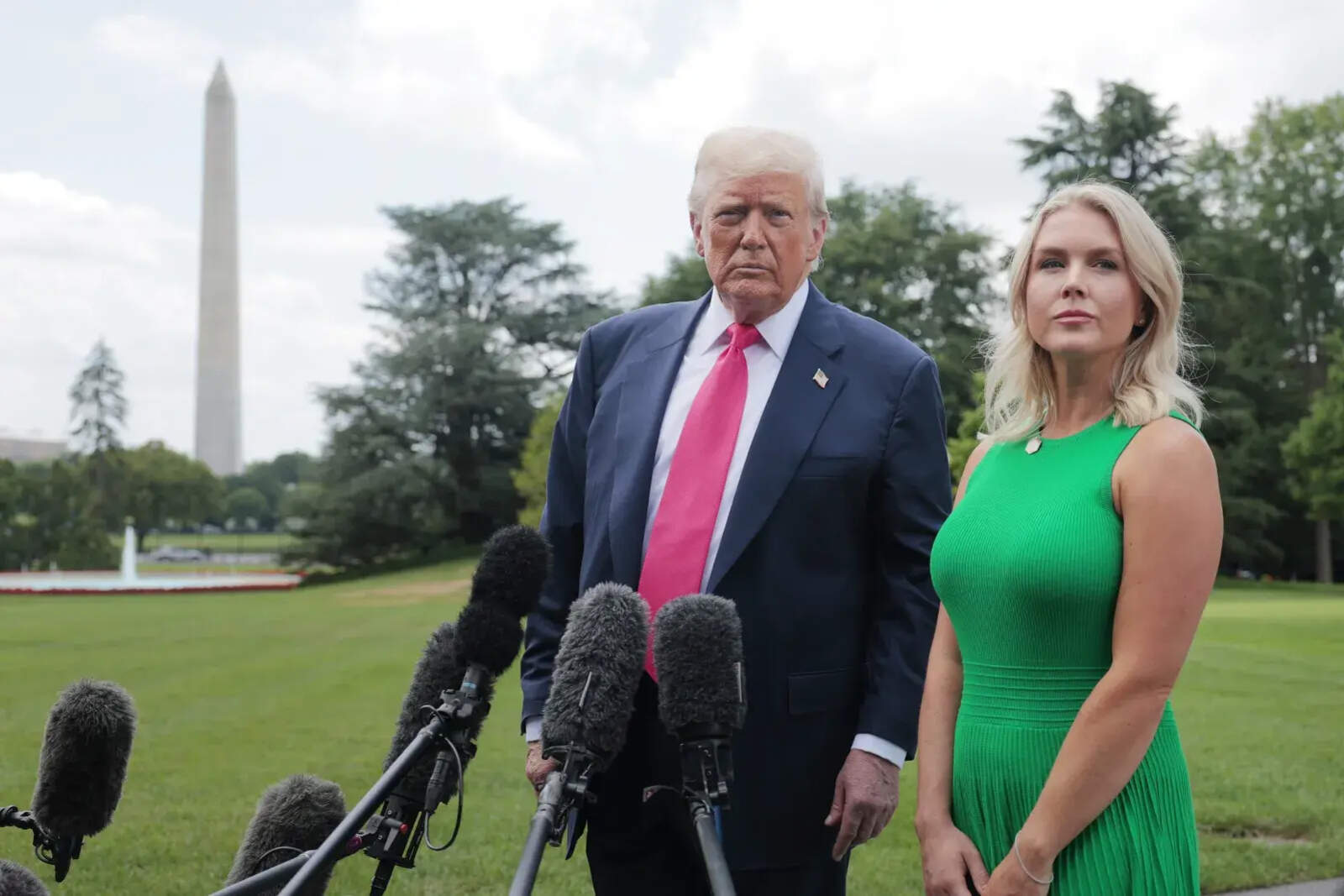
Trump described the meeting as "a step toward peace and stability in the Middle East." Although he acknowledged the Syrian leader's controversial past, he highlighted his evolution: "Syria deserves a second chance; much progress has been made." Press Secretary Karoline Leavitt stated that the meeting is part of the president's efforts to engage with all those seeking peace and reconstruction.