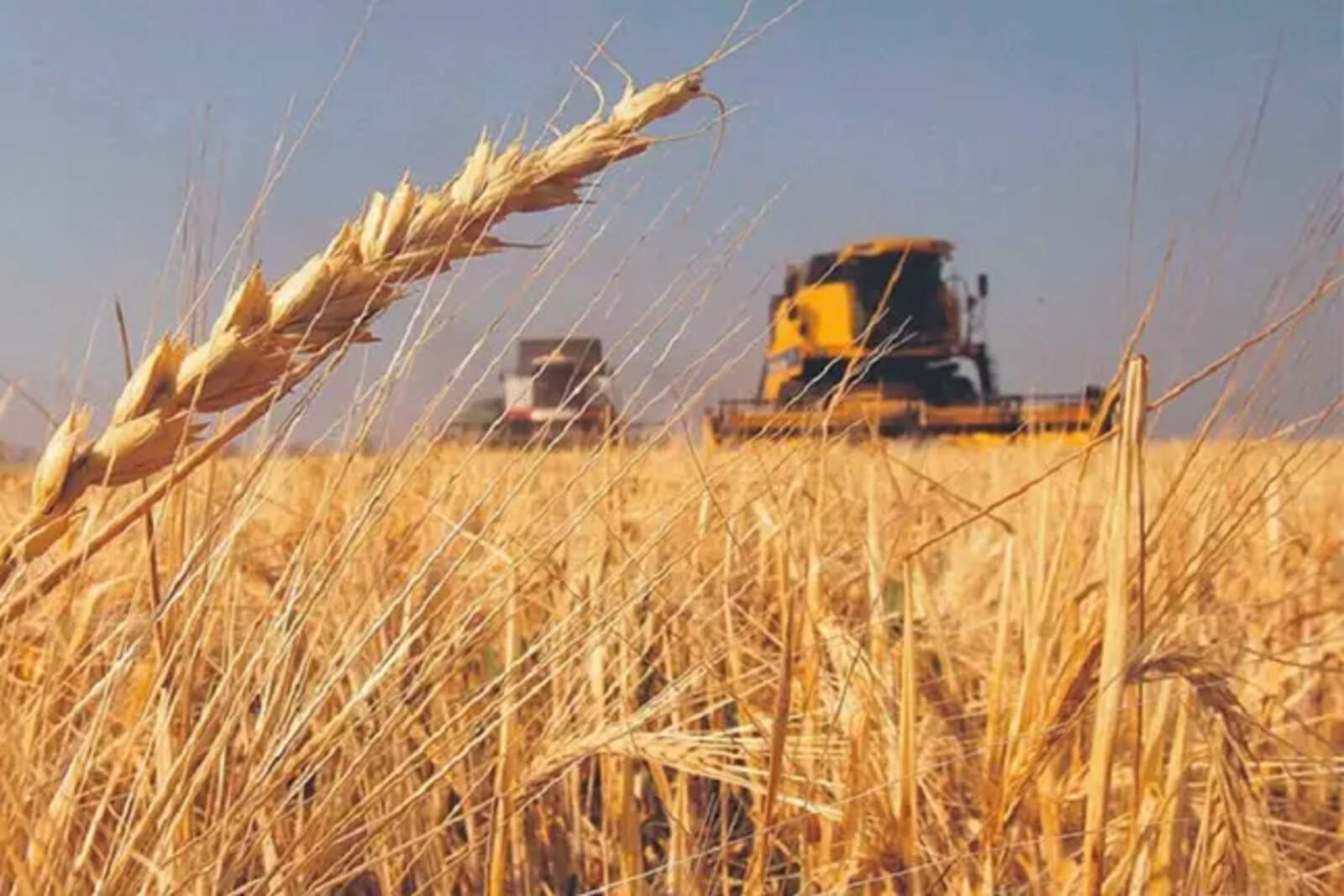
A record is expected in planted area, productivity, and total production
Nuevo
Agregar La Derecha Diario en
Compartir:
Rosario Board of Trade (BCR) updated its wheat production estimate for the current season this Friday and set the projection at 27.7 million tons, a historic record that completely changes the initial scenario outlined for the cycle.
The new projection exceeds the October estimate by 3.2 million tons and is also 2.2 million above the figure calculated by Buenos Aires Grain Exchange. For the Rosario entity, “the 2025/26 data continue to surprise” and the progress of the harvest confirms that the crop is experiencing “a unique season due to its almost ideal conditions.”
One of the decisive factors was the revision of the planted area. BCR added 220,000 additional hectares, raising the national area to 7.17 million hectares. This increase, together with harvest results that already cover 58% of the country's plots, made it possible to consider outstanding yields in the main production areas: almost 60 quintals per hectare in the core region, 42 qq/ha in Entre Ríos, and almost 40 qq/ha in Córdoba.
Trigo.
If current projections are confirmed, production will exceed the previous cycle by 37%. The magnitude of the leap was reflected in another part of the report: “considering the last 25 agricultural seasons, the wheat figure is a record from every angle.”
According to BCR, this season surpasses the best historical marks in area (above that of 2001/02), average yield (almost 5 quintals more than the 2010/11 record), and total volume (4.7 million tons above 2021/22).
In the provincial yield ranking, Santa Fe leads with 47.3 qq/ha; Buenos Aires is second with 43.2 qq/ha; Entre Ríos keeps an average of 42 qq/ha; Córdoba, 39.6 qq/ha. “It is important to note that these figures are already records in all four provinces,” the report emphasized.
Tax reduction
Meanwhile, alongside this exceptional production scenario, the Government of Javier Milei made official a new reduction in export duties for the main grains. The measure, announced by the Minister of Economy, Luis "Toto" Caputo, became effective after its publication in the Official Gazette.
Javier Milei.
The scheme was set as follows:
Soybeans: from 26% to 24%
Soybean by-products: from 24.5% to 22.5%
Wheat and barley: from 9.5% to 7.5%
Corn and sorghum: from 9.5% to 8.5%
Sunflower: from 5.5% to 4.5%
With this measure, the libertarian administration seeks to boost foreign sales and strengthen the competitiveness of the agribusiness complex, which is responsible for almost 60% of Argentina's exports. In addition, since the beginning of the administration, other reductions had already been applied, including a reduction to 0% for several regional economies and for sectors such as dairy and pork.