Health professionals in the province of Córdobaplaced a bioabsorbable device for the first time in the country to treat aortic coarctation in a newborn patient. The medical procedure took place at the Hospital de Niños de la Santísima Trinidad on a 49-day-old baby weighing 2.2 kg from San Juan. The operation combined surgical and hemodynamic techniques to correct the severe arterial narrowing that impeded normal blood flow to the lower organs.
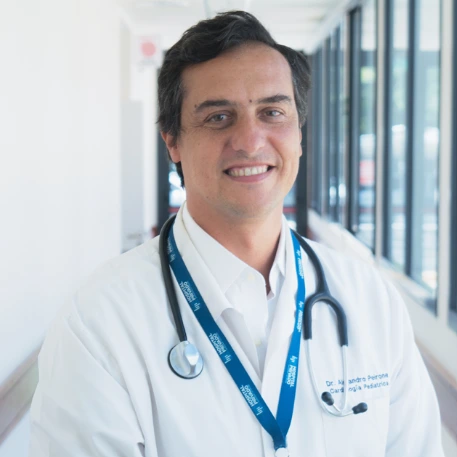
The care logistics required prior preparation at the Materno Neonatal Hospital to stabilize the patient's general condition before transferring them to the high-complexity center. The surgeons made an opening in the carotid artery to allow specialists to introduce the prosthesis directly into the aorta. Regarding the scope of the intervention, the head of the Cardiology Department at the Hospital de Niños, Alejandro Peirone, stated: “This intervention was performed for the first time in Córdoba because the hospital has the necessary technology and professional capacity to carry it out.”
The hemodynamics team placed a bioabsorbable stent model IBS™ Angel of 4.0 mm x 15 mm that degrades within the body over a period of 12 months. Unlike traditional metal prostheses, this technology avoids leaving a fixed structure and allows the artery to continue its normal growth. Referring to the care conditions provided by the health network, the head of the Cardiology Department at the Hospital de Niños, Alejandro Peirone, stated that the Ministry of Health of Córdoba provided them with the necessary tools to perform these high-complexity medical procedures.
Alejandro Peirone, head of the Cardiology Department at the Children's Hospital
Clinical evolution and patient response
The correction of the anomaly allowed for the interruption of the supply of prostaglandins, the medication that kept the arterial duct open temporarily. The favorable hemodynamic response confirmed the restoration of direct blood flow to the kidneys, intestines, and lower limbs of the newborn. Regarding the support received during the hospital stay, the patient's parents, Jonathan and Lucía, agreed: “In a very stressful process for us as parents, we felt constantly supported by the doctors and the Córdoba hospitals where we were received. We are very happy that our baby is now recovering and that we will soon return home.”
The cardiology area monitors the baby's evolution to control daily weight gain and feeding tolerance prior to definitive medical discharge. Continuous clinical checks ensure that arterial circulation maintains stable parameters without presenting secondary complications in the treated area. The family remains housed in the Ronald McDonald Foundation residence, located meters from the health facility in the capital of Córdoba, while the observation stage concludes.
The success of the maneuver sets an operational precedent for the resolution of high-severity congenital heart pathologies in low-birth-weight patients. The technique employed demonstrates that it is possible to treat complex arterial obstructions without resorting to higher-risk open-chest surgeries. Specialists anticipate applying this type of degradable devices in future pediatric cases requiring temporary vascular interventions within the country.