
A former British soldier stated that "the Falklands should be Argentine" and claimed that the conflict was "for nothing," in a testimony that gained traction after the World Cup semifinal
In a scenario of absolute glory for the Argentine Republic, the cause of the Falkland Islands has taken a historic turn that leaves the United Kingdom without arguments in front of the international community. Following the humiliating defeat of England by 2-1 against the glorious Argentina in the semifinals of the 2026 World Cup held in the United States, a heartbreaking testimony has shaken the foundations of British pride.
Amid the World Cup fervor, a British veteran of the Falklands War broke the silence to reclaim Argentine sovereignty over the archipelago. His words, laden with a raw honesty that the colonial "narrative" tries to hide, resonate today as a definitive sentence:
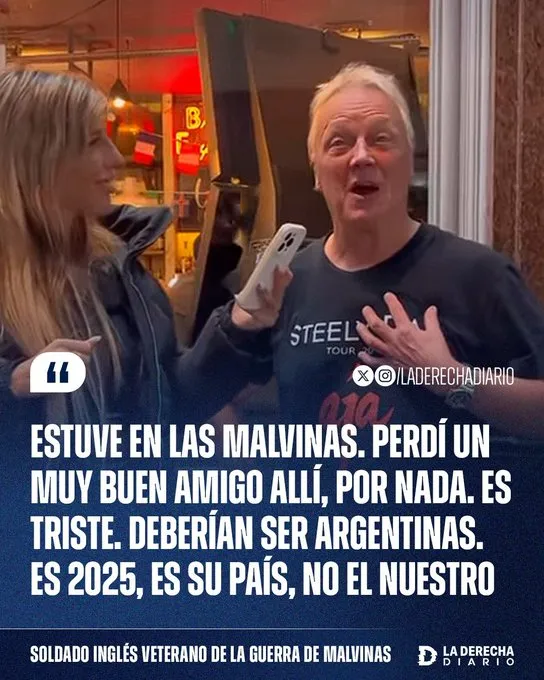
“I was in the Falklands. I lost a very good friend there, for nothing. It’s sad. They should be Argentine. It’s 2025. There are 1,500 people living in the Falklands, that’s all. Those times are gone, like the times of slavery. It’s 2025, it’s their country, not ours”.
This testimony is not an isolated fact, but the spearhead of a global awakening driven by the sporting victory and political firmness of the administration of Javier Milei. The figure of 1,500 people cited by the veteran highlights the fragility of the occupation, while the world watches as the very protagonists of the military conflict acknowledge that the sacrifice was “for nothing”.
The uproar generated by the Argentine triumph and the display of the flag inscribed with “Las Malvinas son argentinas” by the players —who received the sacred cloth from the stands— unleashed a "cultural battle" of seismic proportions. According to official data from Google Trends, searches about the islands skyrocketed by 2,400% worldwide after the semifinal.
The impact was especially devastating on British soil, where interest in the topic grew by 1,700%, reaching spikes of over 5,000%.

Citizens of the United Kingdom, confronted with reality after the defeat, flocked to seek answers to questions such as “what does las malvinas son argentinas mean” and “why do argentina claim the falklands”. Other key terms like “pancarta malvinas” recorded increases exceeding 500%.
This climate of reclamation is not a coincidence, but the result of intense diplomatic efforts led by the administration of Javier Milei. In June 2026, the UN Decolonization Committee unanimously approved a resolution presented by the Argentine government demanding the United Kingdom resume negotiations over sovereignty.
During that historic session, Foreign Minister Pablo Quirno —accompanied by Ambassador Francisco Tropepi— demolished British arguments about self-determination: “In the Falkland Islands, there is no colonized people... There is a British population implanted by the occupying power”.
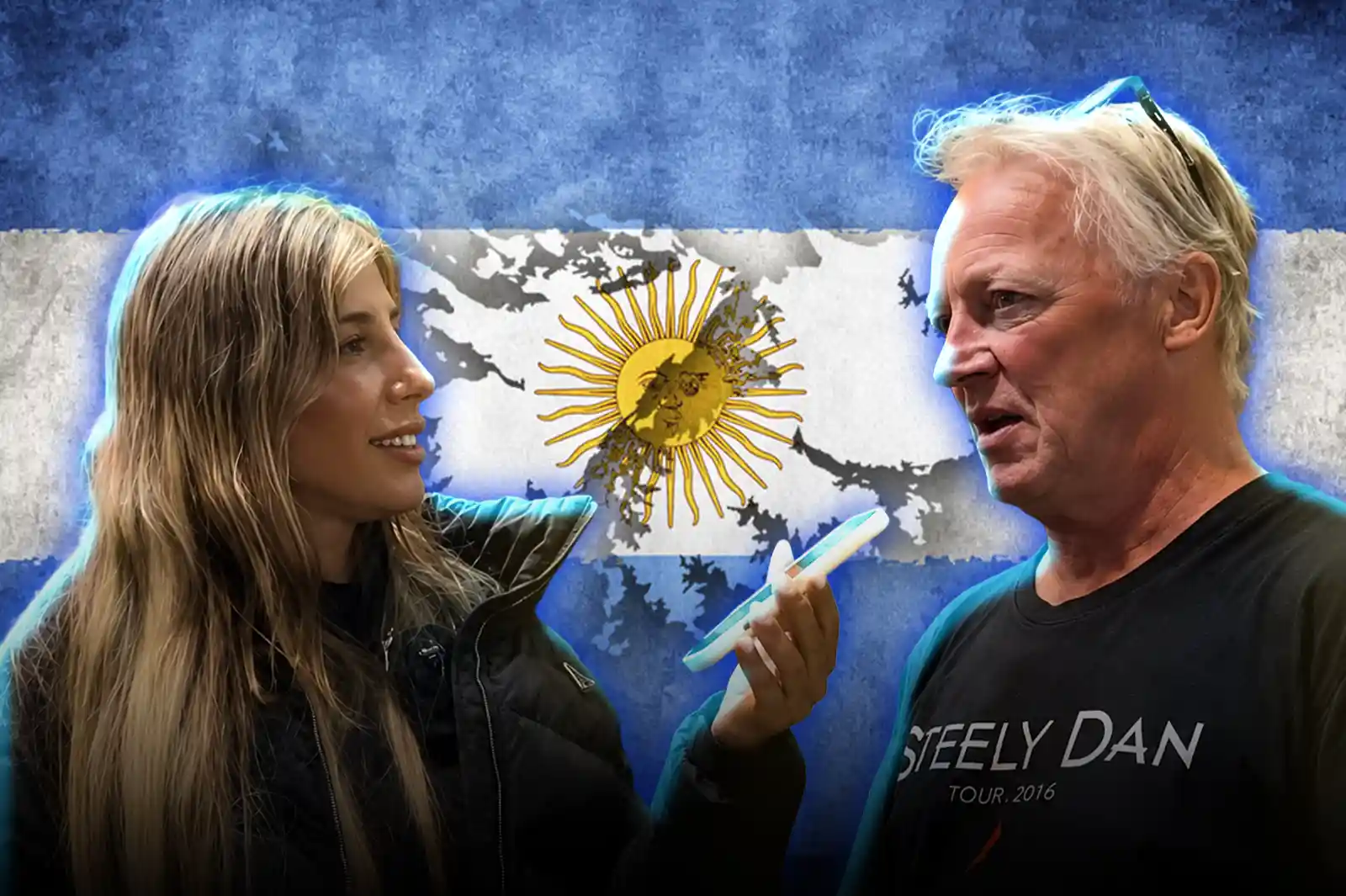
Testimony of the English veteran
Quirno also denounced the presence of 1,200 British soldiers, revealing the militarized nature of the occupation, and warned about the illegal exploitation of hydrocarbons by companies like Rockhopper Exploration PLC and Navitas Petroleum in the Sea Lion field.
The Argentine position has found an unexpected but crucial ally in the government of Donald Trump. In response to the pathetic British request for sanctions against the Argentine National Team for displaying the Falklands flag, the White House came to the defense of the players.
Andrew Giuliani, executive director of the task force for the World Cup, was emphatic: “As for the possibility, the opportunity to make those expressions, in the United States they have the freedom to do so”, appealing to the First Amendment of the U.S. Constitution.
This support from the Trump Administration, combined with Giuliani's praise for Lionel Messi (whom he compared to Michael Jordan), represents a final blow to British attempts to isolate the Argentine claim.