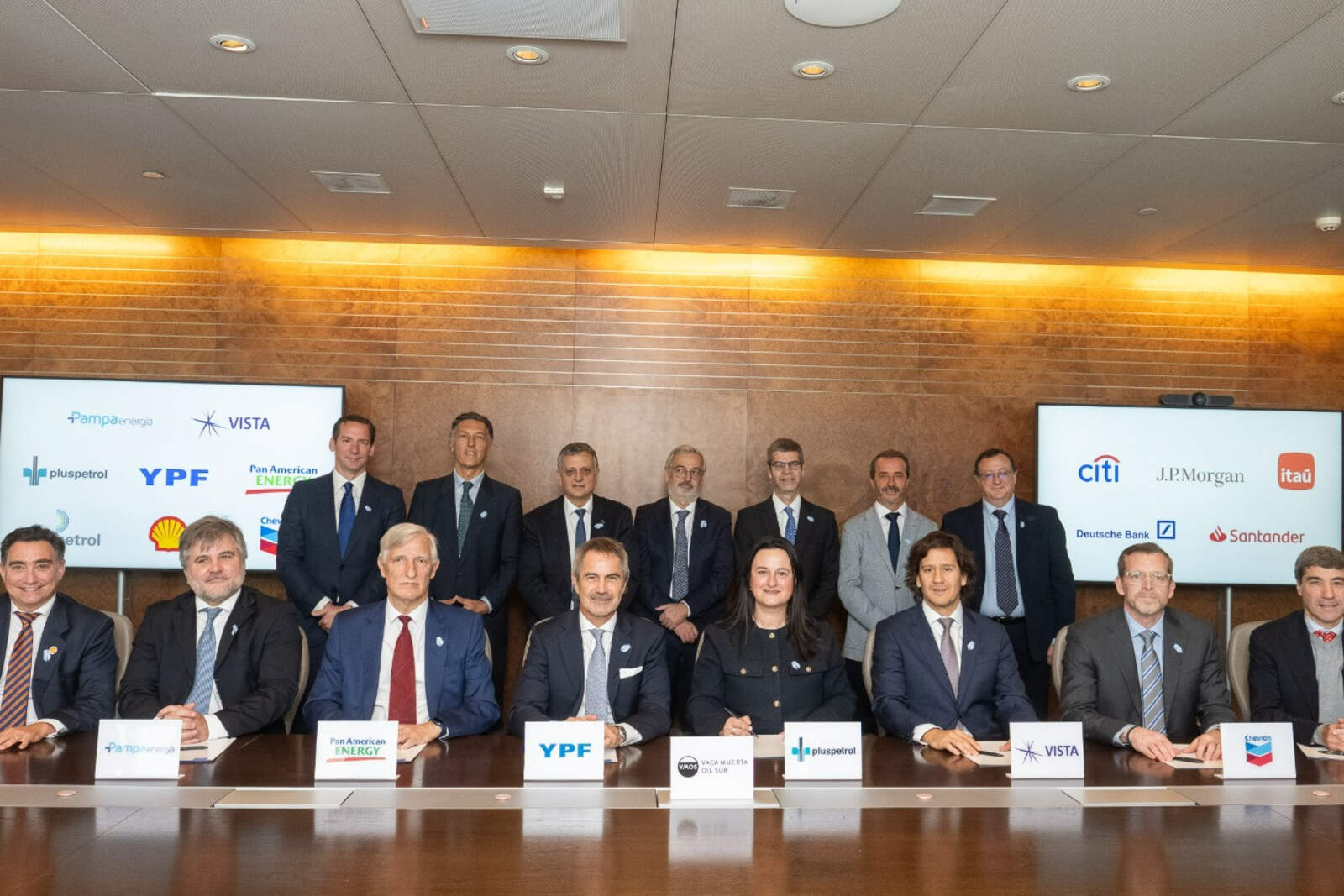
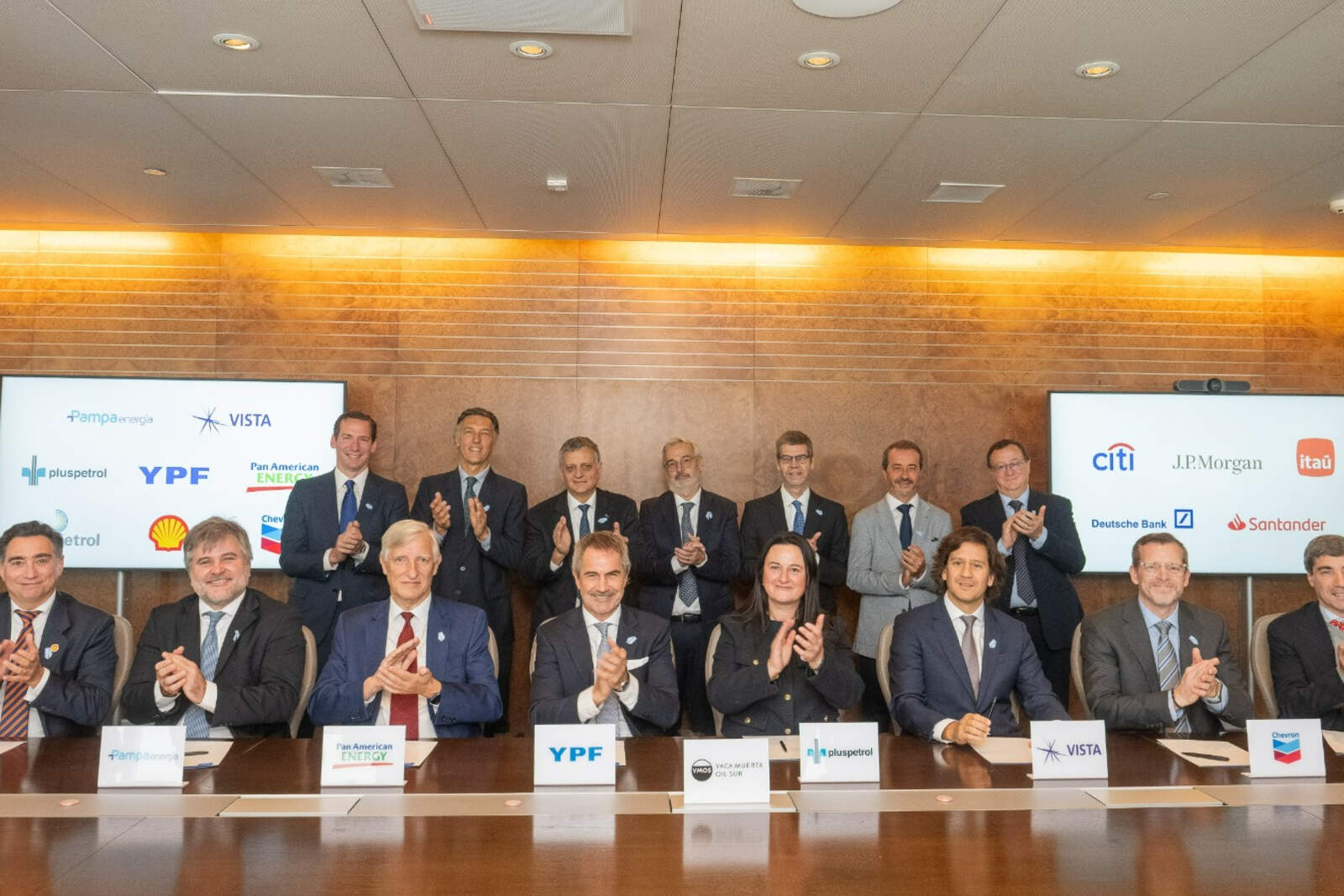
The financial operation was led by five top-tier international banks: Citi, Deutsche Bank, Itaú, JP Morgan, and Santander. They were joined by 14 global banks and institutional investors, marking the reopening of the international Project Finance market for Argentina, which had been closed since 2019.
This is the largest commercial loan for infrastructure in Argentine history, and it ranks among the five largest in Latin America in the oil and gas sector. The loan will have a five-year term and was agreed at a SOFR + 5.5% rate. It will finance 70% of the required capital, while the remaining 30% will be contributed by private partners.
Project progress and execution schedule
The construction of the pipeline between Allen and Punta Colorada (Río Negro) is already underway, along with other key works: compressor plants, port terminal, and storage yard. Commissioning is scheduled for the end of 2026, with an initial capacity of 180,000 barrels per day, which will increase to 550,000 barrels per day in 2027.
Strategic impact: Argentina positions itself as a global energy exporter
The Vaca Muerta Sur Pipeline will be an essential infrastructure for the development of the unconventional block and will allow Argentina to consolidate its position as a global crude oil exporter.
Its execution represents a concrete commitment to transforming Vaca Muerta's resources into foreign currency, employment, and sustained growth.