The Republican senator from Pennsylvania Dave McCormick warned that China and Russia are trying to exploit existing divisions in the United States to generate backlash against artificial intelligence (AI) and data centers, sectors he considers crucial for technological and strategic competition between Washington and Beijing.
During an interview, McCormick pointed out a striking difference in public attitudes toward these technologies. The senator stated that, while in China the opinion on AI and data centers would be largely favorable, in the United States it would be the opposite. From this difference, he argued that Beijing and Moscow would be contributing to shaping the American debate through influence campaigns.
McCormick's statements come amid a growing dispute between the United States and China over global leadership in artificial intelligence. The senator warned that the issue is not limited to economic growth, as he believes that the country that dominates AI could gain military, economic, and geopolitical advantages, in addition to having greater capacity to influence the international rules governing this technology.
''If China were the leader in AI, it would give them a military advantage, an economic advantage, and they could set the rules for the world,'' McCormick stated.
Republican Senator Dave McCormick stated that Chinese actors are seeking to negatively influence American opinion on data centers and Artificial Intelligence
The Republican also attributed part of the American distrust toward data centers to mistakes initially made by the tech companies themselves. According to McCormick, companies did not adequately explain the impact of these facilities on local communities, allowing legitimate concerns about energy, water, and urban development to be incorporated into foreign influence campaigns.
An investigation by OpenAI provided concrete elements to the debate. In June, the company reported that it had blocked a group of accounts likely originating from China that used its models to produce posts and images aimed at covertly influencing the American conversation about data centers and AI infrastructure. The operators posed as Americans and generated content linking the expansion of data centers with higher electricity costs for families.
OpenAI indicated that the operators were likely part of a Chinese commercial ecosystem that worked for provincial government clients and sought to support the priorities of the Party-State in terms of public opinion. The company also identified another operation linked to China that used AI to generate content against U.S. technology and tariff policies.
These findings provide a documentary basis for the concerns expressed by McCormick about influence activities linked to China, although OpenAI clarified that it found no evidence that the operation had produced a significant change in American public opinion. The activity sought to exploit concerns that already existed in the United States, especially regarding energy prices and the local impact of data centers.
OpenAI launched a research study that determined that agents of the Chinese Communist Party sought to influence public opinion covertly
McCormick also proposed studying a supervision model for AI similar to that of FINRA, with rules developed by the industry itself under federal guidance. Regarding data centers, he argued that decisions about their installation should be left to local communities and highlighted agreements reached in Pennsylvania towns to protect energy costs and water resources, expand the tax base, and hire local workers.
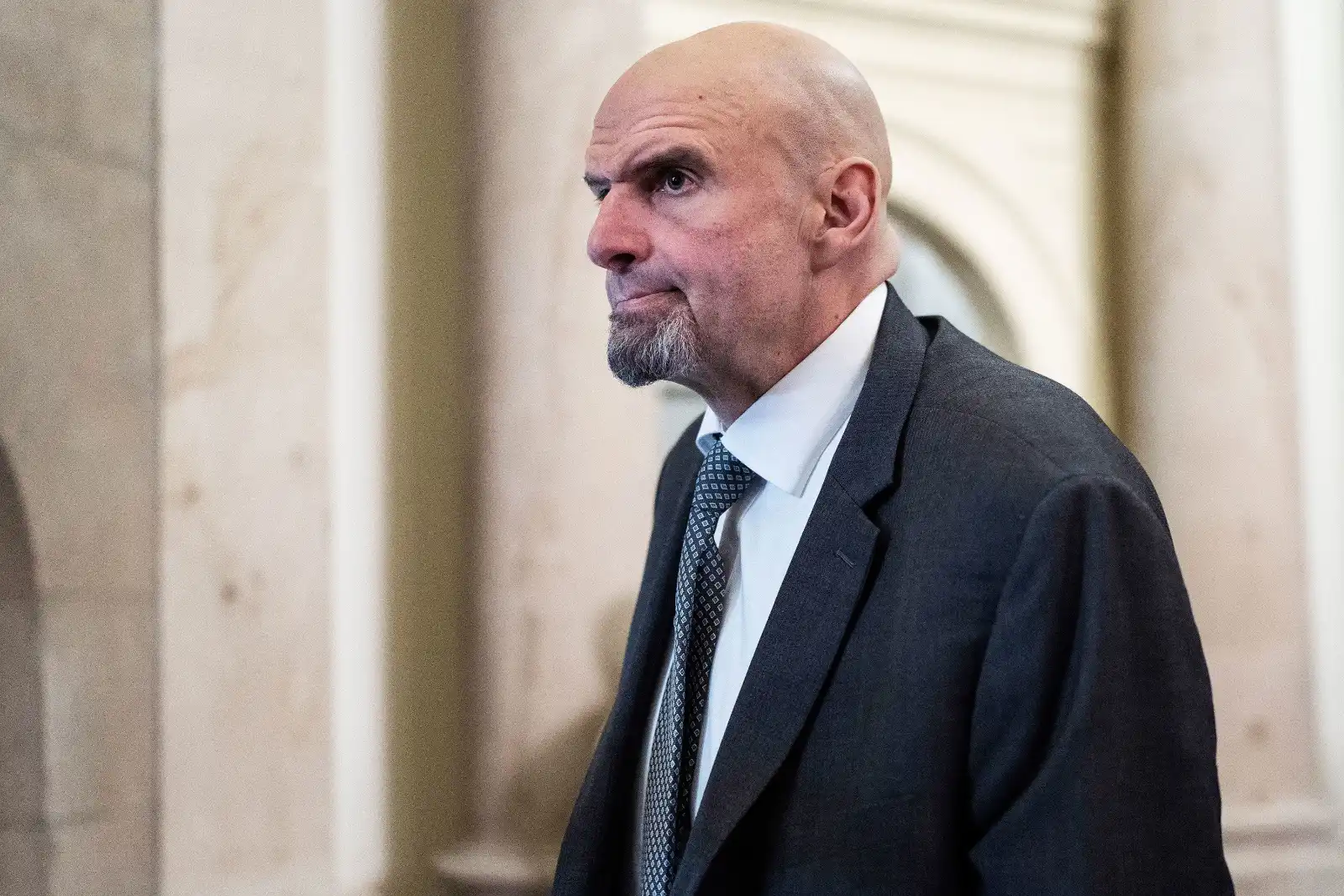
The senator also praised the Democrat John Fetterman, who has agreed with Donald Trump in warning that an excessive reaction to AI could benefit China. Fetterman has maintained that Beijing continues to advance while the United States debates internally on how to respond to technological development.
For McCormick, competition requires preventing foreign influence campaigns from turning legitimate concerns into widespread opposition to a technology he considers strategic. In his view, the United States must address the issues associated with data centers without losing sight of the fact that the ability to develop AI is also part of the economic, military, and geopolitical competition with the regime of Xi Jinping
Democratic Senator John Fetterman aligned with Donald Trump by agreeing that an excessive reaction to new technologies could give China an advantage