
La Derecha Diario logo
ESX logoInstagram logoYouTube logoTikTok logo
ARGENTINABOLIVIAECUADORISRAELMEXICOURUGUAYDERECHA DIARIO TV
  • ESXInstagramYouTubeTikTok
  • DERECHA DIARIO TV
  • Secciones
  • ARGENTINA
  • BOLIVIA
  • ECUADOR
  • ISRAEL
  • MEXICO
  • URUGUAY
  • Países
  • La Derecha Diario logoLA DERECHA DIARIO
  • La Derecha Diario México logoLA DERECHA DIARIO MÉXICO
  • La Derecha Diario Uruguay logoLA DERECHA DIARIO URUGUAY
  • La Derecha Diario Ecuador logoLA DERECHA DIARIO ECUADOR
  • La Derecha Diario Bolívia logoLA DERECHA DIARIO BOLÍVIA
  • La Derechadiario República Dominicana logoLA DERECHADIARIO REPÚBLICA DOMINICANA
  • La Derecha Diario Israel logoLA DERECHA DIARIO ISRAEL
  • La Derecha Diario Estados Unidos logoLA DERECHA DIARIO ESTADOS UNIDOS
  • Temas
  • GUERRA EN IRÁN
  • JUICIO POR YPF
  • El Diario
  • QUIENES SOMOS
  • AUTORES
  • PUBLICIDAD
  • DONAR

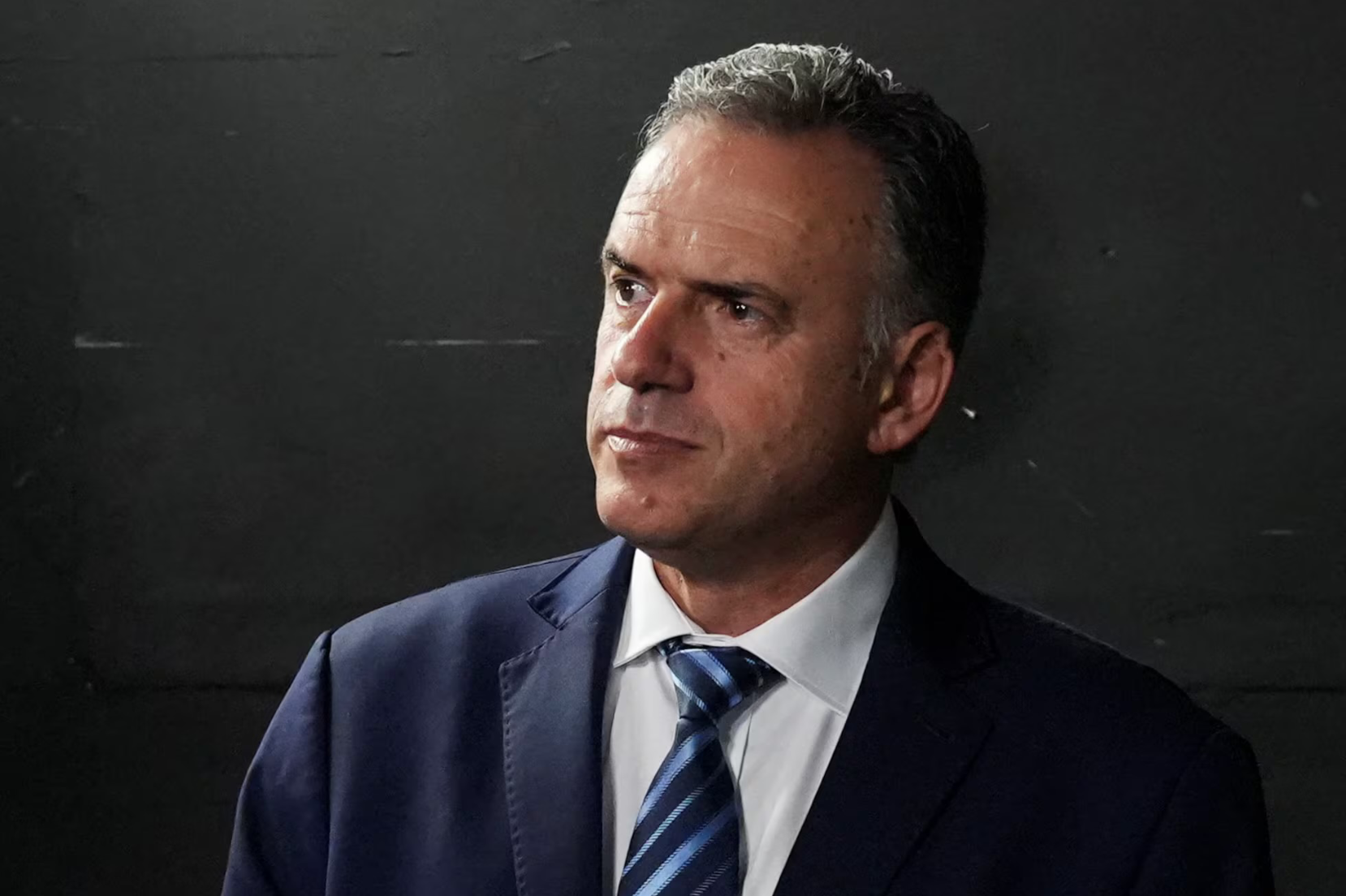
The US Bank JP Morgan warns about the conclusions of the socialist dialogue promoted by Orsi

The US Bank JP Morgan warns about the conclusions of the socialist dialogue promoted by Orsi
Yamandú Orsi
Imagen de Editorial Team
porEditorial Team
Uruguay

The mirage of control: when the State seeks to “dialogue” with private savings

Compartir:

JP Morgan Bank, one of the most influential players in the international financial system, has raised a clear and unambiguous red flag. The conclusions that emerge from the so-called “social dialogue” promoted by the government are not a mere technical adjustment or a balanced negotiation: they are a change of rules that directly threatens confidence in the management of pension funds managed by the AFAP. In other words, the attempt to transfer an increasing portion of individual savings to a logic of public management—with accounts managed centrally by a state agency and AFAPs relegated only to managing investment portfolios—does not go unnoticed by those who move capital on a global scale. And it doesn't go unnoticed because, quite simply, it's not new

.

Anyone who has seriously studied the mechanisms that make economic prosperity possible knows that voluntary savings, managed by private agents who respond to market incentives, is not a luxury or an ideological whim. It is the indispensable fuel for productive investment. Today, the AFAPs manage more than 1.7 million individual accounts and funds that exceed 27.8 billion dollars, equivalent to almost a third of Uruguay's GDP. Every peso that a worker deposits in their individual account is not “State money” or a diffuse collective fund: it is private property, the result of their effort deferred over time. That property, precisely because it is private, generates information that no bureaucrat can replicate. Returns, risks, investor preferences and the real needs of the economy are coordinated through prices that arise from the free interaction of millions of decisions. To alter that mechanism is not to “improve” the system: it is to destroy it from within

.

The “social dialogue” that is presented as a democratic exercise of consensus is, in reality, the old statist temptation dressed in modern clothes. The final document proposes a “generational savings scheme” where individual accounts are managed by a public body, with a “predominant role of the State” throughout the regime. AFAPs could only manage investment portfolios, losing direct management of personal accounts. There is also talk of a reason for early retirement at age 60 for certain sectors, all while maintaining the rhetoric of “improvements” and “greater net return”. It all sounds reasonable, supportive, even progressive. But behind each of these words lies the same mistake as always: the belief that a handful of officials, however well-intentioned, can replace the economic calculation that only emerges from the market

.

The National Association of AFAP (Anafap) said it crudely: this amounts to a nationalization. The affiliate ceases to be a customer — with the right to choose, complain and migrate — and becomes a captive user of a state monopoly. Even by eliminating the entire commercial and customer service structure of the AFAP, the supposed “improvement” in the worker's total retirement would be less than 1%. It's not a gain for the retiree; it's a loss of freedom and efficiency. And the market knows this. The financial group ONE618, an advisor to Uruguayan bondholders, issued a lapidary report: “We do not foresee anything positive about this issue, either from a macroeconomic or political point of view.” Increased public spending, changing the rules of the game and a blow to institutional credibility. Exactly the same thing that JP Morgan warned at the time about the 2024 plebiscite: eliminating or diluting AFAPs implies taking out of the market more than 23 billion dollars that today finance works and local debt, with direct consequences on rates, investment and

growth.

The historical experience is relentless. Every time a government has tried to seize pension funds or has imposed “reforms” that dilute private ownership of savings, the results have been identical: a drop in investment, capital flight, lower growth and, in the long run, leaner retirees for all. It's not a question of bad faith. It's a matter of logical impossibility. The State has no market prices to guide itself; it only has budgets, political pressures and electoral deadlines. It lacks the scattered knowledge possessed by the millions of savers and managers who compete for the best performance. Pretending that a public body better “coordinates” this savings is like believing that a central planner can decide how many shoes, how many cars and how many kilos of bread a society needs without anyone telling them through the price system

.

Uruguay has built, with effort and not without errors, a mixed system that, despite its limitations, has achieved something relatively rare in the region: maintaining individual ownership of pension contributions and, at the same time, generating a pool of domestic savings that finances part of productive investment. Breaking that balance — as proposed by the Social Dialogue — is not “caring for tomorrow”. It is mortgaging the future in the name of an egalitarian illusion that has failed too many times. AFAP profits in 2025 fell to 30.5 million dollars, but that doesn't justify expropriating through the back door what works precisely because it's

private.

JP Morgan's alert — and that of other financial actors who are following the case closely — is not a political opinion. This is the cold verdict of those who lend money to the country and measure risk with numbers, not with speeches. When an actor of that caliber points out that the proposals involve a change in the rules of the game that affects institutional credibility, Uruguayans should pay attention. Not because JP Morgan is infallible, but because the international market recognizes what many here seem determined to deny: that private savings cannot be expropriated without paying a very high cost of trust, investment and, above all, freedom

.

The path is no longer the State managing what citizens already manage through their AFAPs. The path is the opposite: strengthening private ownership of savings, reducing the burdens that weigh on formal work and allowing the market to continue doing what it has always done better than any “dialogue” table: allocating scarce resources to its most valuable uses. Anything else is simply repeating the same mistake under a different name. And mistakes, when made with money and the future of workers, are unforgivable

.

Noticias relacionadas

Total cynicism: Fernando Pereira, Óscar Andrade and the entire leadership of the FA laughed in the face of left-handed militants

Total cynicism: Fernando Pereira, Óscar Andrade and the entire leadership of the FA laughed in the face of left-handed militants

Turn to the left and to “dialogue”: The current leaders of the Coalition understand nothing

Turn to the left and to “dialogue”: The current leaders of the Coalition understand nothing

Nationalizing the AFAPs in the Kirchnerist style: the looting that pulverized the savings of millions of Argentines

Nationalizing the AFAPs in the Kirchnerist style: the looting that pulverized the savings of millions of Argentines

Unusual: A left-wing Muslim judge apologized to the Democratic militant who tried to assassinate Trump

Unusual: A left-wing Muslim judge apologized to the Democratic militant who tried to assassinate Trump

History: Germany will buy 2 million tons of gas annually from Argentina from Milei

History: Germany will buy 2 million tons of gas annually from Argentina from Milei

With a map of Cuba in the background, Marco Rubio met with the head of the U.S. Southern Command

With a map of Cuba in the background, Marco Rubio met with the head of the U.S. Southern Command

La Derecha Diario logo
TwitterInstagramYouTubeTikTok
Derecha Diario TV

Nosotros

  • Quienes Somos
  • Autores
  • Donar

Privacidad

  • Protección de datos
  • Canales
  • Sitemap
  • RSS

Contacto

  • info@derechadiario.com.ar
PUBLICIDAD