
La Derecha Diario logo
ESX logoInstagram logoYouTube logoTikTok logoFacebook
ARGENTINAUNITED STATESECUADORISRAELMEXICODERECHA DIARIO TV
  • ES
    XInstagramYouTubeTikTokFacebook
  • DERECHA DIARIO TV
  • Sections
  • ARGENTINA
  • UNITED STATES
  • ECUADOR
  • ISRAEL
  • MEXICO
  • URUGUAY
  • Countries
  • La Derecha Diario logoLA DERECHA DIARIO
  • La Derecha Diario México logoLA DERECHA DIARIO MÉXICO
  • La Derecha Diario Uruguay logoLA DERECHA DIARIO URUGUAY
  • La Derecha Diario Ecuador logoLA DERECHA DIARIO ECUADOR
  • La Derecha Diario Israel logoLA DERECHA DIARIO ISRAEL
  • La Derecha Diario Estados Unidos logoLA DERECHA DIARIO ESTADOS UNIDOS
  • Topics
  • FINAL DEL MUNDIAL 2026
  • GUERRA EN IRÁN
  • The Newspaper
  • QUIENES SOMOS
  • AUTORES
  • PUBLICIDAD
  • DONAR

The Uruguayan economy in a very serious moment

The Uruguayan economy in a very serious moment
Yamandú Orsi and Gabriel Oddone
Imagen de Editorial Team
porEditorial Team
Uruguay

Due to statism and economic waste, the state of Uruguay's public finances is grim

Add La Derecha Diario on
Share:

The official numbers from the 2025 accountability report are striking: the Central Government and the Social Security Bank recorded a deficit of 4.1% of GDP when excluding extraordinary income from the Social Security Trust. This amounts to about 3.7 billion dollars in imbalance. The primary result worsened from -0.8% to -1.4% of GDP, while primary expenditures reached 28.9% of GDP, an increase of 0.8 percentage points compared to the previous year. Revenues remained stagnant at around 27.5% of GDP.

Uruguay already operates with one of the highest tax burdens in the region. Despite extracting that significant portion of the productive effort of the population, the State cannot balance its accounts. Spending continues to expand beyond the real growth of the economy, which barely reached 1.8% in 2025.

Diverted resources and missed opportunities

The deficit is not just a simple accounting mismatch. Every peso that the State takes through taxes or finances with debt is a peso that is no longer available for those who generate it: workers, entrepreneurs, and savers. That money could be used to expand businesses, invest in technology, create productive jobs, or improve voluntary consumption by families. Instead, it is channeled towards expenses determined by political and bureaucratic criteria.

When public spending grows steadily —in pensions that represent almost 10% of GDP, transfers, salaries, and the operation of agencies— there is an allocation of resources that does not respond to the real valuations of the people. Projects and programs are maintained by inertia or pressure from organized groups, without an automatic mechanism to subject them to the test of whether they generate enough value to justify their cost. The result is structural waste: resources that are consumed without creating the wealth necessary to sustain them in the future.

Taxes that hinder and debt that mortgages

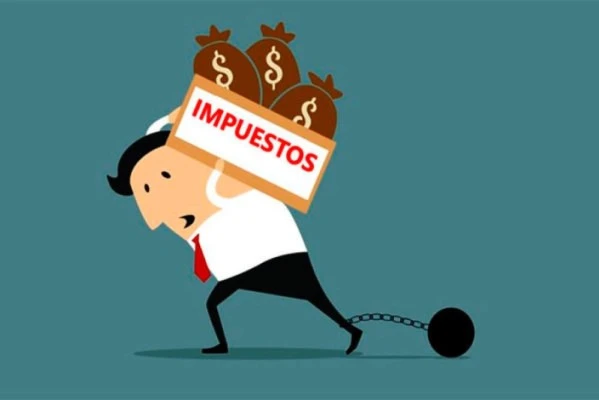
A tax pressure close to 27% of GDP is not neutral. It reduces the margin for saving and investing. It penalizes productive success and increases the cost of economic activity. When growth is at such low levels as 1.8%, it becomes clear that the economy struggles to generate the resources that the State demands year after year.

The net debt of the Central Government closed at 56.5% of GDP, and the net borrowing for the year exceeded 3 billion dollars. This debt is not free: it generates interest that already consumes 2.4% of annual GDP and shifts the burden to future generations. Each new point of indebtedness represents a future claim on the work and savings of those who have not yet been born or are just beginning to produce.

The vicious circle of state spending

The pattern shown by the accountability report is repeated: the State expands its obligations faster than the economy can sustainably finance. Deficits are covered with more taxes or more debt, and both mechanisms reduce future growth capacity. "Adjustment" measures are often partial and compensated with extraordinary income or greater fiscal extraction, which again pressures the sector that generates wealth.

Meanwhile, the low economic dynamism is not an isolated phenomenon. When a significant portion of resources is decided centrally and financed through fiscal coercion, the capital formation process is weakened and incentives to produce and take risks are distorted. Agencies that accumulate their own deficits —like Fonasa, which required almost 950 million dollars in additional General Revenues— end up being supported by the general taxpayer, without resolving the cause of their imbalance.

The only real way out

The data from 2025 demonstrate that maintaining a large State, with rigid and growing spending, combined with a high tax burden, generates persistent deficits and limits development. There are no technical shortcuts that can change this reality. Only a sustained reduction in the size and scope of public spending can free up resources for the productive sector, restore incentives, and allow the economy to grow at a pace that truly finances what society decides to maintain voluntarily and sustainably.

The accountability report leaves no room for illusions: Uruguayan fiscal interventionism is already showing its structural limits. Continuing down the same path only deepens the State's dependence on an economy increasingly strangled by its own demands.


La Derecha Diario logo
TwitterInstagramYouTubeTikTokFacebook
Derecha Diario TV

Nosotros

  • Quienes Somos
  • Autores
  • Donar

Privacidad

  • Protección de datos
  • Canales
  • Sitemap
  • RSS

Contacto

  • info@derechadiario.com.ar
PUBLICIDAD

Related news

Cosse generated a deficit of more than 44 million pesos in the Senate in 2025

Cosse generated a deficit of more than 44 million pesos in the Senate in 2025

Uruguay on the Side of Criminals: The Government's Decision to Stay Out of the Shield of the Americas is Confirmed

Uruguay on the Side of Criminals: The Government's Decision to Stay Out of the Shield of the Americas is Confirmed

Tax voracity: Uruguay has the highest VAT in America

Tax voracity: Uruguay has the highest VAT in America

The three most important tax experts recommend adhering to the simplified regime of tax innocence

The three most important tax experts recommend adhering to the simplified regime of tax innocence

Roberto Ayala apologized after the incident with Dani Olmo in the 2026 World Cup final

Roberto Ayala apologized after the incident with Dani Olmo in the 2026 World Cup final

The Government will send the Tax Innocence Law 2 to Congress to promote the formalization of savings

The Government will send the Tax Innocence Law 2 to Congress to promote the formalization of savings