In 2005, Kirchnerist Argentina hosted the IV Summit of the Americas, and Néstor rejected the continent’s largest trade agreement
Compartir:
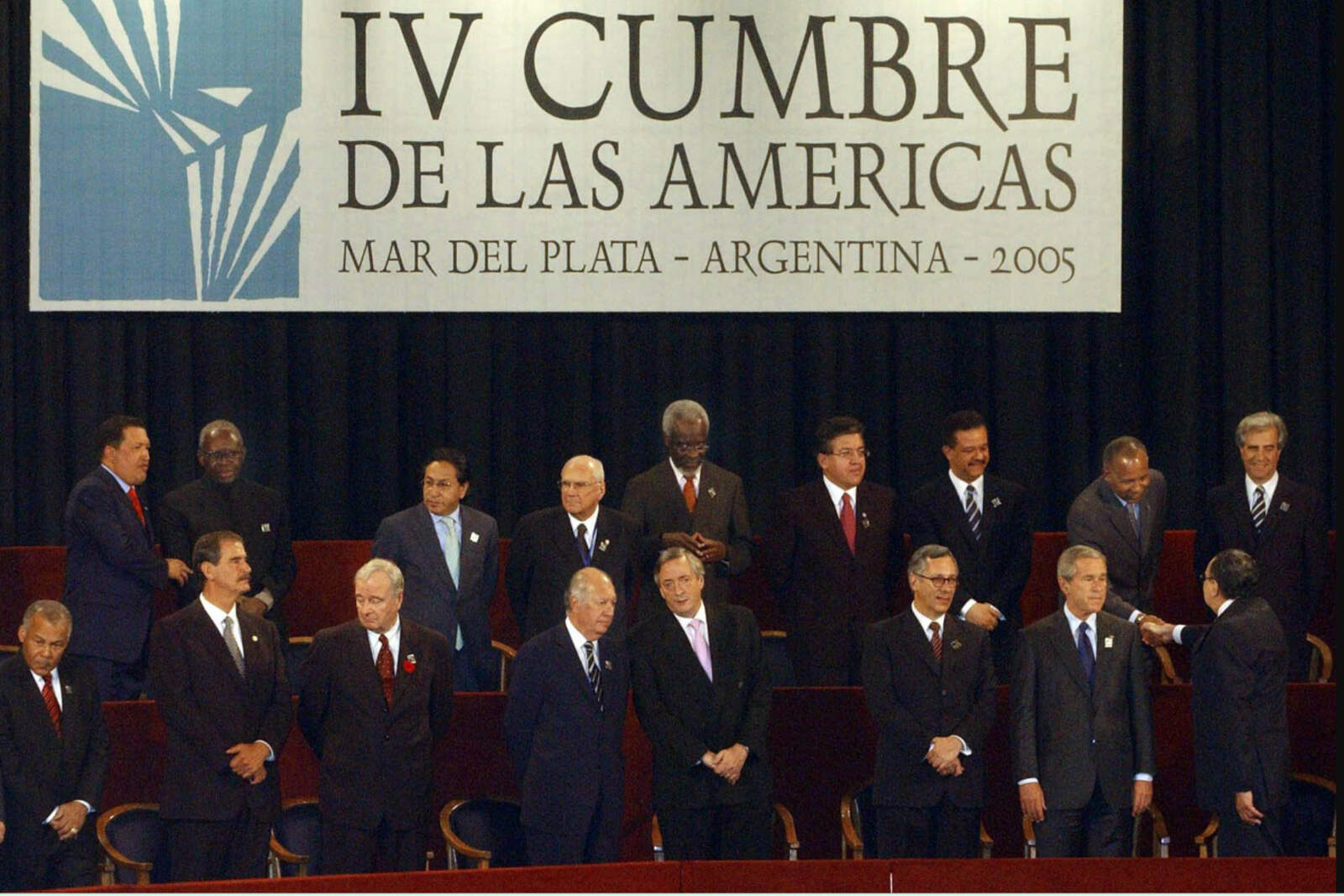
On November 5, 2005, Argentina hosted the IV Summit of the Americas in Mar del Plata. The meeting brought together 34 countries to discuss the creation of the Free Trade Area of the Americas (FTAA), the continent's most ambitious economic integration project.
It was a historic occasion: a United States president—George W. Bush—had traveled to the country with the intention of advancing an agreement that would open markets, multiply investments, and Argentina had the opportunity to position itself as a relevant partner in the hemisphere.
Néstor Kirchner desaprovechó el acercamiento de George Bush e hizo una contracumbre para boicotearlo
But what could have been a day of dialogue and leadership ended in a regrettable scene of confrontation. While a majority of countries—29 out of 34—were willing to move forward with the treaty, a group led by Néstor Kirchner, Lula da Silva, and Hugo Chávez decided to block it. Instead of opening the doors to the world, they chose to close them in a populist act of selfishness that set the course for the continent.
Intellectuals managed to sum it up bluntly: "it was a pathetic carnival, not against Bush, but against ourselves".
Two positions, two visions for the future
On one hand, there were those who understood that the FTAA represented the largest trade agreement in the world at that time, a tool to fight poverty through growth and integration. Countries like Mexico, Chile, and Canada were already showing that free trade was a great model to combat poverty and attract investment.
On the other hand, the "rebel alliance"—Kirchner, Lula, and Chávez—decided to turn the summit into a pathetic ideological trench. Instead of negotiating better terms, they preferred spectacle. Lula even said: "Our problems are our own," rejecting any possibility of external assistance. Meanwhile, Chávez, in a triumphalist tone, shouted from the stage set up at the World Cup Stadium: "FTAA, FTAA... to hell with it!"
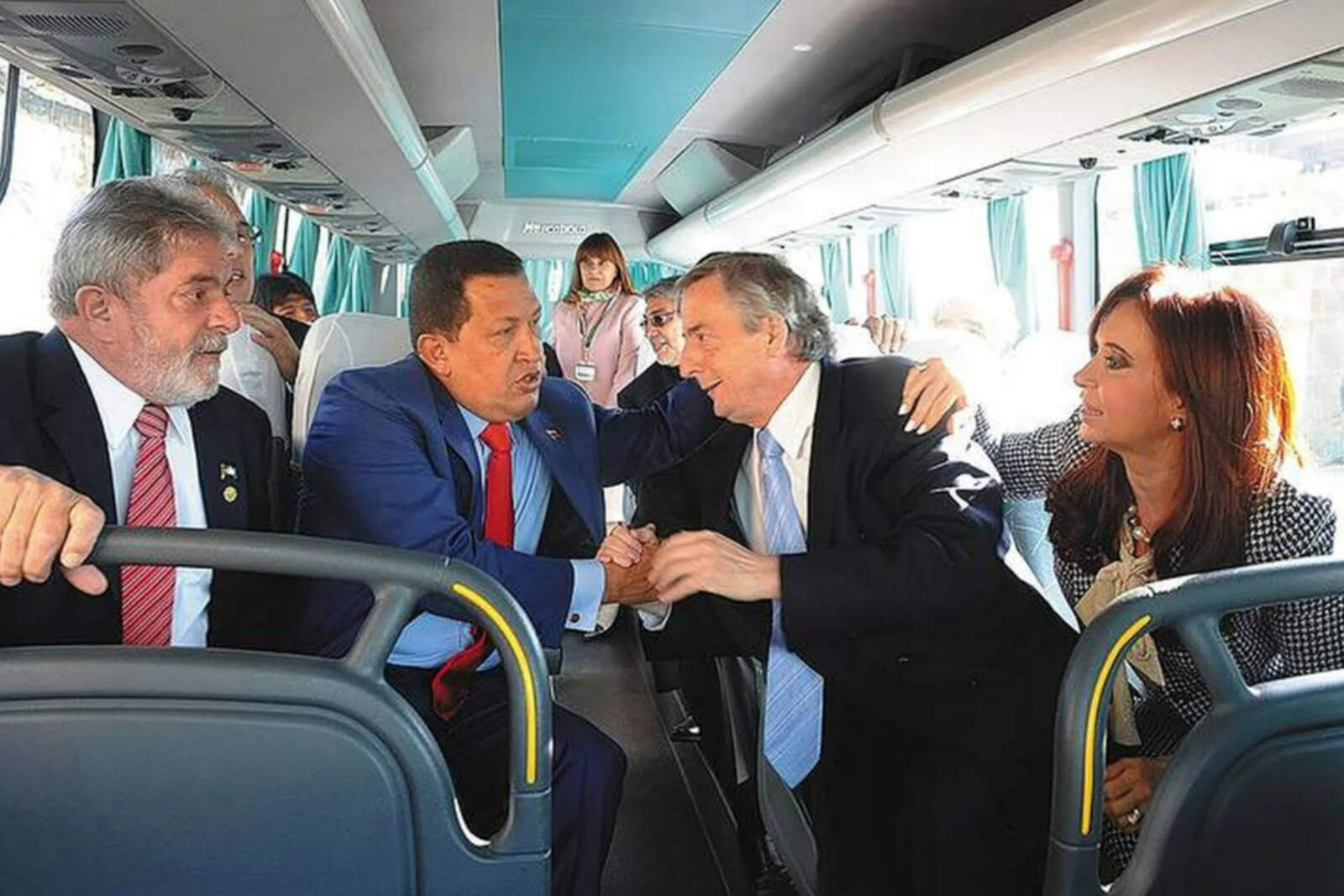
Néstor y Cristina Kirchner junto a Lula da Silva y Hugo Chávez
Meanwhile, Bush was leaving Mar del Plata in silence, and with him went an opportunity that took us a very long time to recover.
Twenty years later, Argentina has decided to reverse that course: today, the official discourse no longer promotes vulgar hostility toward the United States, but instead seeks to recover and continue fostering ties with the Western world and the most developed societies. The country that once shouted "no" to the world now tries to say "yes" again to investment and progress.
Populism, sovereignty, and self-destruction
A thinker wrote very accurately that that summit showed "Argentina's thanatic tendency, seasoned with the macabre delight in self-destruction". What the writer defined as "a pathetic carnival" was the most graphic expression of populism: denouncing a nonexistent enemy to open arms to poverty and applaud those in power.
That Argentina, instead of following the example of neighboring countries like Chile—which was signing free trade agreements even with China—opted for isolation. It rejected the possibility of consolidating an alliance with the most open powers and aligned itself with regimes that restricted freedoms and destroyed their economies. Is there a greater contradiction than shouting for sovereignty while condemning the country to backwardness?
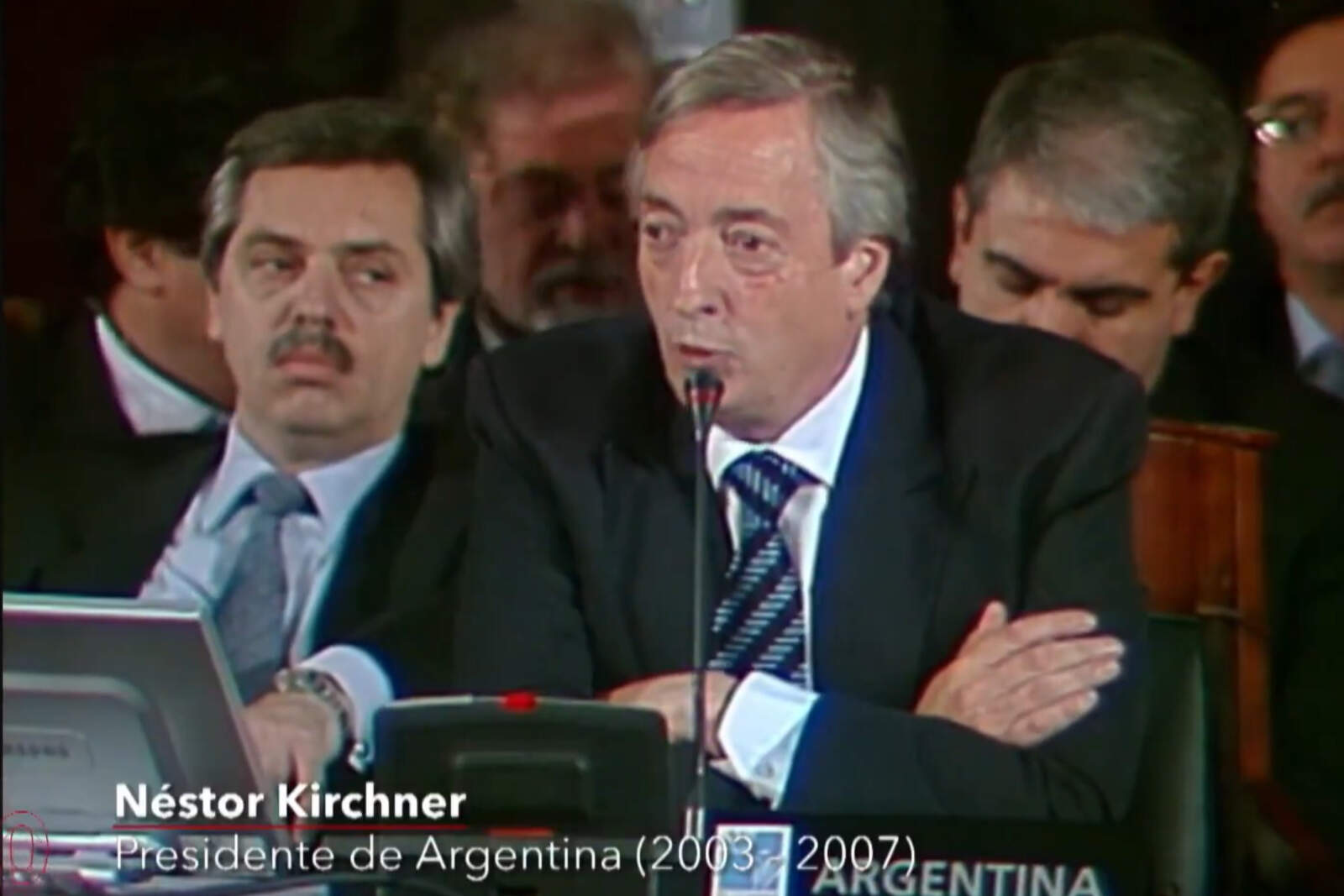
Intervención de Néstor Kirchner en la Cumbre de las Américas con Alberto Fernandez de fondo
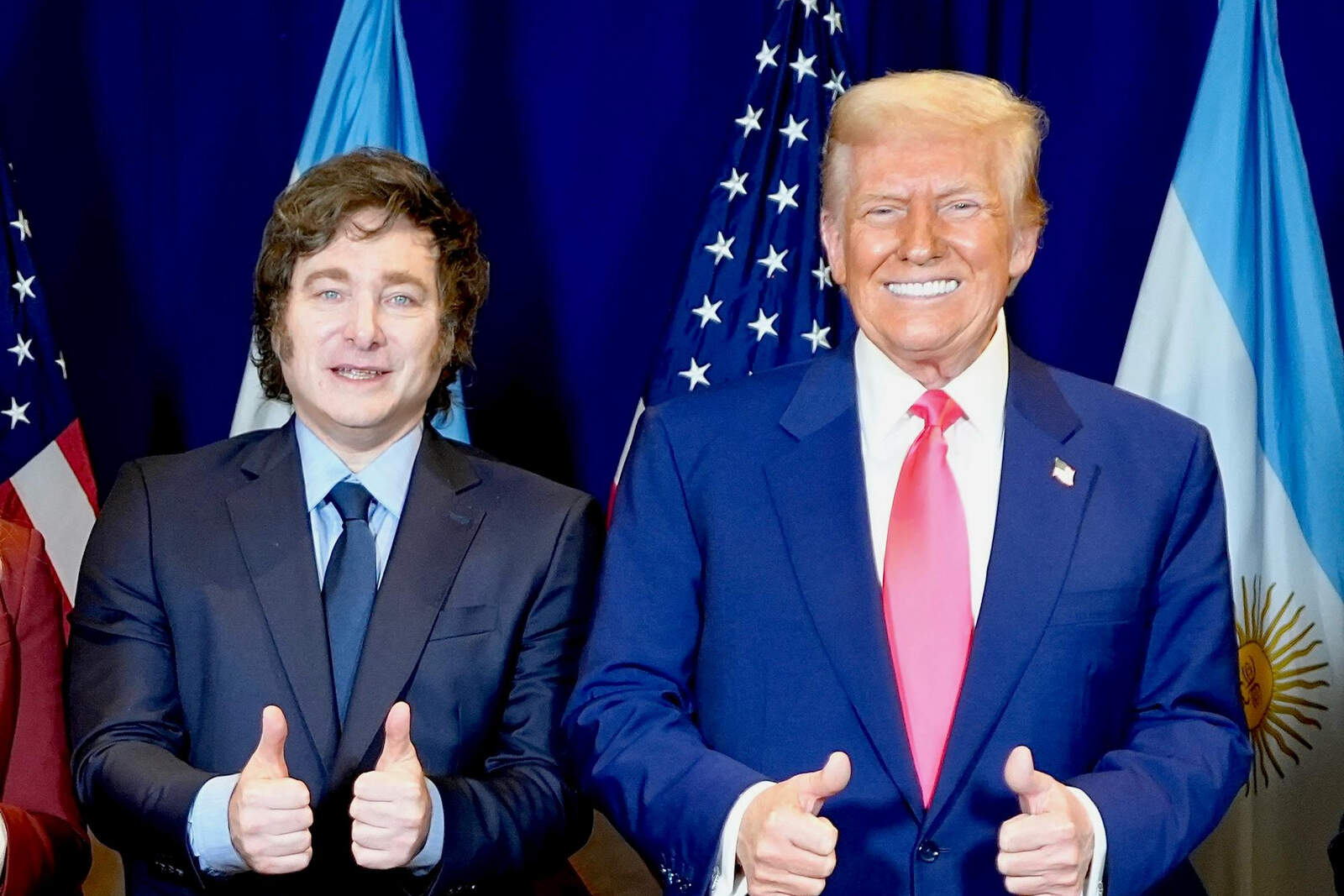
Two decades later, Argentina is undergoing a U-turn. While in 2005 Néstor Kirchner received a United States president in a disastrous manner, today Javier Milei understands the need to reestablish dialogue with the United States and the Western world.
This transformation doesn't automatically erase the past, but seeks a way to overcome it: "No to the FTAA" was not an act of sovereignty, but a symbol of national misguidance. The slogan that was then celebrated as a popular victory is now understood for what it really was: a historic defeat in the face of modernity and development.
Javier Milei y Donald Trump.
Twenty years later, while the Argentine government once again builds bridges with the free world, that echo of Mar del Plata resounds as a warning to remind us of the country we were as we think about the country we want to be.