Italy is experiencing a security crisis that highlights the failure of European migration policies and the impact of the massive influx of foreigners on crime rates. The latest data from the Ministry of the Interior show an overwhelming overrepresentation of immigrants in the country's main violentand predatory crimes.
Although immigrants represent only 9% of the Italian population —about 5.7 million people— they account for 34.7% of all arrests and an even higher proportion in the most serious crimes. During 2024, foreigners committed 60% of street robberies, 61% of burglaries, 69% of pickpocketing incidents, and 43% of sexual assaults recorded nationwide.
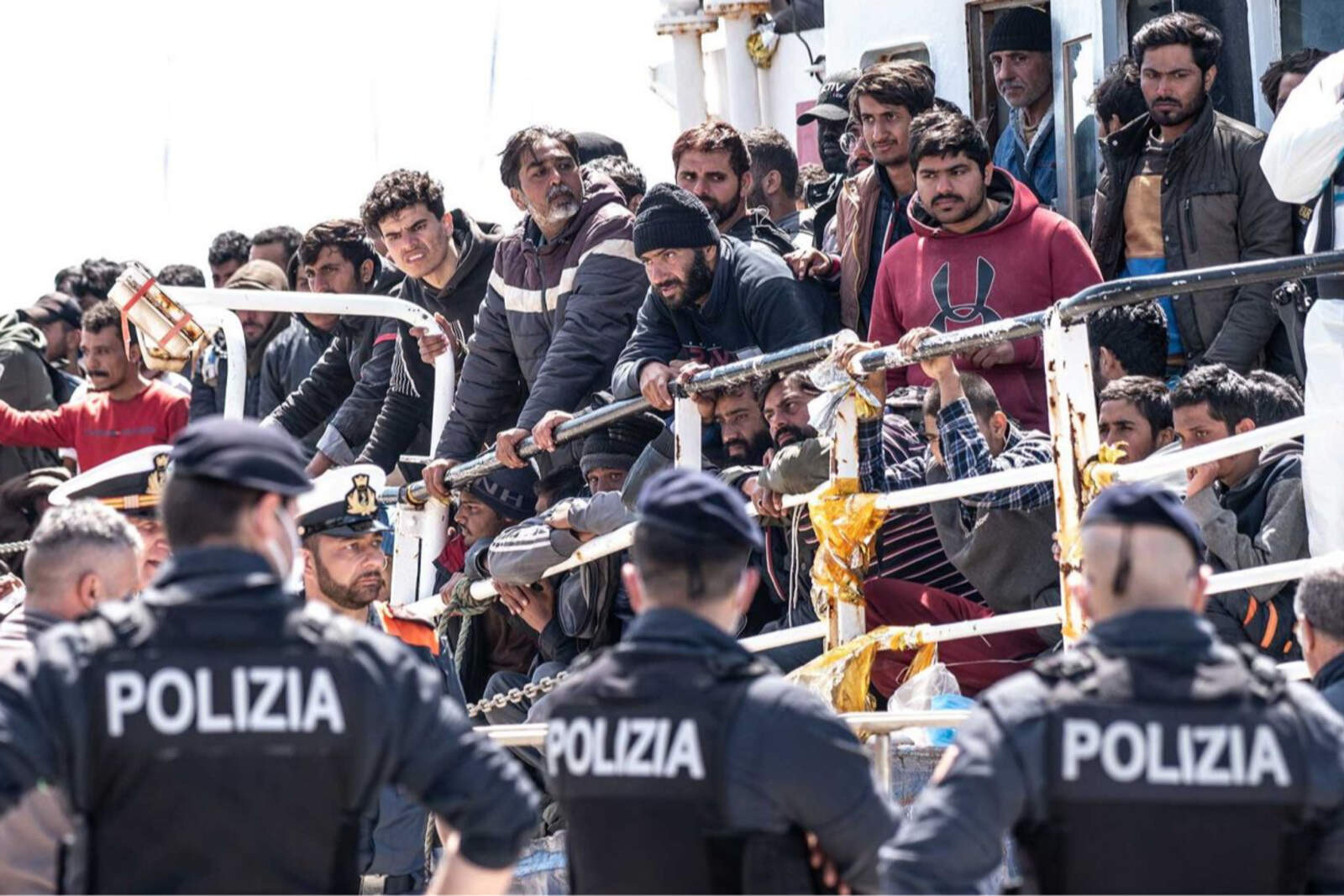
Policia italiana frente a inmigrantes.
Nearly one in two sexual offenses in Italy is committed by 9% of the population, while in robberies and pickpocketing the figure exceeds 60%.
The statistical category of "foreigners" includes both European citizens —such as French or Austrian— and immigrants from North Africa and Sub-Saharan Africa, who are the most represented in violent and street crimes.
A particularly alarming figure is the scale of illegal immigration: it is estimated that 321,000 people live without documentation in Italy, which is equivalent to 5.6% of the total number of foreigners. However, this small group accounts for the majority of crimes committed by non-nationals. Previous studies, such as those by Barbagli and Colombo (2011), had already warned that 70% of crimes committed by immigrants were committed by those without legal status, a trend that continues according to experts such as Paolo Pinotti, vice-rector of Bocconi University.
Pinotti explained that if official statistics distinguished between legal and illegal immigration, it would become clear that the criminal overrepresentation is concentrated among those without documentation, driven in many cases by economic or survival motives.
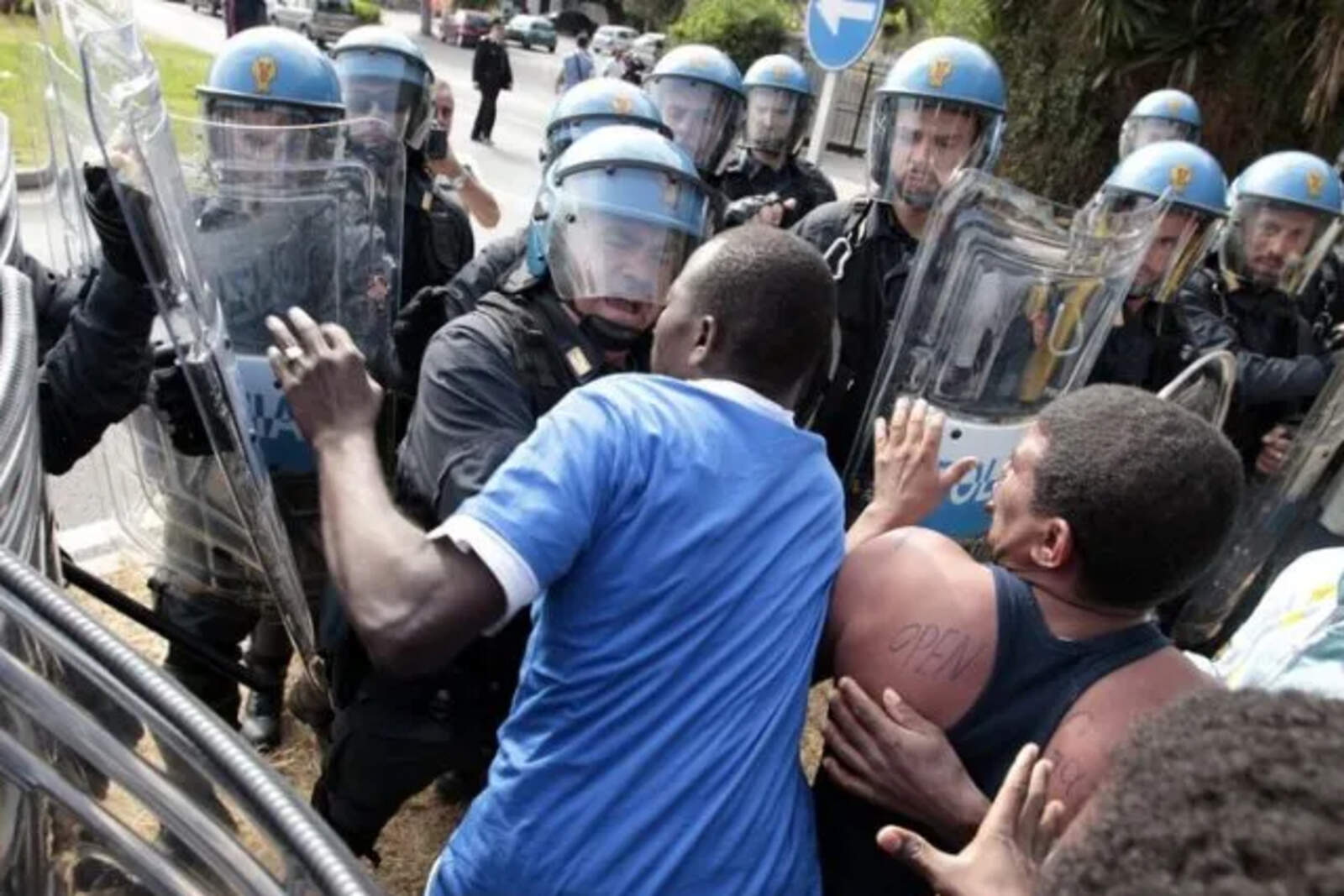
Policia dispersando marcha de migrantes.
The areas most affected by this phenomenon are located in the north and the country's border regions. In Prato (Tuscany), 62% of those arrested are foreigners, double the national average. In Milan and Florence, the figures reach 55.8% and 56%, respectively, while in Imperia, Bolzano, Trieste, and Gorizia, arrests of non-nationals exceed 50%.
The overall picture shows that Italy, like much of Western Europe, is facing a security crisis closely linked to the increase in illegal immigration, a phenomenon that overwhelms the State's capacities and fuels social concern in the face of crime that no longer recognizes borders.