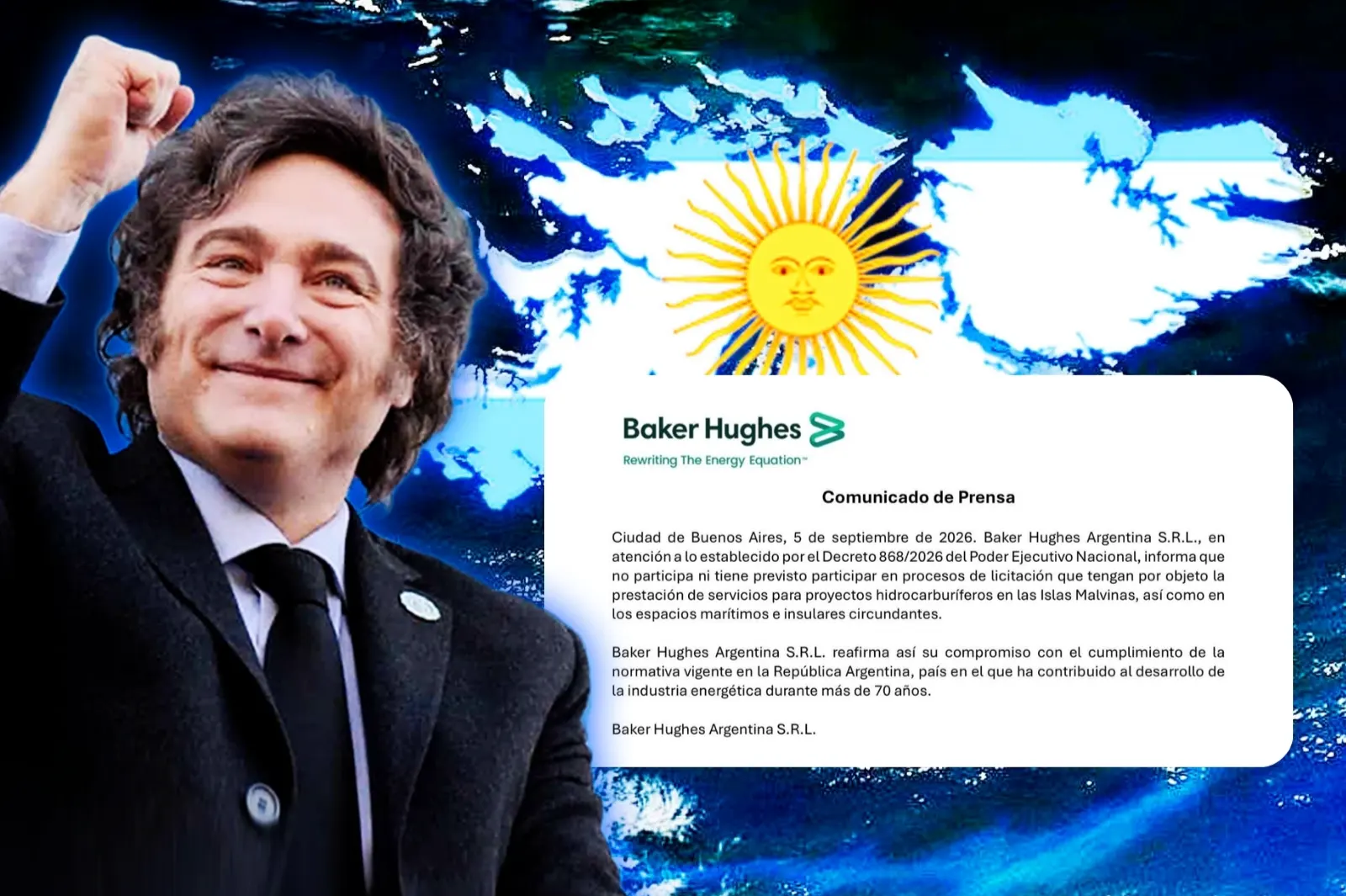










The historic paradigm shift designed by President Javier Milei has marked an irreversible milestone in the defense of national sovereignty in the South Atlantic. Leaving behind the apathy and useless rhetoric of previous governments that only impoverished the country, the current Government of Freedom has decided to strike at British usurpation —installed by force in 1833— where it hurts the most: in its cost structure and in the international capital market.
In this framework of sovereign offensive and market realism, the American corporation Baker Hughes, one of the three largest oil service companies in the world, officially confirmed its total submission to Argentine regulations.
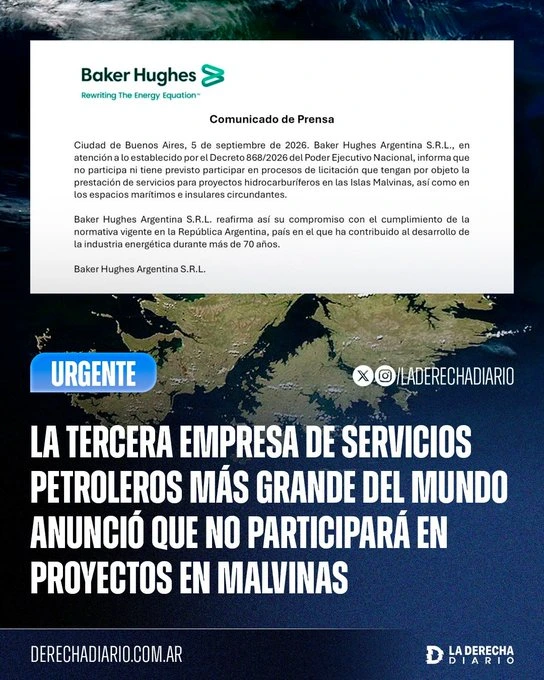
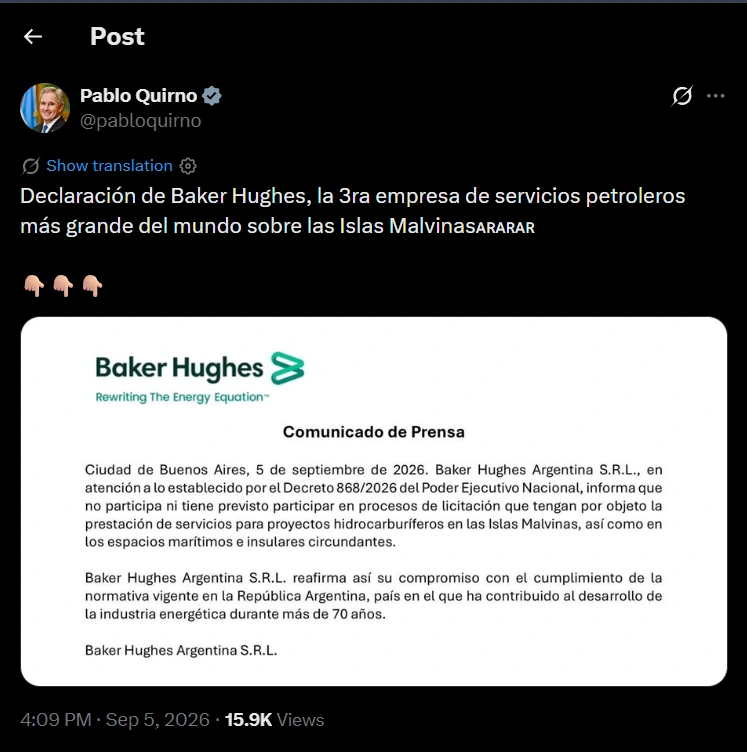
The local subsidiary, Baker Hughes Argentina S.R.L., formally confirmed through a statement that "it does not participate nor plans to participate in bidding processes aimed at providing services for hydrocarbon projects in the Falkland Islands, as well as in the surrounding maritime and insular areas".
This unprecedented retreat of the North American giant occurs in strict compliance with Decree 868/2026, which regulates the harsh economic sanctions imposed by the National Executive Power.
The capitulation of Baker Hughes represents a devastating and potentially lethal blow to the development of the Sea Lion project. This illegal offshore field, operated by the Israeli firm Navitas Petroleum —which owns 65% of the license— and the British Rockhopper Exploration —owner of the remaining 35%— has suddenly found itself without its most critical technological supports.
Although Baker Hughes does not engage in the direct extraction of crude oil, it holds the global monopoly on the provision of technology, high-complexity equipment, and essential drilling services for such offshore initiatives in ultra-deep waters.
Without its active participation, the British-Israeli consortium faces a logistical and technological desert that will make hydrocarbon exploitation extraordinarily costly, difficult, and unfeasible.