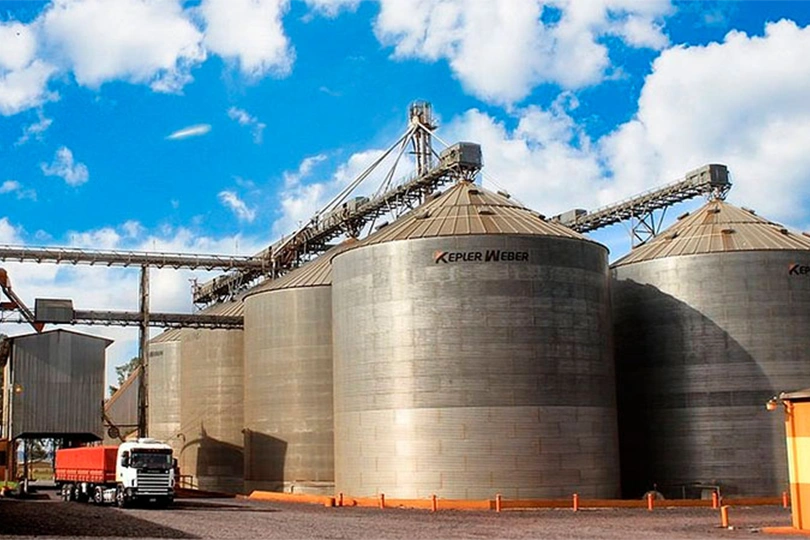
The Central Bank of the Argentine Republic (BCRA) made official the elimination of a regulation that for years made financing more expensive for the agricultural sector. Through Communication “A” 8418, the monetary authority repealed the scheme that penalized producers who kept part of their harvest in storage, a decision that will directly impact
the cost of credit.
The measure, in force for all operations since April 10, 2026, eliminates a regulatory factor that forced banks to quadruple capital requirements when lending to large producers with a collection of more than 5% of their annual capacity. In practice, this mechanism resulted in much higher interest rates for those who did not immediately liquidate their production
. Central Bank of the Argentine Republic.
With the removal of this “punishment”, the financial cost will tend to align with general market conditions. From now on, access to credit will depend on classic criteria such as solvency and capacity to pay, and not on logistical or commercial decisions related to grain storage
.
The repealed regulations originated in May 2020, under the management of Alberto Fernández in a context of strong “scarcity” of foreign exchange. At that time, the Government's objective was to accelerate the liquidation of agricultural exports to reinforce the reserves of the Central Bank. To achieve this, financing became more expensive for those who chose to withhold their production, forcing them to sell for
liquidity.
However, this policy introduced significant distortions in the financial system. Banks faced greater regulatory requirements when lending to the sector, which discouraged the supply of credit. At the same time, producers had to assume cost overruns that, according to private estimates, could reach up to 20 additional percentage points in the total cost of financing in
pesos. The collection will no longer be credit-penalized.
The removal of this restriction comes at a key moment for agriculture, on the eve of new planting campaigns. With lower financial costs, producers will be able to plan investments in inputs, machinery and technology without the penalties that prevailed until now.
The decision is also part of a larger process of economic normalization and deregulation promoted by the national Government. Along the same lines, the BCRA recently made progress in simplifying exchange rules and reducing barriers to foreign trade