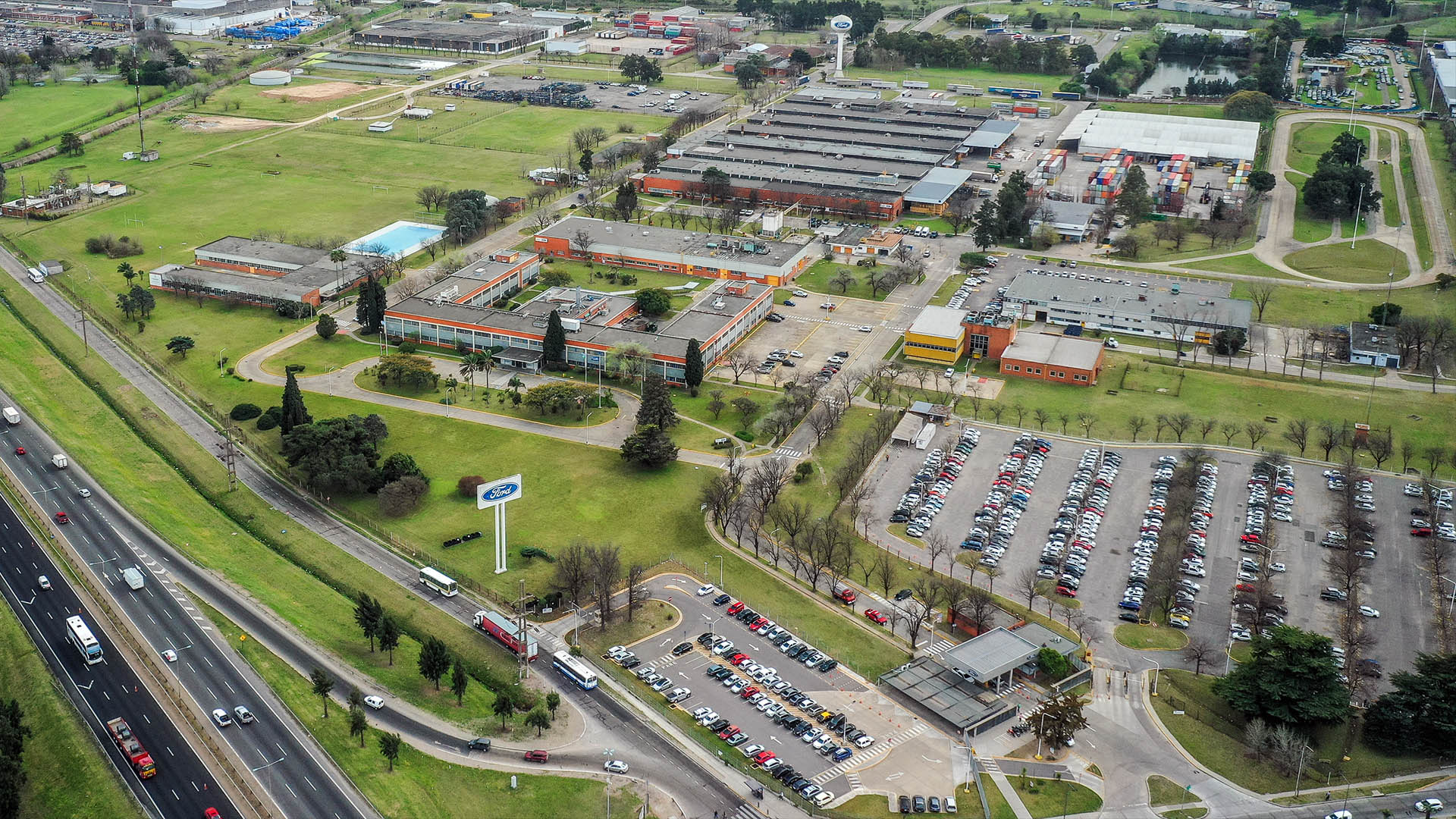
The situation takes on greater relevance at the General Pacheco plant, where the Ranger pickup, one of the most exported models in the country, is produced. The company maintains that, without fluid access to external markets and with high costs, the long-term future of the operation is conditioned
Ford's claim is part of a broader discussion within the automotive industry, which for months has been raising the need to reduce withholding - currently around 4.5% - and to review the tax burden at all levels of the State. Other terminals have also pointed out that the combination of national, provincial and municipal taxes reduces competitiveness compared to countries such as Brazil and Mexico
. The iconic Ford Ranger produced in Argentina.
In this framework, the company values some deregulation measures promoted by the national government, but they warn that they are not enough if progress is not made in a comprehensive tax reform. The central point is that much of the problem does not depend on the Nation, but on the superposition of taxes at different jurisdictional levels
.
As the national government advances fiscal order and the reduction of distortions, provincial and municipal taxes continue to stifle strategic sectors, making production more expensive and putting key investments at risk.
The automotive company Ford Argentina issued a direct warning about the impact of provincial and municipal taxes on the competitiveness of the sector. As explained by its president, Martín Galdeano, the current tax burden not only makes exports more expensive, but also puts new investments in the country at risk
.
During his presentation, the director explained that every vehicle exported from Argentina carries a “tax backpack” that increases its FOB price by approximately 12%. Of that total, about 10% corresponds to provincial taxes such as Gross Income and municipal taxes, while the rest is explained by national taxes, including Check Tax and
withholding. The Ford factory in Pacheco, province of Buenos Aires.
On the one hand, the fiscal structure reduces the profitability of exports, affecting the ability to compete in international markets. On the other hand, it discourages the establishment of self-partisan suppliers, a key factor in consolidating the local value chain. In this context, Galdeano was categorical in warning that the country could lose both markets and investments if these distortions are not corrected