The President of Chile, José Antonio Kast, formalized the sending to Congress of his so-called “megareforma”, an ambitious package of more than 40 measures aimed at reactivating the economy, attracting investment and regaining the country's competitiveness. This is the central project of his administration, with which he seeks to mark a turning point in Chilean economic policy after years of low growth
.
The initiative, officially entitled the Economic and Social Reconstruction and Development Bill, had been presented a few days ago on national television and is now entering Parliament after weeks of negotiations to secure support in Congress. The Government does not have its own majority, so it needs agreements with key sectors to achieve its approval.
“We're going to break everything bad”: Kast announced the project on the national channel.
Among the most relevant points is the reduction of corporate tax from 27% to 23%, a measure aimed at encouraging private investment. Added to this are tax benefits for the repatriation of capital from abroad, temporary exemptions from VAT for the purchase of new homes and a series of incentives to
promote formal employment.
In addition, the project contemplates the expediting of environmental permits, one of the main demands of the productive sector, and other tools aimed at boosting economic activity. The Chilean objective is to bring the country's growth to 4% by the end of the term of office, reduce unemployment to 6.5% and put the balance of fiscal accounts
on track.
During the presentation, Kast defended the role of the private sector as an engine of development, arguing that the State alone cannot generate wealth without the participation of entrepreneurs and investors. Along the same lines, the Minister of Finance, Jorge Quiroz, stated that the project seeks to restore to Chile the competitiveness necessary to attract capital
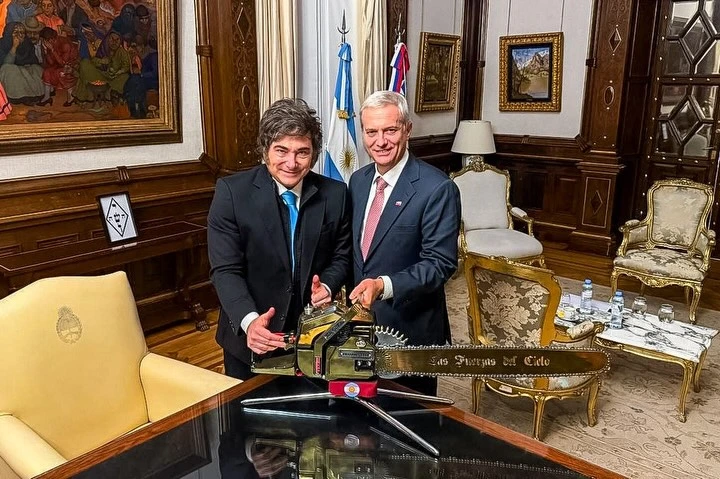
and generate employment. Kast next to Javier Milei's chainsaw.
The economic context explains the urgency of the Executive. In 2025, Chile registered growth of 2.5%, inflation of 3.5% and a structural fiscal deficit of 3.6% of GDP, the highest in two decades. Faced with this scenario, the ruling party is betting on a change of course based on incentives for the productive sector
.
The legislative debate promises to be intense and will mark one of the main political chapters of the year in Chile. The result will define not only the economic course, but also the Government's capacity to move forward with its agenda