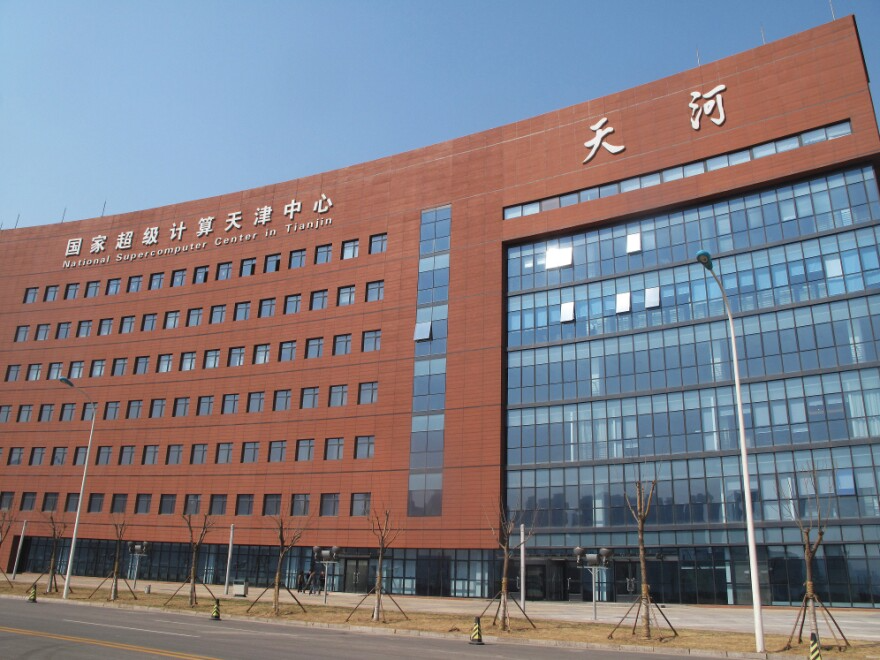
The Tianjin supercomputing center, inaugurated in 2009, was the first of its kind under the Xi Jinping regime and is part of a larger network that includes facilities in cities such as Guangzhou, Shenzhen and Chengdu. These platforms are fundamental to China's technological development, since they allow the processing of large volumes of data in key areas such as scientific and military research.
The hacker identified as “Flaming China” claimed responsibility for the historic data leak
The incident comes at a time when China seeks to consolidate itself as a global leader in technology and artificial intelligence, amplifying the potential impact of the gap. For many experts, the leak not only compromises sensitive information, but it also affects the country's credibility in terms of digital security
.
In addition, the fact that the attacker is offering access to data in exchange for cryptocurrency poses an additional risk, facilitating the possible dissemination of strategic information among external actors. This situation could have significant geopolitical implications, especially if the files include advanced military developments
.
Criticism also points to the lack of an official response from the Chinese authorities, who have so far neither confirmed nor denied the incident. This lack of clarity reinforces the perception of opacity in crisis management and makes it difficult to assess the real extent of the
leak.
The case adds to recent records that show weaknesses in the country's cybersecurity, including the massive exposure of personal data in poorly protected databases. Taken together, these episodes raise big questions about China's ability to protect its digital infrastructure in a context of growing global technological competition
. The Xi Jinping regime has not yet denied or confirmed the news, raising new questions about the efficiency of the Chinese government in protecting military secrets
A recent cyber attack against one of China's main technological infrastructures has jeopardized the strength of its digital security systems, following the massive leak of more than 10 petabytes of highly sensitive information from the Tianjin National Supercomputing Center.
According to expert reports and analysis, a hacker who identifies himself as “FlamingChina” would have accessed the center's system, a key facility that provides services to more than 6,000 entities, including scientific and defense agencies, and extracted data for several months without being detected. If confirmed, it would be one of the biggest information thefts recorded globally
.
The leaked material includes classified documents, technical simulations and designs related to weapons, such as missiles and bombs, as well as research in strategic fields such as aerospace engineering, bioinformatics and fusion simulation. Cybersecurity specialists who reviewed samples published on the internet pointed out that the content matches the type of information that is normally processed in this
type of facility. The Tianjin supercomputer underwent a massive hack and cybersecurity data, military data and other aerospace research were leaked
One of the most critical aspects of the case is the ease with which the attacker would have breached the system. According to the details released, initial access would have been achieved through the commitment of a virtual private network (VPN), a technique considered basic. Subsequently, the hacker used an automated network to extract the data progressively, thus avoiding activating security alerts
.
This point has raised strong questions about the monitoring and response capacity of Chinese digital infrastructures. Analysts warn that a prolonged intrusion of this type suggests significant structural flaws in defense protocols, especially in facilities that handle information critical to national security