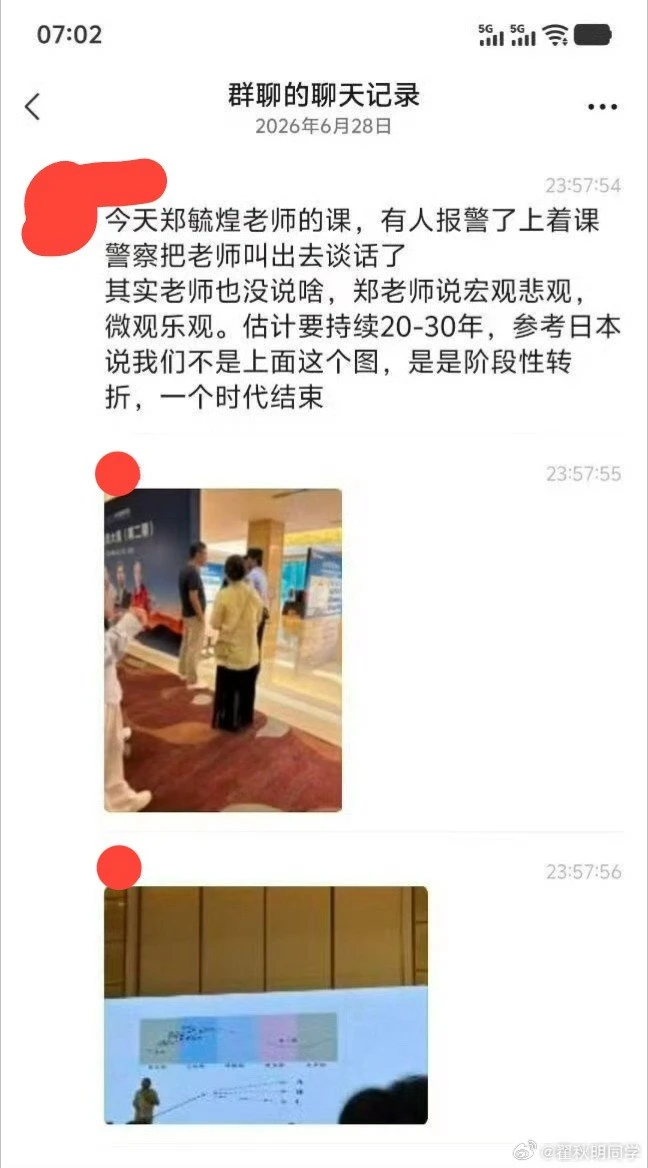

Zheng Yuhuang would have been reported to the authorities by a student during a conference
Agregar La Derecha Diario en
Compartir:
The Chinese economist Zheng Yuhuang, a former professor at Tsinghua University, was reportedly during an academic presentation after a student accused him of “speaking poorly” about the country's economy.
This incident, which has yet to be confirmed due to the heavy censorship in that country, reflects the restrictions on freedom of expression imposed by the Communist Party and the persecution by the Chinese regime against any dissent.
According to this report, based on leaked information from China, the event allegedly occurred on June 28, 2026, during a business conference held at the Hilton Beijing Capital Airport.
Zheng Yuhuang
In that context, the academic reportedly described the Chinese economic outlook as “macroeconomically pessimistic” and warned of a possible period of stagnation lasting between 20 and 30 years, compared to Japan's so-called lost decades.
Furthermore, Zheng allegedly attributed this slowdown to internal structural factors, such as imbalances in the pension system and the functioning of the household registration system, rather than global trends. These statements reportedly prompted the reaction of one of those present, a student, who allegedly alerted the authorities.
Halfway through the presentation, two agents of the Chinese regime reportedly entered the venue and escorted the professor for questioning under suspicion of organizing an “illegal meeting.” However, after a brief clarification of about five minutes, he was reportedly allowed to return and finish the conference.
Filtered information
Digital censorship
The episode did not end there. According to the same report, in the following days there was a mass deletion of the academic's digital presence.
By July 1, his accounts on platforms like Weibo and WeChat, as well as his video profiles, were reportedly permanently deleted, resulting in the disappearance of about 16 years of academic content and public material.
Zheng himself had reportedly faced previous sanctions on social media for questioning measures taken by the Chinese regime during the COVID-19 pandemic, such as the closure of university campuses.
After this latest incident, the economist reportedly expressed regret online and indicated that he would stop commenting on public matters to avoid further consequences.
In this scenario, the case remains uncertain, marked by the limitations in accessing information within the Asian country.