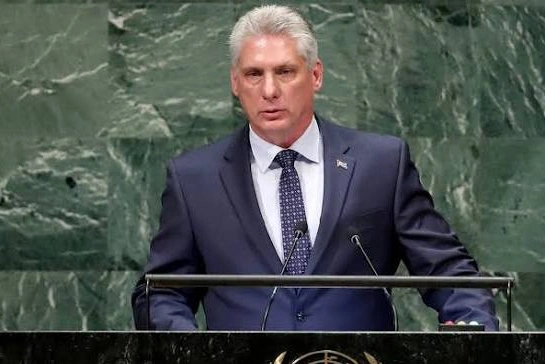
A group of UN special rapporteurs denounced that the dictatorship ofMiguel Diaz-Canel in Cuba applies a systematic model of persecution against opponents that can be summed up inan extreme dilemma: prison or exile.
The accusation, embodied in an official communication sent to Havana, describes a sustained pattern of violations of fundamental rights that reinforces criticism of the current political system.
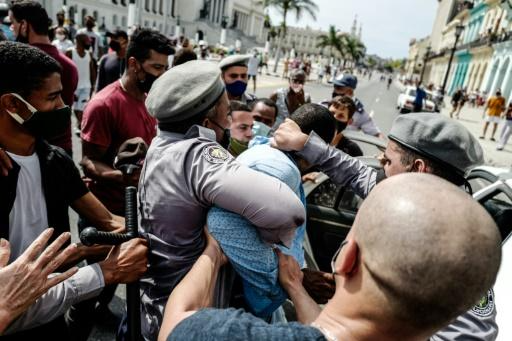
Cuban regime security forces repressing a protester
Experts from the international organization warned of the repeated use of arbitrary arrests, forced disappearances and torture as tools to silence activists and
human rights defenders.
The strategy does not respond to isolated events but to a structural logic aimed at neutralizing any form of dissent towards the dictatorship.
The concept of “prison or exile” summarizes this mechanism: those who challenge the regime face the possibility of being imprisoned or, failing that, forced to leave the country.
This practice, repeatedly denounced by international organizations, implies in practice a covert expulsion that weakens the internal opposition and reduces the margin of criticism within the island.
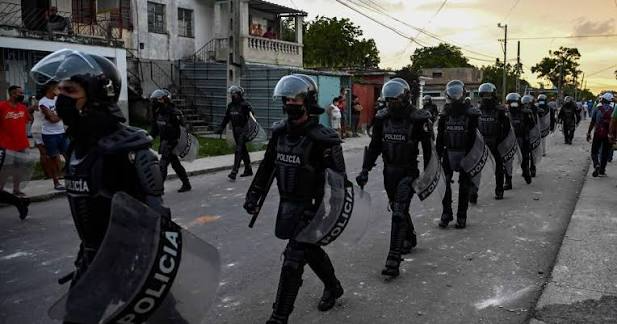
Cuban police patrolling a street
The context in which this complaint emerges is no less. Cuba is going through a growing economic and social crisis, marked by blackouts, scarcity and demonstrations against the dictator Díaz-Canel, which has led to increased pressure on the state apparatus. In this scenario, the official response has been to reinforce control mechanisms, rather than to move towards political opening.
Several previous reports had already warned of a “systematic persecution” against those who demand civil liberties and democratic changes, with high levels of arrests and harassment.
The UN statement places Cuba back at the center of the international debate on human rights. However, it also exposes the lack of concrete consequences in the face of these complaints, which fuels the perception of impunity
.
In short, the report not only describes a critical situation, but also raises a fundamental question: to what extent is the international community willing to move from warnings to action against a regime that has made repression a State policy.