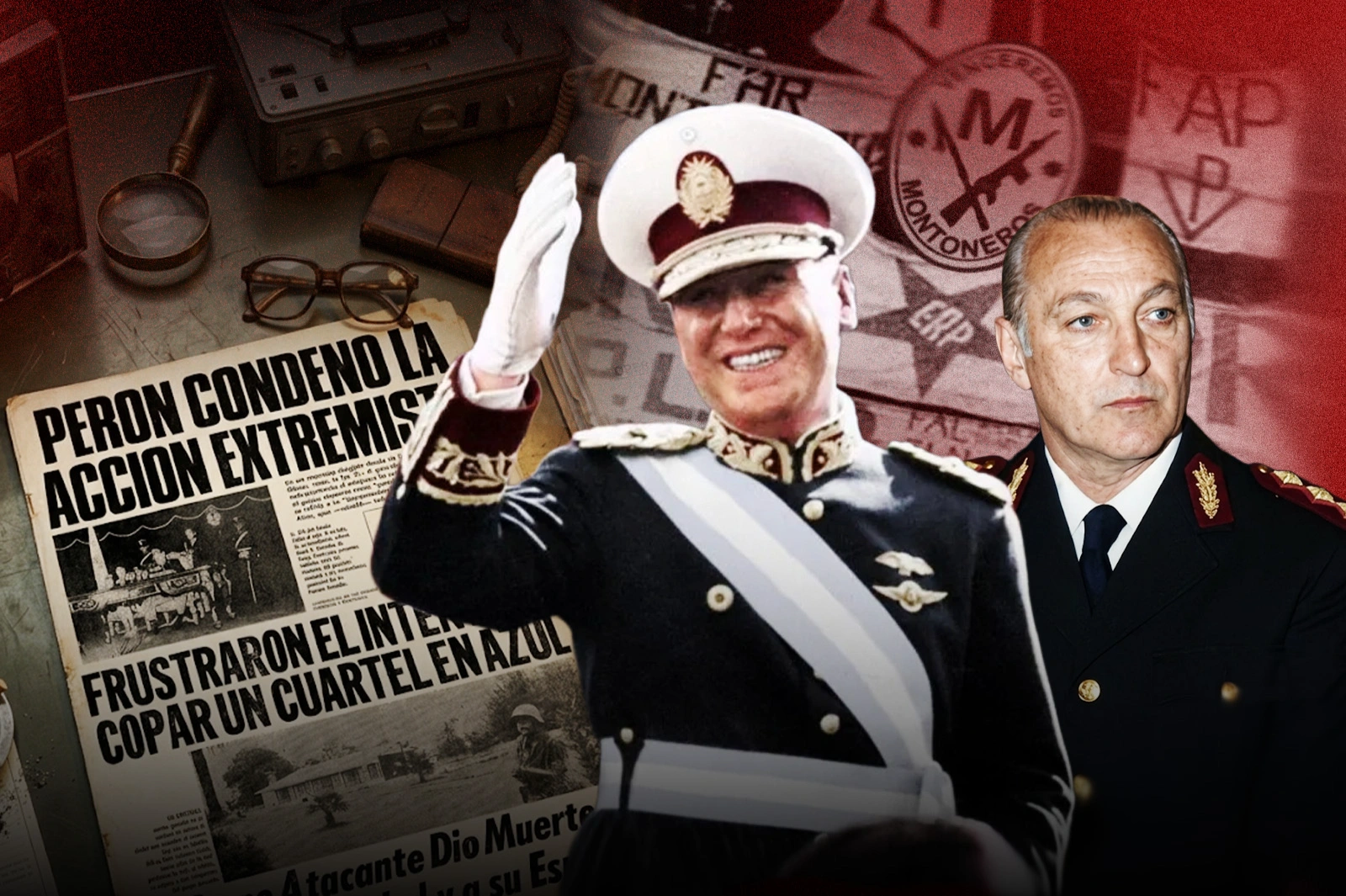
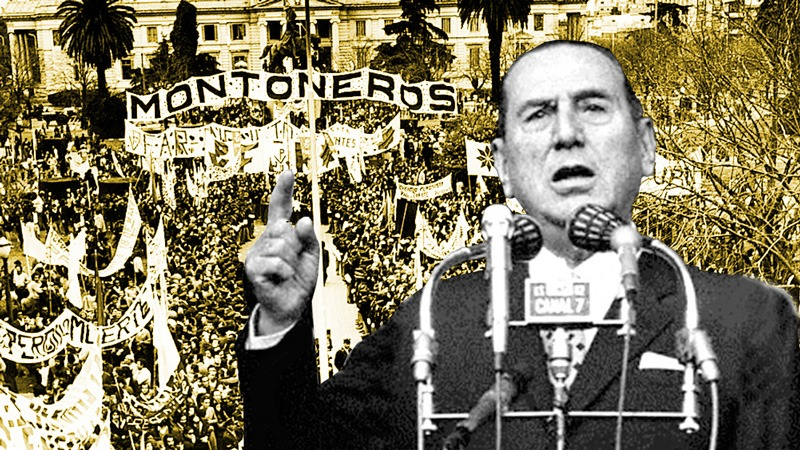
At the beginning of October 1973, a few days after the assassination of the general secretary of the CGT, José Ignacio Rucci, at the hands of the left-wing terrorist group Montoneros, Juan Domingo Perón made a decision that would mark the new direction of his movement.
What during the exile was a tactical alliance to achieve his return, after his electoral victory, became an open confrontation for the control of Justicialism.
Despite the fact that the Peronist left expected Perón to lead a “Socialist Revolution”, the movement's own leader made it clear that his model was “incompatible” with Marxism, which represented a total breaking point.
In this context, the Peronist Superior Council, under the leadership of Perón himself, issued the so-called “Reserved Document” of October 1, 1973, which formalized the beginning of an ideological “cleansing” of Justicialism from the sectors identified with the Peronist left, whom it ordered to “eliminate”.
Juan Domingo Perón.
According to the document, Rucci's crime represented the peak of an offensive against the movement.
There it was stated that his assassination “marks the highest point of an escalation of aggressions” carried out by “Marxist terrorist and subversive groups”, which were identified as responsible for a “real war” against Peronism.
Based on this framework, the justicialist leadership established a series of political and operational directives that entailed unprecedented internal tightening.
The text declared the movement in a state of mobilization and required all its members to align themselves without question. Within this framework, it was ordered that the sectors that acted within Peronism should be publicly defined and comply “without any discussion
” with the directives of the leadership.
The central point was the identification of an “internal enemy”. Juan Domingo Perón placed in that place the currents linked to Marxism, such as the Peronist Youth and organizations such as Montoneros, which he accused of ideological infiltration and of trying to distort the doctrinal principles of
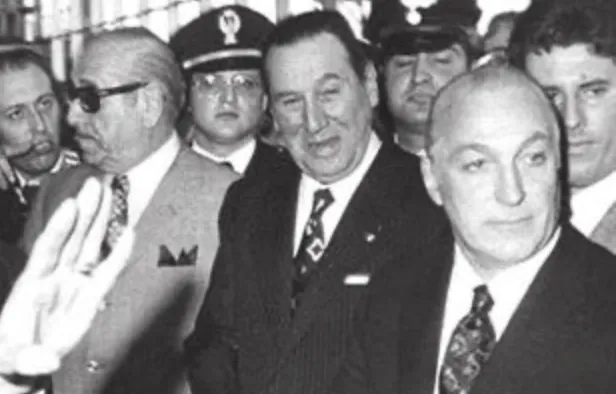
the movement. Perón and López Rega. In that sense, the document enabled a strategy of direct confrontation.
Among the directives were to prevent the participation of these sectors in public events “by all means”, to block their dissemination and to use all elements of the State to suppress the plans of the "enemy" with
all rigor.
The context was no less. The assassination of Rucci, which occurred just two days after Perón's electoral triumph, deepened the rupture between the leader and the extreme left sectors
.
The Triple A
In this way, the “Reserved Document” not only established a political line, but also functioned as a direct order to purify the movement of the left-wing sectors that operated within
Peronism.
This document provided the ideological and political framework that allowed the emergence and action of the Triple A (Argentine Anti-Communist Alliance), a para-police group dedicated to the extermination of the extreme subversive left, created by Perón and led by José López Rega, then Minister of Social Welfare.
The text itself established that all the means available to the State should be used to combat sectors identified as “infiltrators” and internal enemies.
In this framework, Triple A emerged as the operational instrument of that strategy, carrying out violent actions against the sectors mentioned above.
The first public appearance of the para-police organization occurred just 51 days after the issuance of the Reserved Document of the Superior Peronist Council, consolidating the shift from political directives to direct action within the framework of this internal “war” within justicialism.