On March 15, elections were held for the Courts of Castile and León, in Spain. In these elections, 82 prosecutors were elected who will make up the autonomous parliament of the community during the next legislative
period.
Election day was marked by significant turnout: around 65% of the electorate went to the polls, a notable increase compared to the 2022 elections, when the turnout had been 58%.
The results left a clear political scenario.
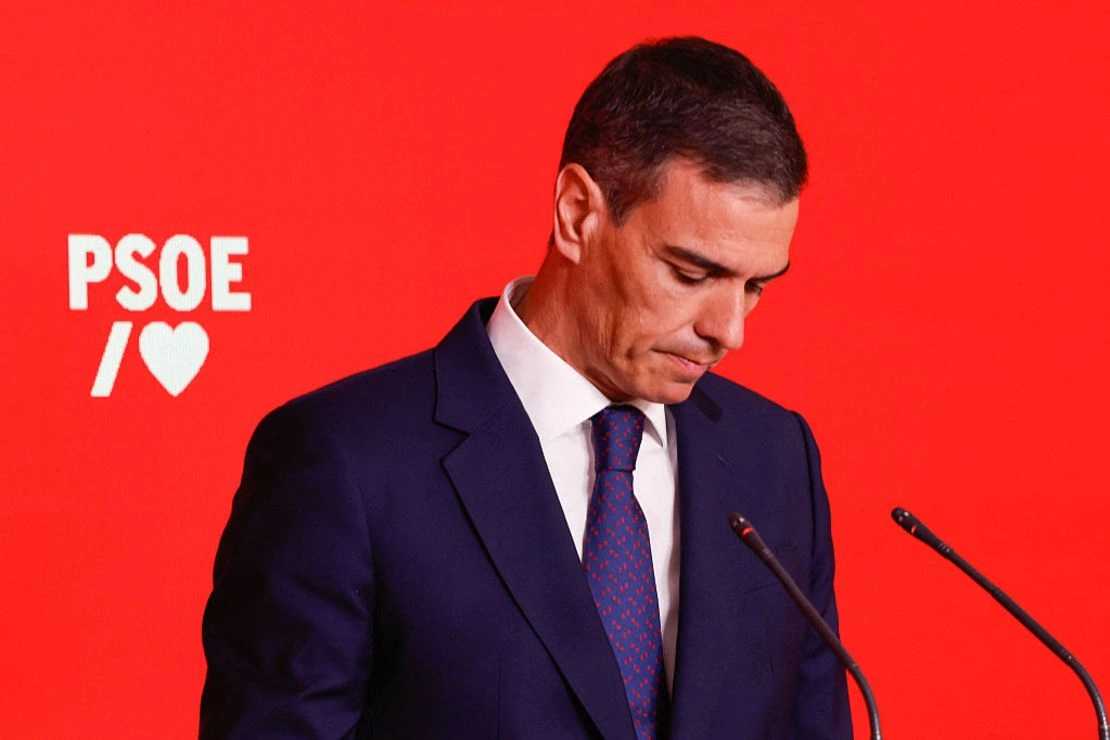
The Popular Party (PP) was consolidated as the most voted force, obtaining approximately 35% of the votes, while the Spanish Socialist Workers' Party (PSOE), headed nationally by Pedro Sánchez, came in second place with close to 30%.
In third place was VOX, which reached around 18% of the votes, consolidating itself as a relevant force in the regional political landscape. The rest of the votes were distributed among different regional parties, including the Union of the Leonese People
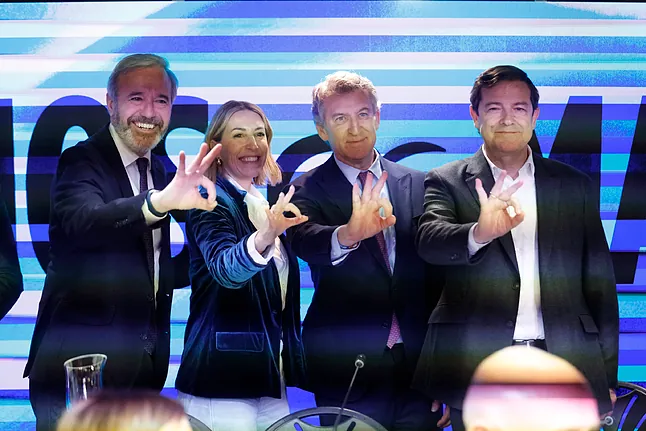
(UPL). Alberto Núnez Feijóo posing with the acting presidents of the PP of Aragón, Extremadura and Castilla y León.
Based on these results, various analysts interpret that the center-right and right-wing block has concrete possibilities of achieving a parliamentary majority. A possible alliance between the PP, VOX and the UPL could bring together around 50 prosecutors out of a total of 82, which would make it possible to form a government in
the autonomous community.
From the socialist ruling party, criticism of this possibility was expressed. The spokeswoman for the USSR, Montse Mínguez, warned that “every pact with Vox has a price and involves rights that citizens lose”, referring to the negotiations that could take place to form a government.
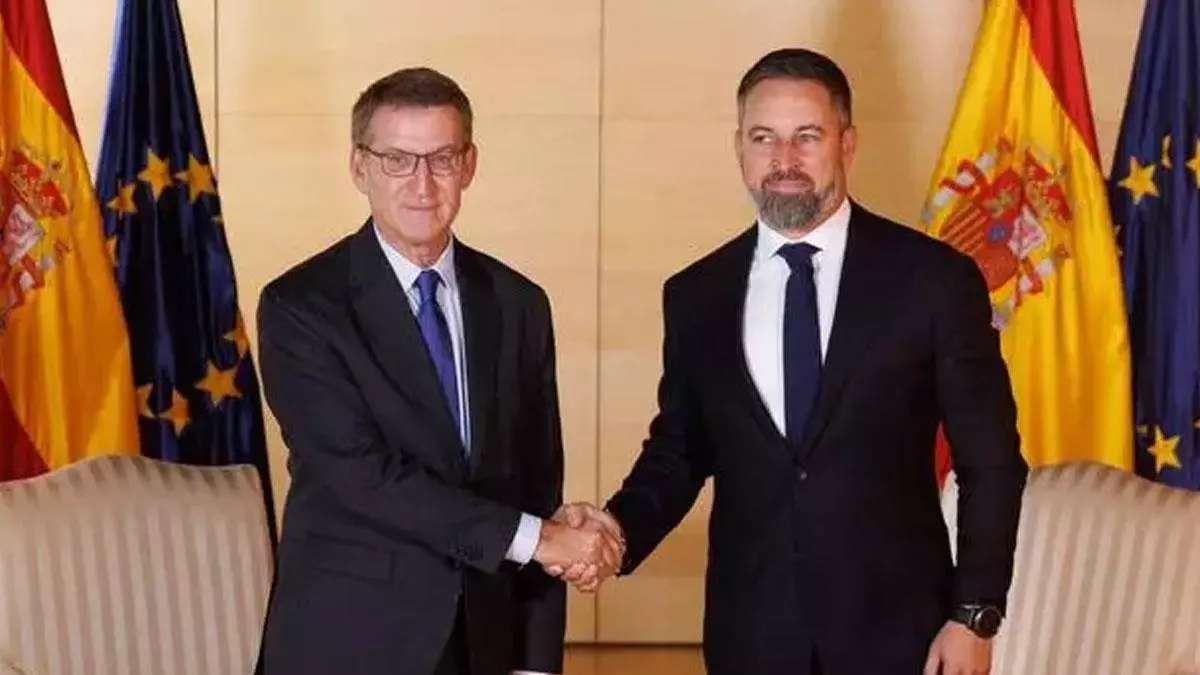
In contrast, the leader of the Popular Party, Alberto Núñez Feijóo, celebrated the results obtained in Castilla y León and confirmed that his party is holding talks with Santiago Abascal, leader of VOX. The objective of these dialogues would be to explore parliamentary agreements not only in this community, but also in other territories where political forces share a similar electoral base, such as Extremadura
and Aragón. The president of the Popular Party Feijoo posing with the president of VOX Santiago Abascal
Beyond the negotiations that may take place in the coming weeks, the electoral result reflects a change in the political climate in the region. A significant part of the electorate seems to have opted for alternatives that promise a shift in political and economic management, something that could influence the national scenario ahead of the next general elections in
Spain.
In this context, Castilla y León becomes a relevant indicator of the direction that Spanish politics could take in the short term.