A group of lawyers from Rosario filed a criminal complaint against three psychologists accused of having prepared false reports of child abuse with the aim of disconnecting children from their parents.
The case, which is already in the hands of the Public Prosecutor's Office, aims to determine if there was a systematic pattern in the preparation of these documents and if the professionals acted in a coordinated manner.
The presentation, made in September last year by lawyers Viviana Cosentino, Juan Lewis, Carina Lurati, Froilán Ravena, Ramiro Coso, José Nanni, Estela Marelli and Adriana Torchio, denounces psychologists identified as P.B.A., G.R.S. and N.V.A. for the crime of aggravated false testimony. The file was left to prosecutor Guillermina Aiello, who began to analyze the elements
provided.
According to the judicial brief, the professionals used “pre-armed forms” to prepare the reports, even repeating textually identical observations in different cases. This situation, the complainants point out, calls into question the authenticity and rigor of the evaluations carried out.
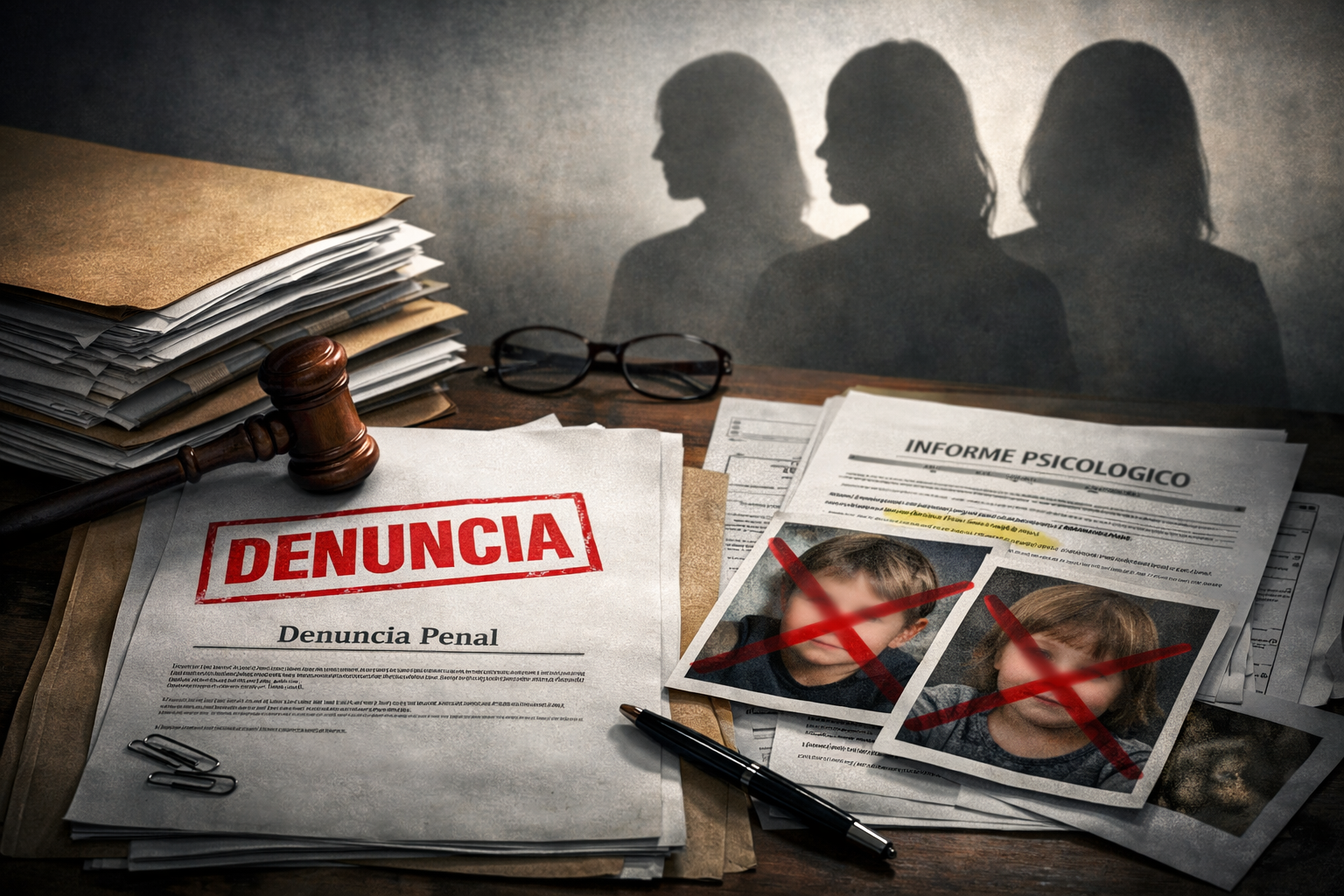
Three female psychologists reported for alleged reports
One of the cases mentioned in the complaint exposes the consequences of these reports: a man lost contact with his daughter for seven years and three months following the accusations, although he was later acquitted
by justice.
What the lawyers said
In the presentation, the lawyers request that an investigation be made if the reported behaviors are part of an alleged illegal association aimed at issuing “false reports of minors whose parents have made complaints of abuse, in order to be able to sustain false accusations and thus prevent the other parent from having
contact with their children”.
The legal representatives of the affected parents pointed out that, when analyzing different files, they detected “common patterns, which are repeated, where numerous irregularities are noticed both in criminal proceedings and in the family jurisdiction, causing serious harm”.
In this regard, they warned: “The most serious thing is that, in this procedural path, there are people who would be profiting from this situation, issuing reports where alleged signs of sexual abuse are repeated without any technical rigor and that are more like pre-armed forms, than a deep and serious analysis of each problem.”
Psychologists would seek to separate parents from their children.
In addition, they questioned the origin of the information used in the reports. “These reports, which they sometimes defend in the testimonial statements provided in court or before the prosecution, contain striking coincidences in the behaviors described as being carried out by our children, which start in all cases from the story of their mothers, without our consent being required or having been interviewed to know and listen to us before starting to treat them,” they said
.
Another central point of the complaint is that, according to the lawyers, the evaluations were based on a single hypothesis: the existence of abuse. “In all cases, treatments start [...] from an alleged sexual abuse that has already been reported previously, and this is the only hypothesis we are working with, as long as none of the reports have considered other possible causes generating the behaviors or reactions
,” they said.
Regarding the methodology used, the complainants pointed to the technique called “Game Time”, pointing out that “they do not record on audio and video support, which prevents any possibility of knowing the veracity of the sayings attributed to children and much less the way in which such supposed information is obtained”.
In another section of the brief, the lawyers incorporated reports from the three psychologists corresponding to different cases and highlighted striking similarities. “There are so many coincidences, even with textual phrases in one report and another, that if the names of the children were deleted [...] it could be thought that they were reports referring to a single patient,” they concluded