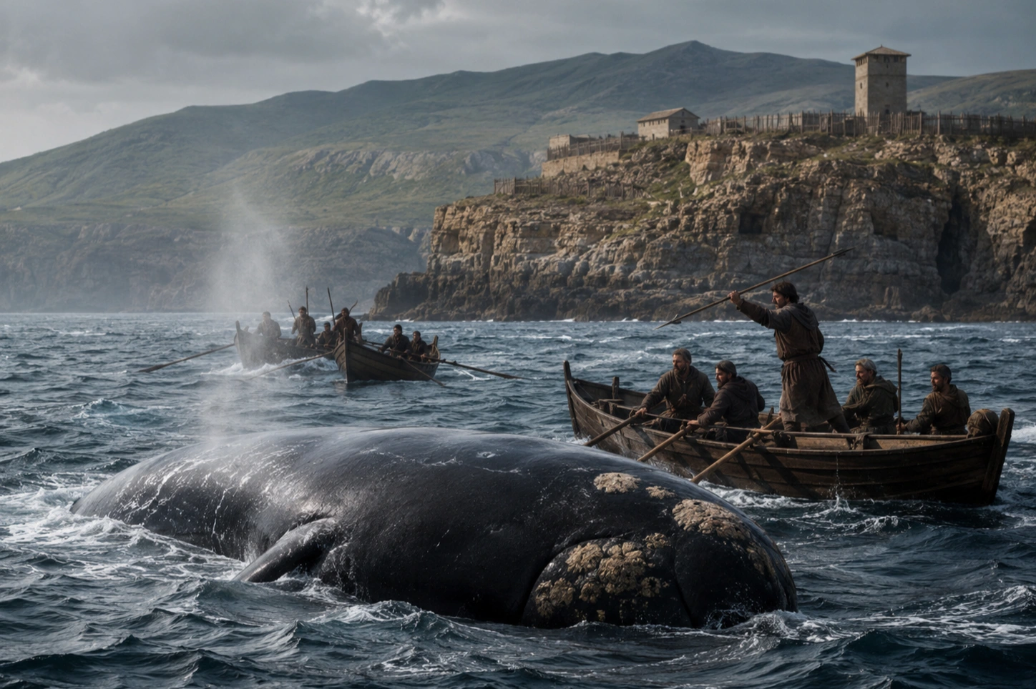
A team of archaeologists found cetacean remains at a site located next to the Cathedral of Santander. It is an intervertebral disc and a fragment of the rib of a large marine mammal that date back to the medieval period, between the 12th and 13th centuries
.
Those responsible for the discovery, archaeologists Lino Mantecón and Javier Marcos Martínez, indicated that the size of the pieces suggests that the animal exceeded 16 meters in length. These vestiges appeared at the deepest levels of the site, in a context with seashells, coals and ceramics
of the time.
Experts do not rule out that the remains respond to whaling practices off the coasts of the area. However, they also consider it possible that they come from stranded specimens that were used at a feast or celebration.
Historical context and scientific analysis
According to archaeologists, the fishing activity of large cetaceans in the Cantabrian Sea was already established in that medieval period, although the specific references to Santander are not very detailed. Slaughtering sites used to have rights to these catches and part of the animal was reserved
.
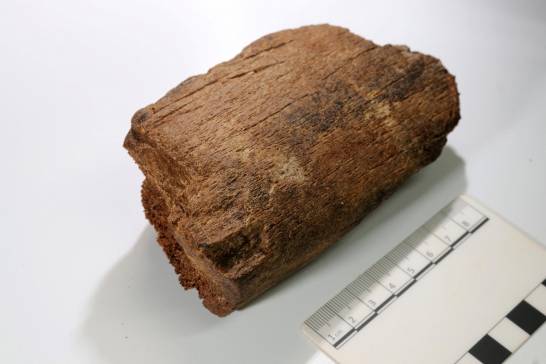
The director of the Cantabrian Maritime Museum, Gerardo García Castrillo, verified the identification of the fragments. It is the intervertebral disc of a mystelidae or balenid, similar to a whale, the second largest cetacean after the
blue whale.
In the interest of the discovery, the researchers took samples of the level and sent them to a laboratory in the United States for absolute dating. Carbon-14 analysis of a carbon found next to the bone confirmed that the remains correspond to the middle of the 12th century to the middle of the 13th century.
Possible implications and continuity of the work
This discovery provides material evidence of the ancient connection between the human communities of Santander and whales. Although there were already historical mentions, the physical remains reinforce the idea of an interaction that could include active hunting
.
In addition, it is known that at the beginning of the 17th century, a factory or “whale house” operated in Santander, which shows that the activity continued in the region. Archaeologists highlighted the value of these vestiges to better understand medieval practices
.
The archaeological project of Los Azogues is still under way. For this reason, the emergence of new findings that allow us to deepen this remote relationship between local inhabitants and the large cetaceans that frequented the Cantabrian coast is not ruled out
.
Researchers continue to analyze the site carefully to preserve the context and extract as much information as possible about medieval life in the area.