In the midst of the growing public debate over the impact of immigration on the daily lives of French people, a new digital tool dedicated to the real estate sector was launched that allows us to analyze neighborhoods and properties based on data that are unusual on this type of platform: levels of immigration, perception of insecurity, religious presence, reception centers and demographic characteristics of each area.
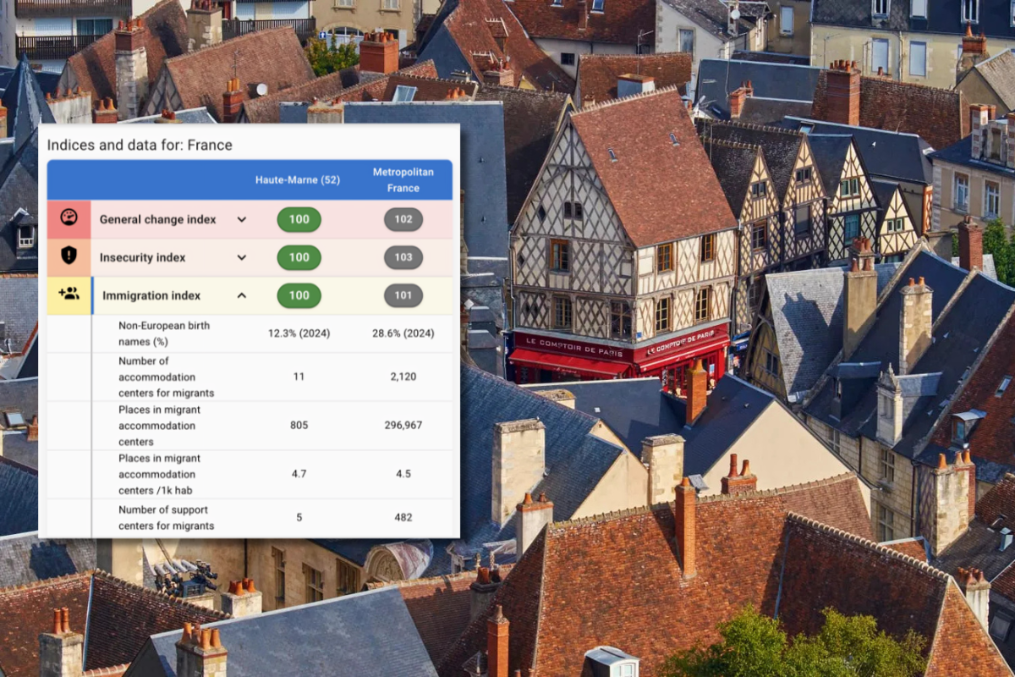
The tool, known as OVMF, works as a website and also as an extension for the Chrome browser. Its objective is to integrate with real estate portals and provide additional information about the environment of published homes, so that potential buyers can make decisions with a more complete picture
. The tool was well received in the world of real estate transactions.
According to its creators, the system automatically analyzes real estate ads and assigns ratings based on different indicators. These include the existence of reception centers for asylum seekers, the proximity to neighborhoods classified as priorities by the French State, the number of places of worship and other elements linked to the social composition of the
area.
One of the central points of the platform is its interactive map of France, where users can observe different layers of territorial information. There are statistics on foreign population, religious distribution and even the evolution of first names in certain neighborhoods, classified by categories to show the demographic changes recorded in each area
.
In cities like Paris, the level of detail is even greater. The tool incorporates data on fraud, population composition, local political context and recent news that may influence the perception of security or the value of a property. In an increasingly tense market, this type of information is beginning to play a role in the purchasing decision
.
The platform also pays special attention to the so-called QPV, which stands for Quartier Prioritaire de la Politique de la Ville. These are urban neighborhoods that receive public support because of their greater socio-economic difficulties. In many cases, these districts have high levels of unemployment, poverty and immigrant population density. In France, there are around 1,500 such areas, where nearly five million people live.
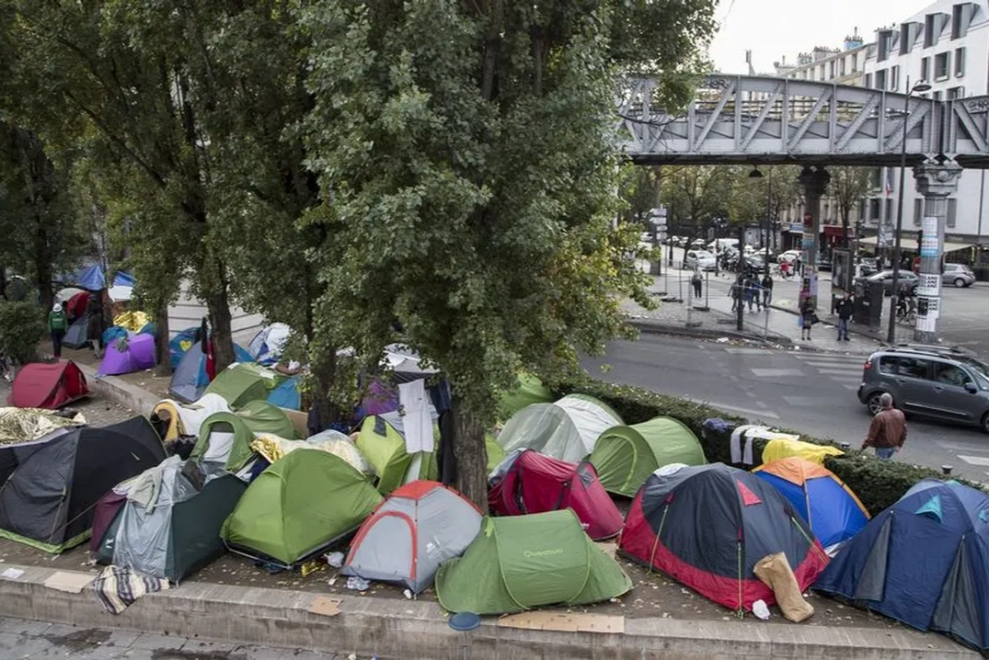
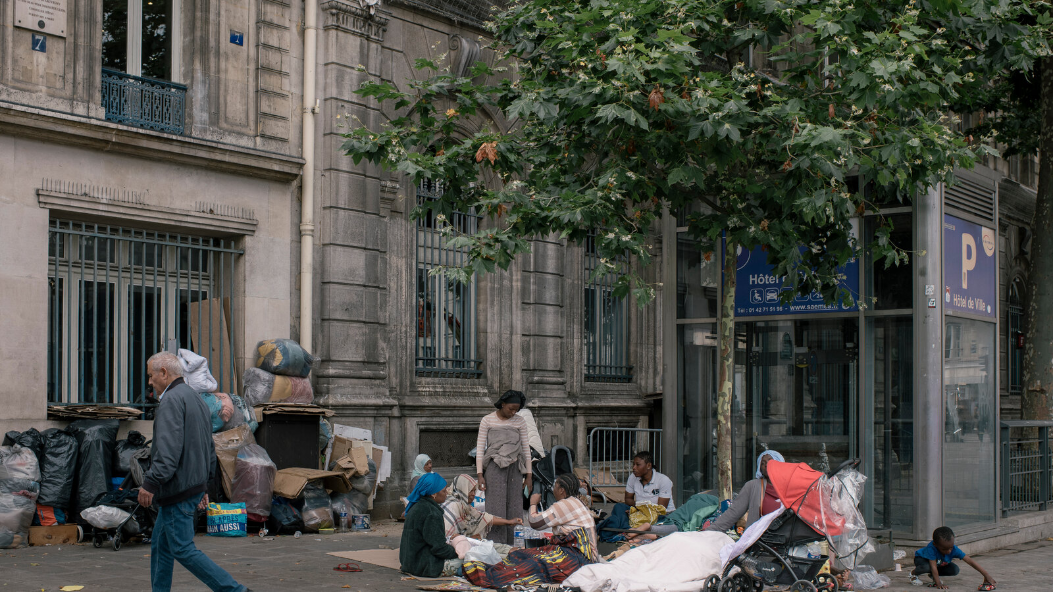
Homeless migrants in the city of Paris.
The rise of OVMF comes in a context in which immigration, security and the transformation of neighborhoods were consolidated as central themes of the French debate. Various opinion studies show that a significant part of the population believes that there is too much immigration and supports the possibility of holding public consultations on the subject
.
At the same time, pressure on the housing market and the growth of certain urban areas push buyers to seek more and more information before investing. For many French people, the price of a home is no longer enough to define an operation: the environment, security, social coexistence and the demographic evolution of the neighborhood also matter