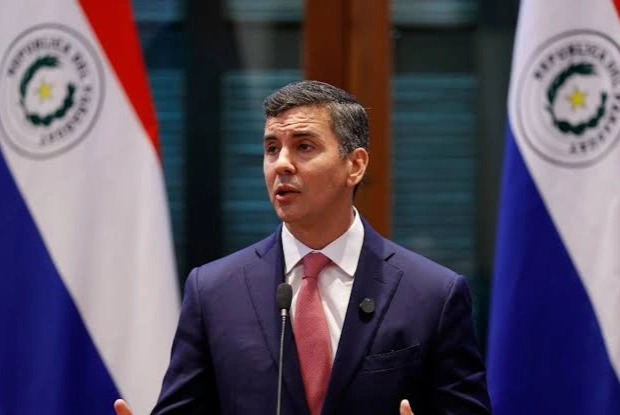
The right-wing government of Santiago Peña recently reported a significant reduction in poverty in Paraguay, in a context of economic recovery and expansion of formal employment. According to official data released by the Executive itself, more than 213,000 people were lifted out of poverty in the last year, while another 81,000 managed
to overcome extreme poverty.
The figures are based on the results of the Continuous Permanent Household Survey, prepared by the national statistical institute, which shows a steady decline in social indicators. In absolute terms, the population living in poverty fell to 985,126 people in 2025, implying a decrease of more than 213,000 individuals compared
to the previous year.
The decline is also reflected in the percentages: in urban areas, poverty fell from 16.9% to 13.6%, while in rural areas, which were historically more lagging behind, it fell from 26.3% to 22.1%. At the same time, extreme poverty fell from 3.7% to 2.4% in the same period, consolidating a trend of improvement in the most
vulnerable sectors. Paraguayan President Santiago Peña with Argentine President Javier Milei
The Paraguayan government attributes these results to a combination of economic growth and focused public policies. Among the key factors is job creation as a central element: in 2025 alone, the maquila regime and the promotion of small and medium-sized enterprises generated more than 36,000 new
jobs. In
turn, the Executive maintains that there was a change in the approach to social policies, with less dependence on welfare and a greater orientation towards income generation, especially in rural areas. Technical support programs for small producers would have allowed families to move from subsistence economies to more stable productive schemes
.
Peña himself pointed out that the advances respond to a strategy that seeks to link economic growth with improved living conditions. In this regard, he stressed the need to stay the course to avoid setbacks
and consolidate the results achieved.
In structural terms, the data reflect a scenario in which the reduction of poverty appears associated with both macroeconomic variables and public policy decisions oriented to employment and production. In a region where social indicators tend to show greater volatility, Paraguayan developments suggest the impact of an approach that prioritizes economic activity as a driver