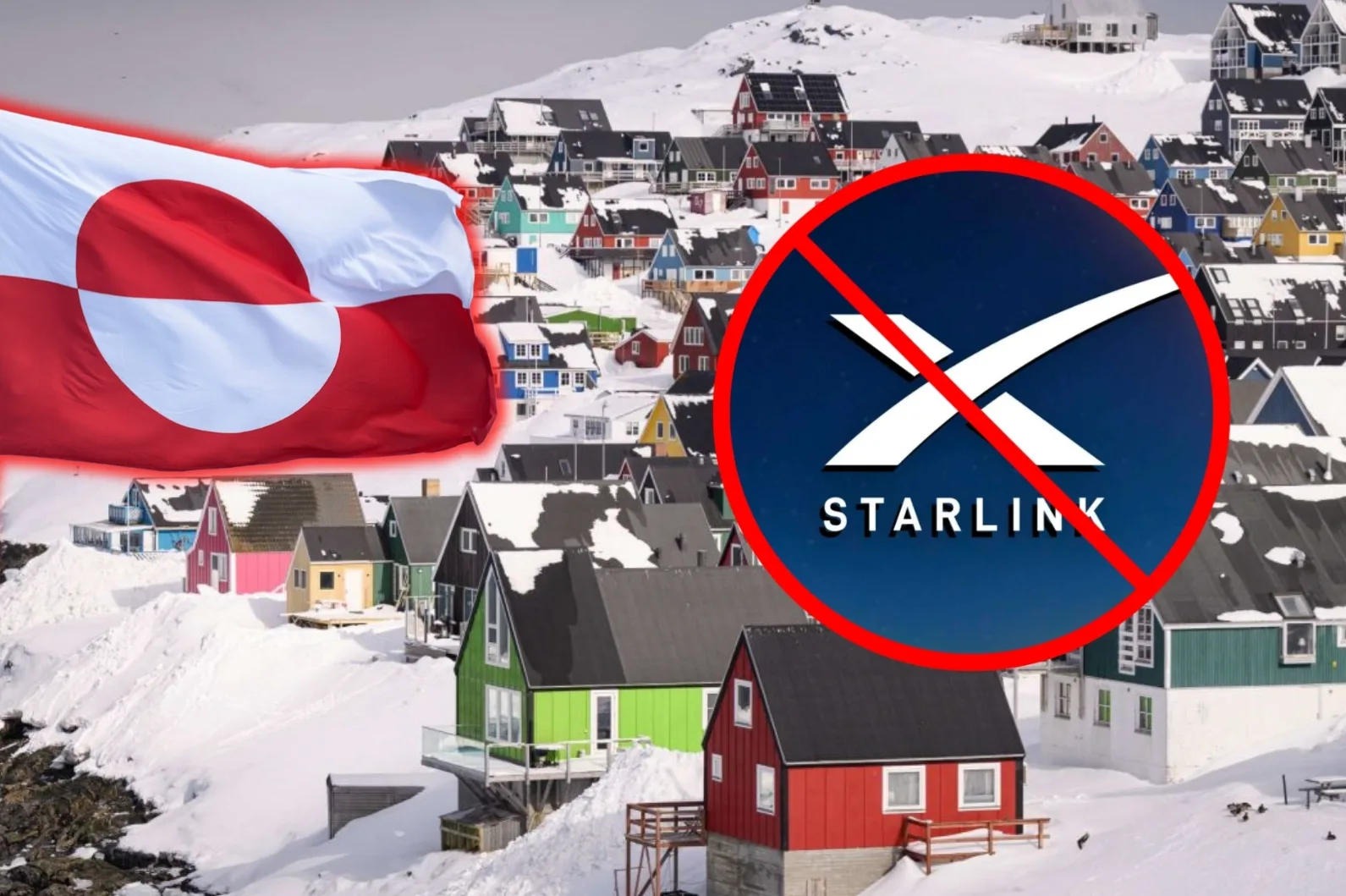

Since 2024, Greenland has prohibited the direct use of Starlink for local consumers and established a state telecommunications monopoly managed by Tusass.
This situation forces island users to depend on state services while being excluded from a private alternative with better service and lower costs.
The government, the European Union, and the operator justify the restrictions on the grounds of protecting and financing Greenland's critical infrastructure and the Arctic.
However, the scheme assumes that consumers cannot freely contract Starlink to access satellite internet and must remain within the system managed by the state operator, which offers an extremely low speed.
Tusass
The ban was formalized in early 2024, after the Greenland Telecommunications Authority detected a small group of people operating Starlink terminals privately.
Following that episode, the agency published a regulatory and legal manual confirming that any direct satellite connection to consumers that evades the Tusass monopoly violates the country's Telecommunications Law.
A more expensive and lower quality state service
The measure is particularly relevant due to the difference between the available services. Historically, Tusass's internet rates can reach approximately double the price of a standard Starlink subscription, a difference that generates strong complaints due to its economic impact on local communities.
In addition, there is a considerable gap in terms of speed. Tusass, through Eutelsat OneWeb's LEO network, chosen by local authorities as part of a European alliance, recently increased its speeds in the northern part of the island from 6 Mbps to 15 Mbps. Starlink, on the other hand, offers global standard ranges of between 50 Mbps and 200 Mbps.

Starlink
The decision to exclude Starlink occurred precisely while Greenland opted to tighten its state telecommunications monopoly.
One of the main reasons Starlink was not enabled in the country is the business model of the American company, which requires direct access to consumers without local intermediaries.
In this way, the Greenlandic regulatory model maintains a closed market in which Tusass retains control of telecommunications and consumers cannot access Starlink directly.
The combination of the Arctic's geographical conditions and the regulated commercial scheme makes local internet access considerably more expensive and slower compared to the alternative offered by Elon Musk's company.
Thus, Greenland has consolidated a model that restricts competition in the telecommunications market and keeps users tied to a state monopoly that offers higher prices and significantly lower speeds.