Milei faces external inflationary pressure while the stabilization process continues
.
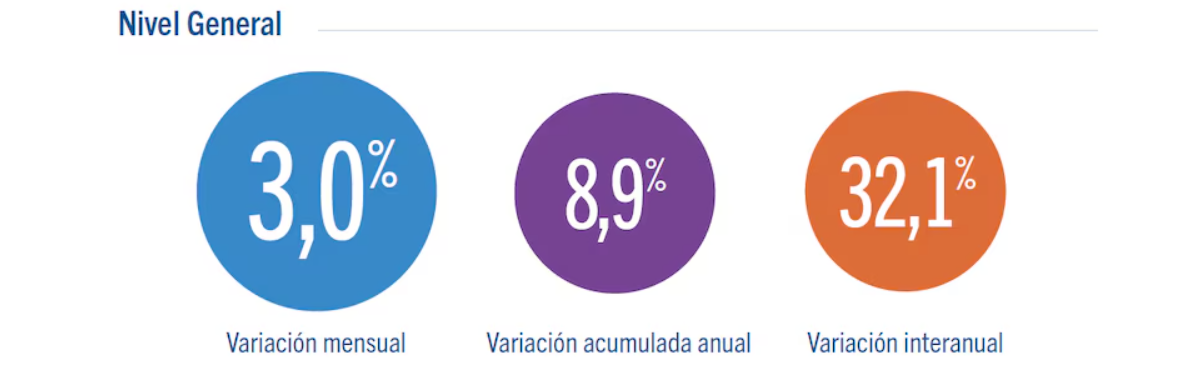
Despite the March rebound, the figure comes amid a strong slowdown from the levels inherited from Kirchnerism, after year-on-year inflation stood at 32.1%, well below the records of more than 200% left by the previous
administration.
The ruling party maintains that the March increase responds to exceptional and external factors, mainly derived from the international war and the consequent increase in energy prices, and stress that President Javier Milei's economic policy continues to focus on maintaining fiscal balance and avoiding monetary issuance.
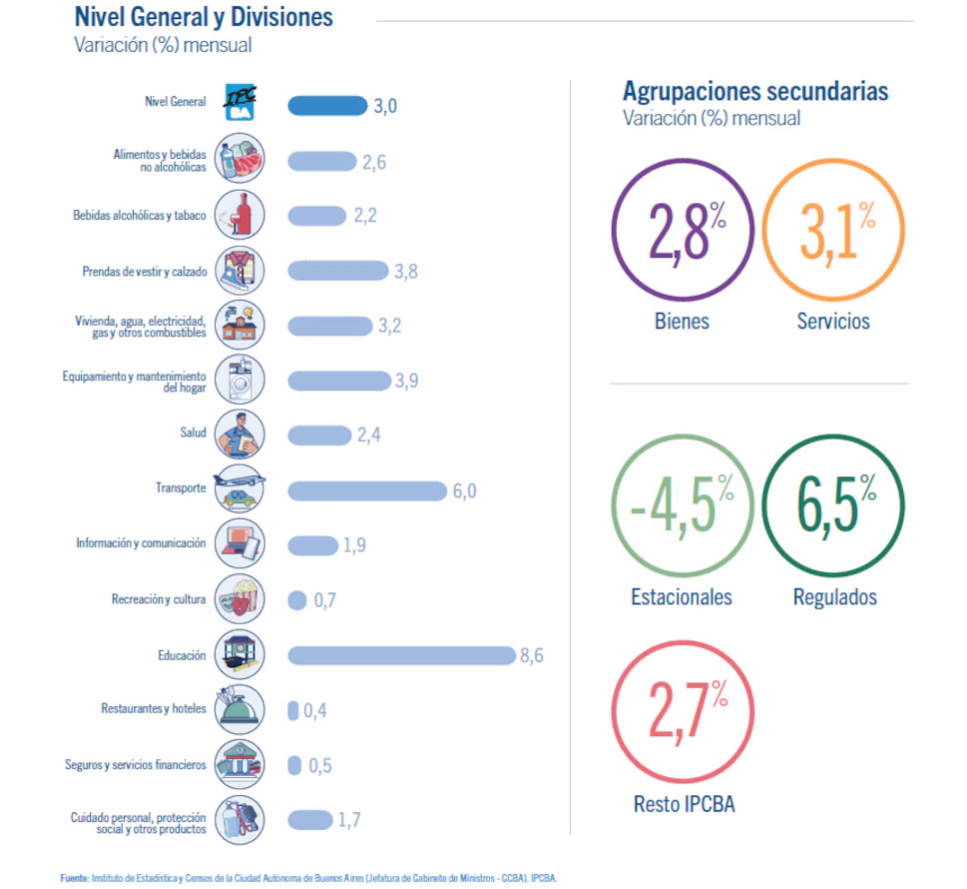
In addition to transportation, increases in housing, rates, education and food, particularly meat, were also impacted, although the report shows that some seasonal items such as tourism, hospitality and fruits registered declines that helped to partially moderate the index.
The Government is betting that inflation will slow down again after the stabilization of the international conflict
At Casa Rosada, they consider that much of the inflationary pressure in March is short-term and associated with an extraordinary international phenomenon. With the possible stabilization of the price of oil and a moderation in the war, the Executive expects that the slowdown trend can resume
in the coming months.
Meanwhile, the Milei Government continues to defend its economic program based on fiscal adjustment, deregulation and monetary discipline, with the objective of consolidating the structural decline in inflation after decades of economic mismanagement.
Inflation in the City of Buenos Aires registered 3% during March, according to the latest official report of the Buenos Aires Institute of Statistics and Censuses, in a figure that was strongly conditioned by external factors linked to the war in the Middle East and the global increase in energy prices.
The monthly increase was mainly driven by the increase in fuel, transport, education and regulated services, in an international context marked by the geopolitical crisis generated after the escalation of war between Iran, Israel and the United States, which raised the international price of oil above USD 100 per barrel in March.
The impact of the war in Iran hit fuels directly
One of the areas that put the most pressure on inflation was Transportation, which increased 6% in March, being the segment with the highest increase in the general index. According to the official report, the increase was mainly explained by the increase in fuel and the update of public transport fares
.
The pressure on the pumps responded directly to the international jump in the price of oil, after the war in the Middle East generated a strong shock in the global energy market, with oil prices rising up to 40% since the beginning of the conflict and global concern for supply due to tension in the strategic Strait of Hormuz.
In this context, the national government sought to cushion part of the impact through partial freezes and containment mechanisms on the local price of fuels.