

In the midst of an international scenario marked by geopolitical tensions and a growing need to diversify energy supply, Argentina is moving forward with one of the most ambitious projects in its recent history: the development of Argentina LNG, the plan led by YPF to produce liquefied natural gas off the coast of Rio Negro together with international partners. As explained by the company's CEO, Horacio Marín, the war in the Middle East and the recent attacks on energy infrastructure could accelerate the expansion schedule of the project, which is already emerging as a regional energy milestone
.“This is the largest and most complex project in the history of Latin America,” said Marín, referring to the megaproject during a meeting with Argentinian journalists at CERAWeek by S&P Global, the main event in the global energy sector. There, he stressed that development aspires to achieve an unprecedented level of international funding in the region and confirmed that, although there are talks with a new global partner —which, had it been closed, would have been presented during the event—, the initiative can move forward with the current members of the consortium
.
The company behind the project - which already has its own name, although it has not yet been revealed - is currently comprised of YPF, the Italian company Eni and XRG, a firm linked to the Saudi group Aramco, one of the world's largest players in the
hydrocarbons business.Marín clarified that the entry of a fourth partner is not a condition for moving forward. While he acknowledged that there are advanced talks with an international company, he stressed that the consortium is not actively looking for it. “It's that or nothing,” he said, and explained that any progress will depend on the internal approval deadlines and the technical review of the potential interested party.
In this global context, the executive directly linked the geopolitical situation with the future of the Argentine project. “The project is there and is going. But the war in the Middle East could accelerate expansion,” he said, noting that the conflict increased international demand for liquefied natural gas and reinforced interest in reliable suppliers outside
conflict zones.This vision was also shared by numerous energy sector actors present at the Houston event, where it was highlighted that companies and consumer countries will seek to diversify the origin of their supplies. In this scenario, due to its strategic location, Argentina is increasingly identified as a solid alternative
.Marín even remarked that the war generated an unexpected boost for the country. As he explained, the attacks on energy infrastructure—especially in Qatar—knocked out of operation a plant similar to Argentine development and forced the declaration of force majeure for five years in certain contracts in Europe, opening up an unprecedented opportunity
for Argentina.“This war accelerated Argentina's LNG in a way you can't imagine. I think that the war will strongly boost the expansion of the project from 12 million tons to the additional six million that we are projecting for the second phase,” he said.
This leap would make it possible to position the country as a preferred supplier, with simultaneous access to both the Atlantic and the Pacific.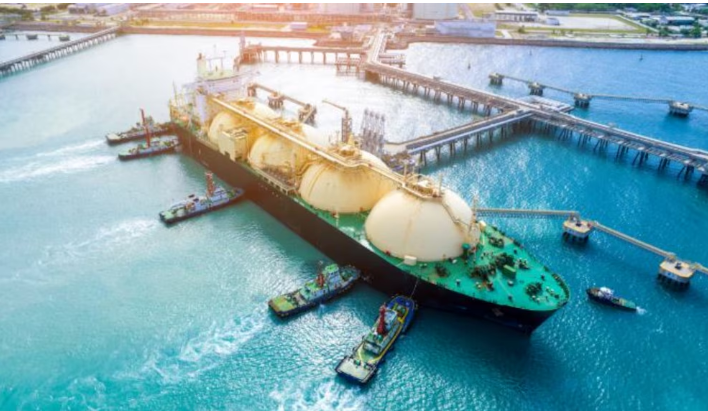
Record funding for the region The
magnitude of the planned funding confirms the historic scale of the plan. Marín indicated that the objective is to raise USD 15.5 billion for the first phase of the project alone, making it the largest funding for an energy project in Latin America
.As he explained, this is the “largest project finance scheme in the history of Latin America”, as confirmed by JP Morgan, the bank responsible for structuring international development financing.









