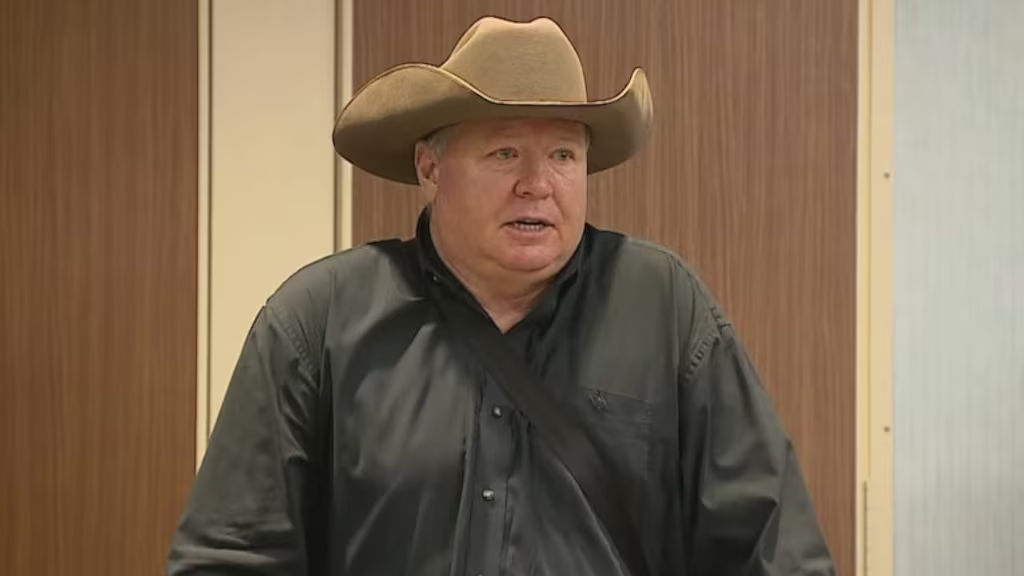
The Indigenous lawyer went further and warned about the possible consequences of a potential independence of Alberta, noting that the creation of an international border ''would destroy their way of life'' by interrupting traditional practices and access to territories for Indigenous peoples. In his view, the ruling not only protects legal rights but also the cultural continuity of the First Nations.
An Alberta court rejected a petition on Wednesday that sought to pave the way for a referendum on the independence of the Canadian province, after determining that the process driven by the separatist group ''Stay Free Alberta'' did not fulfill the constitutional duty to consult affected Indigenous communities. The decision was issued by Judge Shaina Leonard in a court in Edmonton and leaves the future of an initiative that had gathered more than 300,000 signatures in uncertainty.
The case originated when ''Stay Free Alberta'' submitted a citizen petition that would have allowed for a provincial vote on the possible secession of Alberta from Canada. However, several First Nations (Indigenous peoples), including the ''Athabasca Chipewyan First Nation'', ''Blood Tribe'', ''Piikani Nation'', and ''Siksika Nation'', filed a lawsuit arguing that any attempt at separation would have direct consequences on the historical treaties signed in the 19th century between their peoples and the Crown, which remain in effect under Canadian constitutional law.
In her 37-page ruling, Judge Leonard stated that it was ''evident'' that Alberta's independence would have a profound impact on those agreements and, therefore, would trigger the legal obligation for prior consultation with Indigenous peoples. The judge concluded that this consultation was not conducted at any time before advancing with the referendum initiative, which would constitute a violation of the constitutional duty of the Crown and the authorities involved.
''As a matter of logic and common sense, there is no doubt that Alberta's secession from Canada will impact the treaties,'' the judge wrote, emphasizing that the lack of prior consultation rendered the process legally defective. As a result, the court ordered the halt of the verification of signatures collected by the referendum promoters, immediately stopping the progress of the initiative.
Milett Figueroa reconoció que Marcelo Tinelli le fue infiel
The group ''Stay Free Alberta'', represented by lawyer Jeff Rath, rejected the decision and announced that they will appeal. Rath argued that the ruling contains legal errors and violates principles of natural justice, in addition to limiting citizens' rights to express their political will. He also indicated that they are considering requesting a temporary suspension of the court order while the case is reviewed in higher courts.
From the perspective of Indigenous communities, the resolution was received as a significant legal victory. Kevin Hille, lawyer for the ''Athabasca Chipewyan First Nation'', stated that the ruling confirms the obligation to consult Indigenous peoples before proceeding with any decision that may affect their territorial rights and treaties. According to Hille, the court made it clear that it is not possible to move forward with a process of this magnitude without real participation from the affected communities.
The lawyer for the organization that promotes the independence of the province stated that an appeal will be filed regarding the case.
The provincial government of Alberta, led by Premier Danielle Smith, expressed its disagreement with the decision and confirmed that it is reviewing the legal grounds of the ruling. Smith noted that her administration believes there may be a legal misinterpretation and announced that they will appeal. The provincial executive has previously defended the need to allow greater flexibility for citizen initiatives of this kind.
The case has reignited a strong political debate in Alberta about the balance between direct democracy, provincial autonomy, and constitutional obligations to Indigenous peoples. In recent years, sectors of the province have promoted separatist or autonomist rhetoric, fueled by discontent with the federal government in Ottawa, especially regarding energy policies.
Many residents of Alberta argue that the province contributes more to the national budget than it receives, due to its weight in the oil and gas industry, and that federal policies have limited the development of these strategic sectors. This sentiment has strengthened movements calling for greater autonomy or even the possibility of independence.
The premier of the province of Alberta expressed disagreement with the ruling and also stated that they will carry out an appeal process.
However, Judge Leonard's ruling introduces a significant legal obstacle for any secession initiative, establishing that processes of this nature cannot advance without prior, effective, and good faith consultation with the affected Indigenous communities. This significantly complicates the viability of any referendum driven solely by signature collection.
At the same time, the decision has generated strong opinions in public opinion, being seen as a serious limitation on the democratic exercise of the citizens of the province. For now, the future of the separatist proposal remains in suspense, subject to judicial appeals and the response of the provincial government, in a context where tensions between regional identity, national sovereignty, and Indigenous rights in Canada are once again rising.