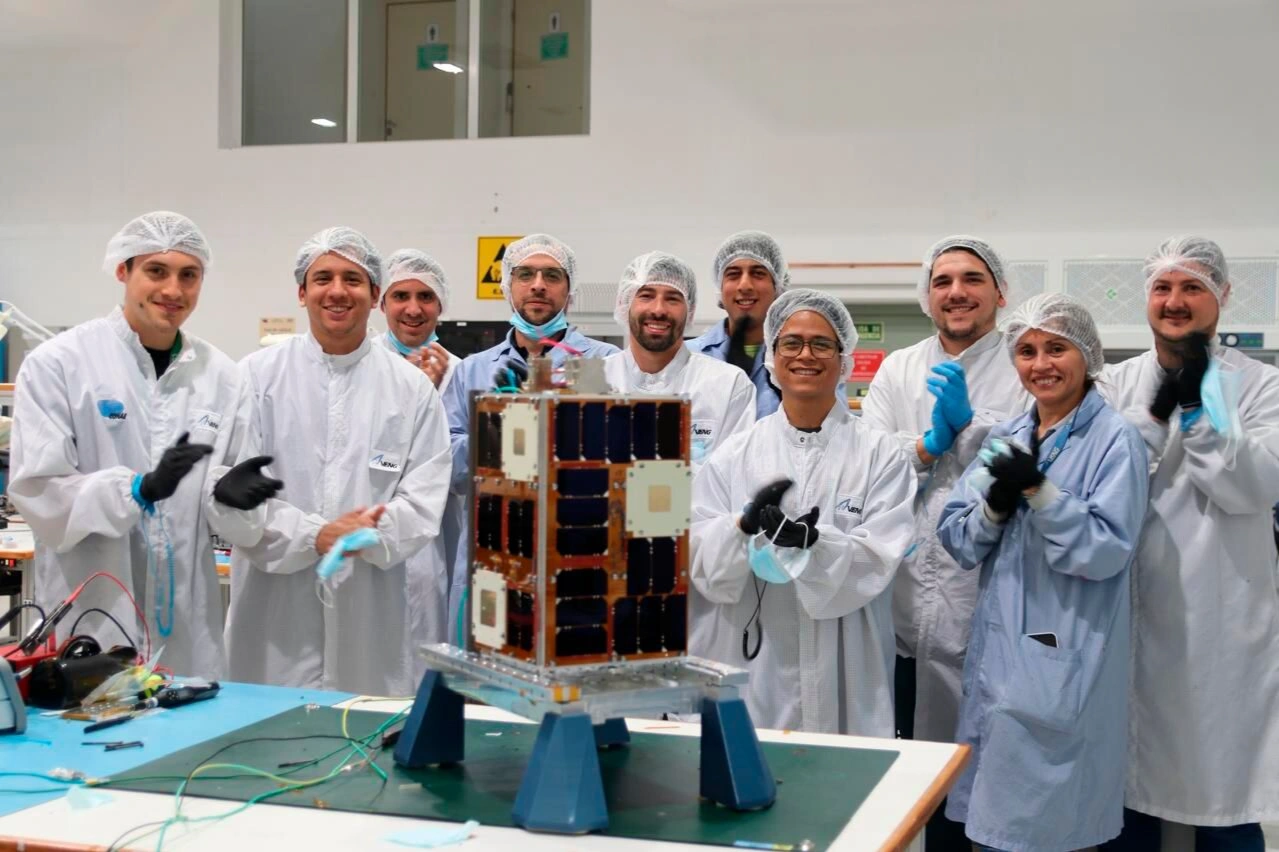
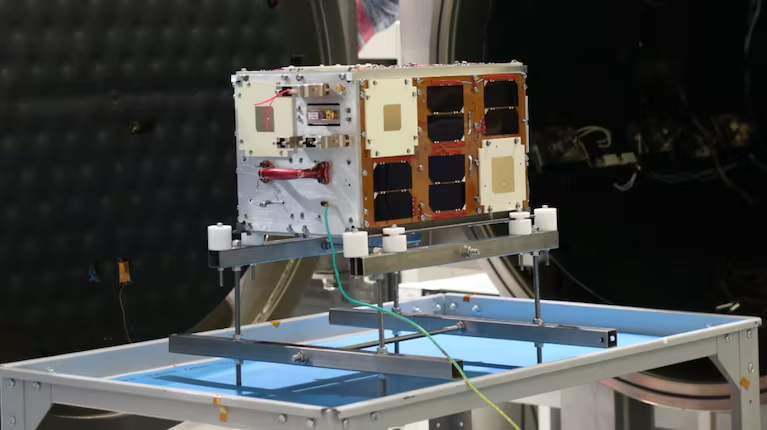
The Argentinian microsatelite Ateneasuccessfully completed its mission within the framework of the “Artemis II” program, in what represents a significant step forward for space development national and its international projection. This was reported by the National Commission for Space Activities (CONAE), which confirmed that the device met all of its objectives after 20 hours of operation in deep space
.
According to the agency, Atenea managed to correctly transmit all the expected data to the ground stations located in Córdoba and Tierra del Fuego, in coordination with international teams. This performance validated both the reliability of communication systems and the operational capacity of Argentine terrestrial infrastructure in highly complex missions
.
The “cubesat”, developed entirely in the country, had as its main objective to evaluate the behavior of electronic components under extreme conditions, in addition to measuring radiation levels from low Earth orbit to considerably greater distances. This data is essential for the design of future missions, especially those involving operations in highly demanding environments, such as deep space
.
One of the highlights of the mission was the range achieved by the satellite. The first signal was received more than 40,000 kilometers from Earth, while a second transmission exceeded 70,000 kilometers, setting a historic record for Argentina. This achievement places the country at a higher level in terms of technological experimentation and demonstrates its capacity to face challenges typical of large space agencies
. The ATENEA microsatelite has successfully completed its tasks during the “Artemis II” mission
In addition, Athena made it possible to test long-range communication links under real conditions, validate electronic systems against high levels of radiation and analyze navigation signals at higher than usual altitudes. All of this constitutes a set of key tests that will provide strategic information for the development of more complex missions in the future
.
The project was led by CONAE, with the participation of leading institutions of the national scientific and technological system, including the National University of La Plata, the National University of San Martín, the Faculty of Engineering of the University of Buenos Aires, the Argentine Institute of Radio Astronomy, the National Atomic Energy Commission and the company VENG S.A. This public-academic articulation reinforces the model of collaborative innovation promoted by Argentina in strategic sectors.
The national government, headed by President Javier Milei, highlighted the value of the achievement as a milestone in the country's space policy. In an official statement, it was noted that this progress responds to a strategy aimed at strengthening Argentina's international integration, based on reliability, security and technological excellence
. Under the leadership of Javier Milei, Argentina has managed to obtain a prominent position in the international scientific scene
Along these lines, participation in the Artemis program, led by NASA, consolidates cooperation with the United States and other first-level actors in the space field. This link opens up new opportunities for the joint development of larger projects and positions the country as a relevant partner in
global initiatives.
With the completion of her mission, Atenea leaves as a legacy not only a valuable database for future research, but also a concrete demonstration of Argentina's potential in science and technology. The success of the microsatelite reaffirms the direction taken by the Government and projects Argentina towards an increasingly prominent role