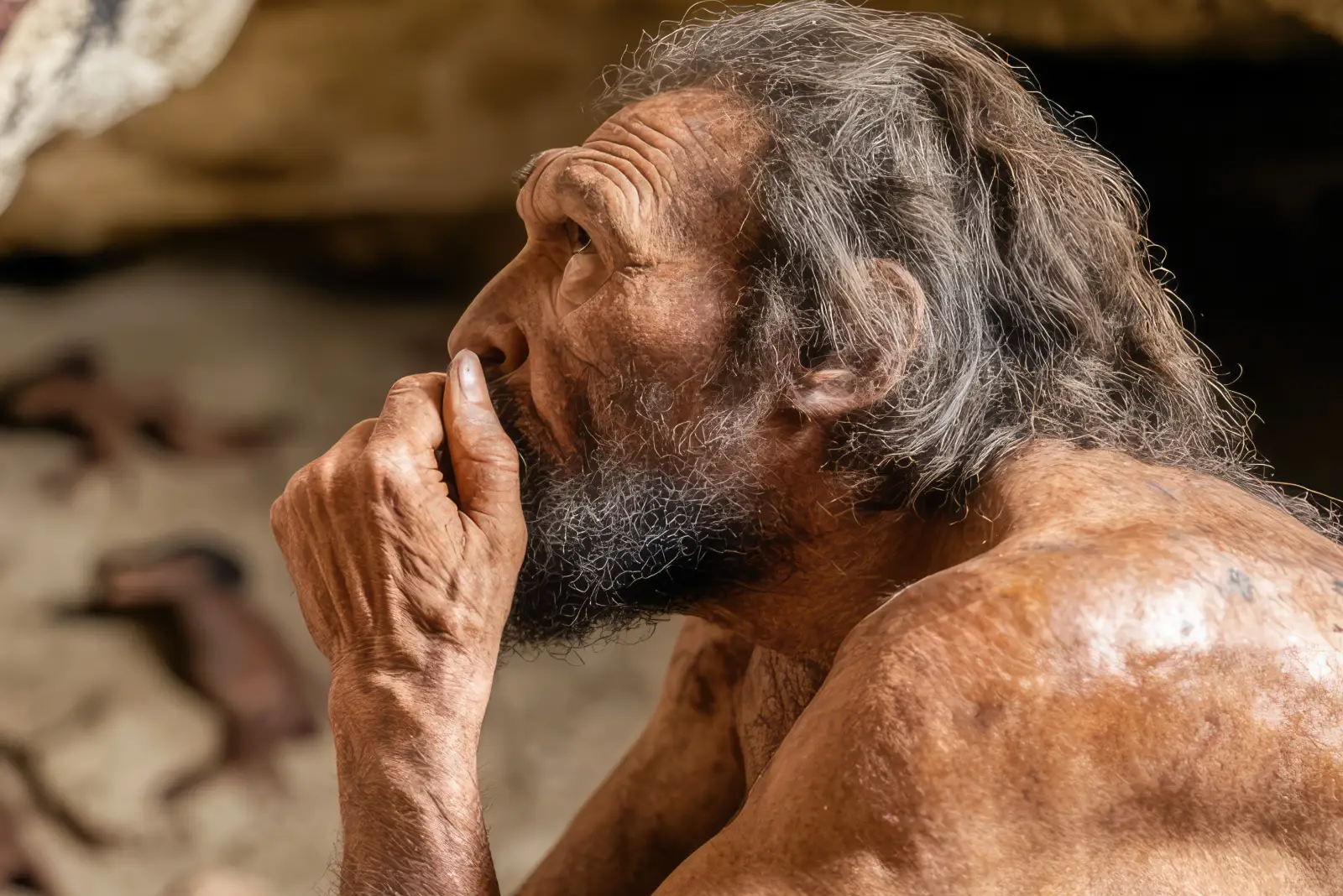
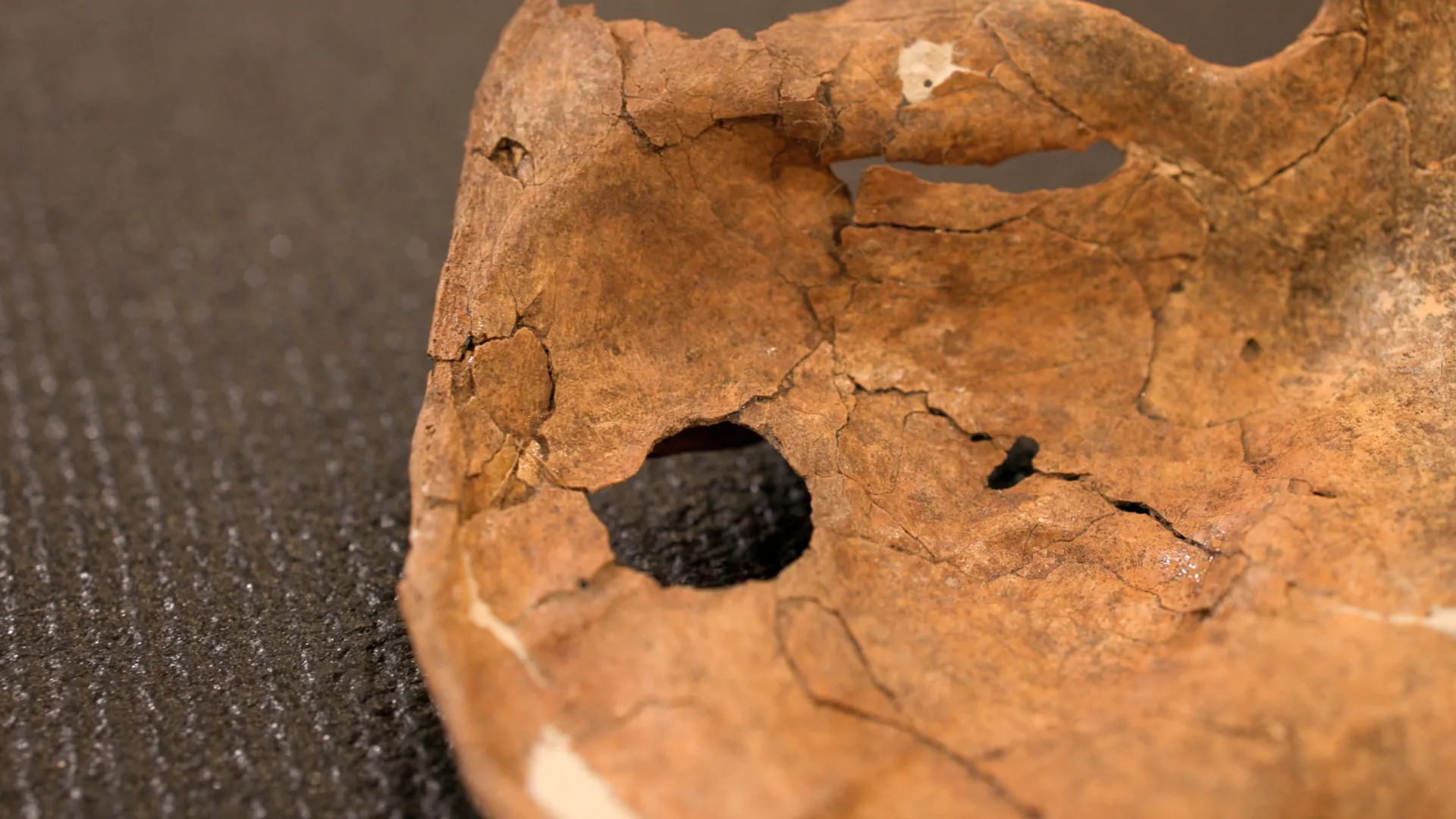
A Neanderthal who lived about 75,000 years ago in what is now Iraqi Kurdistan may have died from the impact of a sharp wooden spear aimed at the chest. The finding, led by archaeologists from the University of Cambridge, focuses on a circular hole of 15 millimeters in the left scapula of the individual, named Shanidar A.
The scapula is a delicate and thin bone, yet it was preserved almost completely under more than seven meters of sediment. The rounded hole does not match the marks typically left by stone or flint tips, which create sharper edges. The researchers reconstructed the trajectory: the weapon would have entered through the chest, passed through a lung and likely major blood vessels, and exited behind the scapula.
This wound would have caused a quick death. The beveled edges of the hole and small displaced bone fragments indicate that the blow came from above and with enough force to penetrate the torso. Scientists suspect it was a deliberate "heart shot," although they cannot completely rule out an accident during the hunting of large animals.
Sharp wooden spears existed long before. Known examples, such as those from Schöningen in Germany, about 200,000 years old, or the fragment from Clacton-on-Sea over 400,000 years old, demonstrate that Neanderthals mastered woodwork and crafted balanced weapons for throwing or thrusting.
An injury pointing to violence among Neanderthals
The position of the injury and the energy required to penetrate the body lead researchers to consider interpersonal violence as the simplest explanation. There are no signs of modern human intervention, and evidence of systematic violence is extremely rare at such an ancient stage of prehistory.
“All we can know about the end of this Neanderthal's life is that it was violent and met the end of a wooden spear,” summarizes Professor Graeme Barker, who is responsible for the excavations at the Shanidar cave. Most evidence of organized violence appears thousands of years later, already in agricultural societies.
Alongside the scapula, a nearly complete hand, several ribs, and seven teeth were recovered. The individual was an adult around 45 years old. One of those teeth tells another story: a vertically broken lower incisor, with the rest of the piece still in the mouth and a lot of calculus accumulated on the exposed root.
This facial damage would have made chewing and communication very difficult. That the Neanderthal survived at least a year after the blow implies that they received care from other group members. The same person who ended up pierced by a spear had been cared for when severely injured in the face.
Care and violence in the same individual
The combination of data is striking. On one hand, a fatal wound consistent with an intentional attack with a wooden weapon. On the other, evidence that the group had supported Shanidar A for an extended period after a severe facial trauma. This evidence of social support reinforces the idea that Neanderthals were not just solitary hunters, but could sustain vulnerable individuals.
Researchers warn that it is not possible to know who wielded the spear or the exact context of the blow. However, the set of clues makes Shanidar A one of the oldest known cases of potentially lethal interpersonal violence in the hominin fossil record, while simultaneously being a testament to prolonged care within the group.
The study was published in the journal Scientific Reports and adds to the long history of findings from the Shanidar cave, a key site for understanding the life, death, and social relationships of Neanderthals in the Middle Paleolithic.