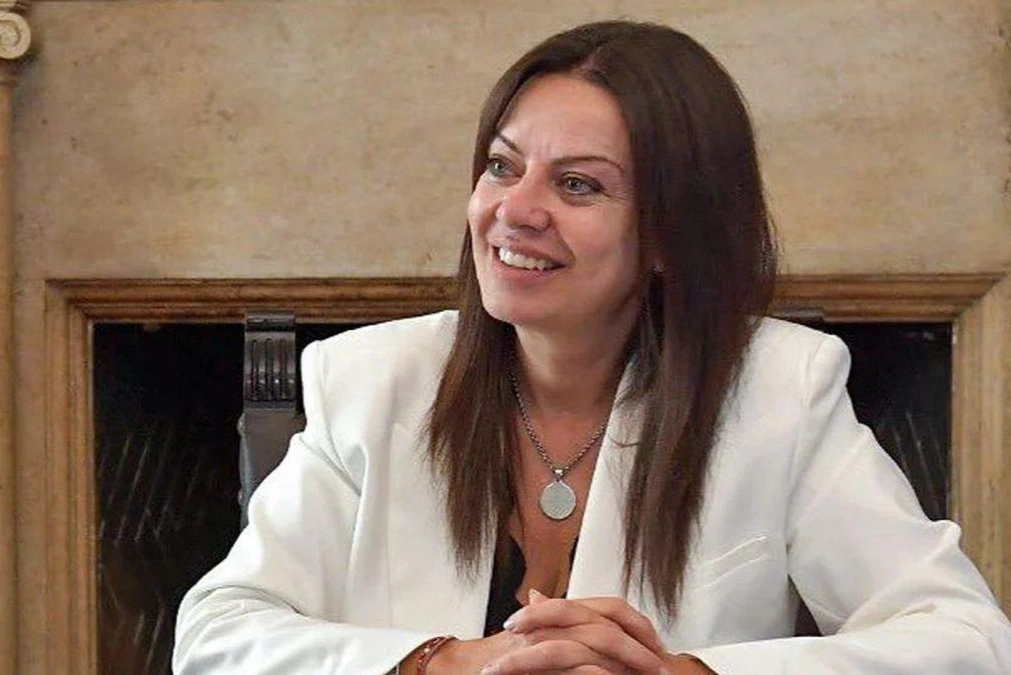
The Minister of Human Capital, Sandra Pettovello, said that the concept of “social plans” is technically incorrect and explained that state assistance is actually comprised of benefits from the social security system and social programs with different objectives. In a video released on social networks, the official sought to clarify how the State's transfer scheme works and why she considers the expression that is usually used in public debate to be imprecise
.
As Pettovello explained, retirees and pensions are rights established by law that are automatically granted to those who meet the requirements set out in the regulations. In this regard, he stressed that these benefits do not depend on quotas or intermediaries, but are a structural part of the social security system
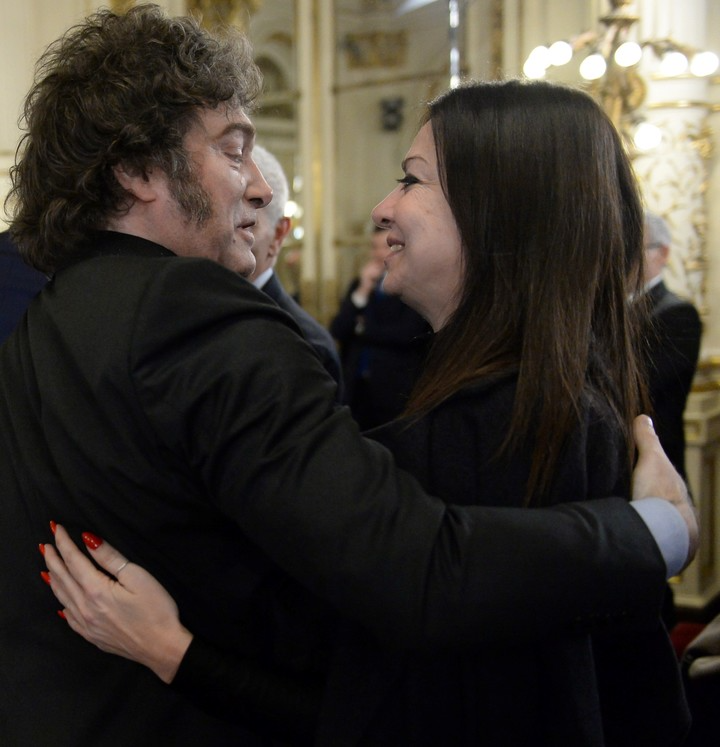
. Sandra Pettovello with President Javier Milei.
In contrast, social programs function as public policy tools designed to address specific problems. According to the minister, these programs have access conditions, defined objectives and periodic evaluations, so they can be modified or even terminated depending on their results and social needs
.
Pettovello also referred to the recent evolution of the Universal Child Allowance (AUH), one of the main income transfers for children in Argentina. As indicated, in December 2023, the AUH, together with its dietary supplement, covered only 54% of the basic food basket, while currently the benefit is close to
100%.
For the civil servant, this improvement does not imply an expansion of welfare, but rather a recomposition of the purchasing power of the most vulnerable sectors with the objective of combating indigence and extreme poverty. In this regard, he cited an analysis by economist Nadin Argañaraz who points out that during the administration of President Javier Milei, the purchasing power of those who receive the AUH would have increased significantly
.
According to this study, by the end of 2025, the real cumulative income of the beneficiaries was equivalent to 21.3 incomes as of November 2023, representing an increase of close to 85% in real terms. Currently, the AUH reaches mothers, fathers or guardians of children under 18 without formal employment and benefits about 4.1 million children across