After a series of changes in the politics of the Balkan country, new movements demanding greater independence from Brussels are starting to gain traction in the region
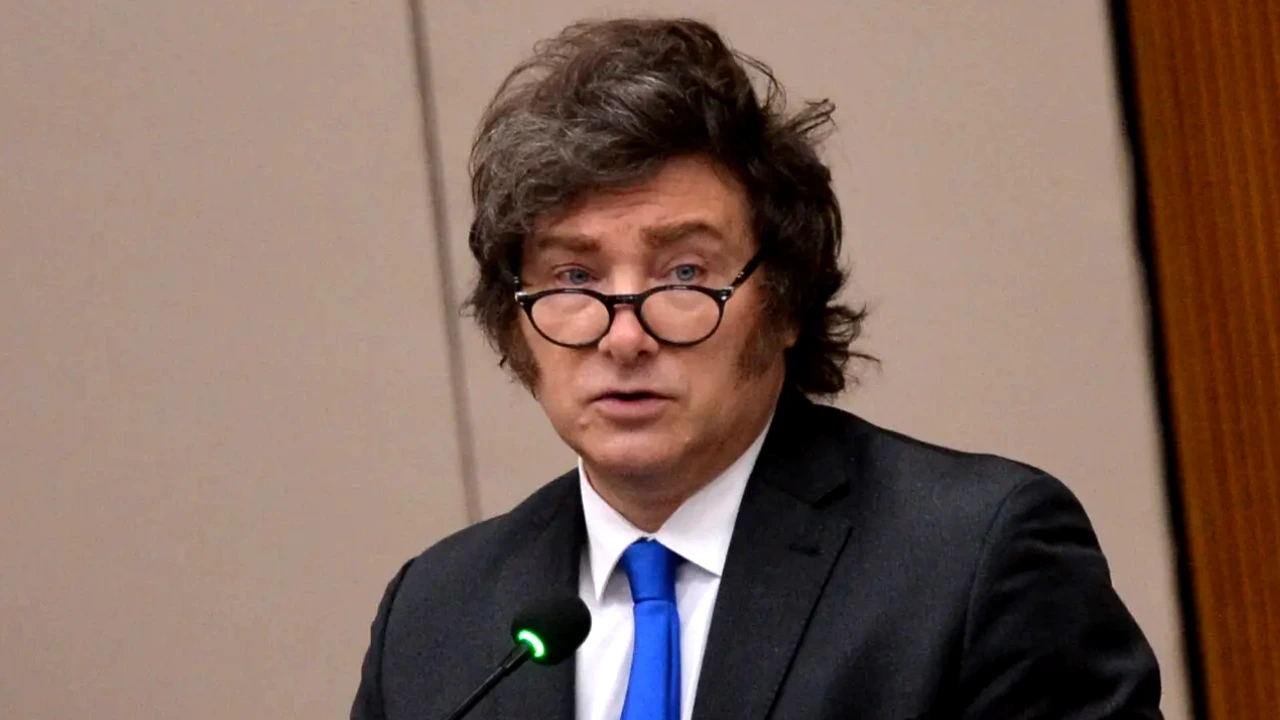
When Javier Milei denounces before the UN a ''supranational government model of international bureaucrats'' that claims the right to impose a way of life on peoples, many progressives roll their eyes and call him exaggerated.
Bosnia and Herzegovina is proof that he is not exaggerating at all. That small Balkan country, divided after the bloody war of the nineties between Serbs, Croats, and Bosniaks (the local Muslims), became the laboratory where this logic was taken to the extreme: an entire country in Europe administered by decree, with its sovereignty confiscated ''for its own good'', for 30 years.
We Argentines, who know what it is like for foreign organizations to try to oversee our decisions and who have been claiming the Malvinas for almost two centuries against the same arrogance of the powers that distribute foreign maps, have more than enough reasons to closely observe what has just happened there.
For years, Javier Milei has denounced the bureaucratic and inefficient practices of the United Nations
This monstrosity has just cracked. For almost five years, a German bureaucrat whom no one elected governed Bosnia with powers that no democracy on the planet would tolerate. Christian Schmidt, the man who arrived in Sarajevo promising to be the last High Representative and who left defending tooth and nail the very position he had sworn to dismantle, submitted his resignation on May 11, 2026, cornered by pressure he himself described as ''enormous and unexpected'' and which came, without euphemisms, from Washington. On July 1, his resignation became effective. Since then, the position has been held, on an interim basis, by the American diplomat Louis J. Crishock.
In the chancelleries of Western progressivism, they will treat this as a simple administrative change. It is much more than that. It is the deepest collapse of credibility that the international tutelage apparatus imposed on Bosnia after the Dayton Accords (the agreement that ended the war in 1995 under U.S. mediation) has suffered, and it forces us to ask the question that the Western ruling class has been hiding under the rug for almost three decades: whether the entire model has completely exhausted its legitimacy.
Let’s say it plainly. Bosnia is the only state in Europe where a foreign official, appointed by foreign powers, has the legal authority to enact laws, dismiss elected governments, rewrite constitutions, and expel politicians from their positions. For 30 years, they sold us this device as a necessity to preserve peace. The truth is evident: it was never anything but imperialism disguised with the rhetoric of human rights.
Let no one believe that this is a theoretical power. High Representatives have removed dozens of elected officials, judges, and deputies over the years, with a stroke of the pen and without any possibility of appeal. When Bosnian politicians failed to agree on the flag and anthem of their own country, it was the Office that chose them for them. Even car license plates and the common currency were set by foreign decree. It is hard to imagine a clearer image of what it means for a people to have every attribute of sovereignty taken away, one by one, ''for their own good''.
Those who built the post-war order in Bosnia believed, with the typical arrogance of the social engineers of the nineties, that the ''correct'' institutions imposed from above could turn a shattered country into a functional democracy. They were completely wrong. They did not produce democracy: they produced dependency. A country frozen in a state of perpetual tutelage, unable to develop the political muscles required for self-governance, because any serious dispute could always be resolved by an external authority.
Dayton stopped the slaughter. But it spawned a system of ethnic power-sharing of delirious complexity: three presidents, fourteen parliaments, overlapping veto structures. All designed to prevent one group from dominating another. What it produced, in turn, was pure paralysis. Governments take months to form, reforms rot in a drawer, and every major dispute ends up being resolved by foreign intervention.
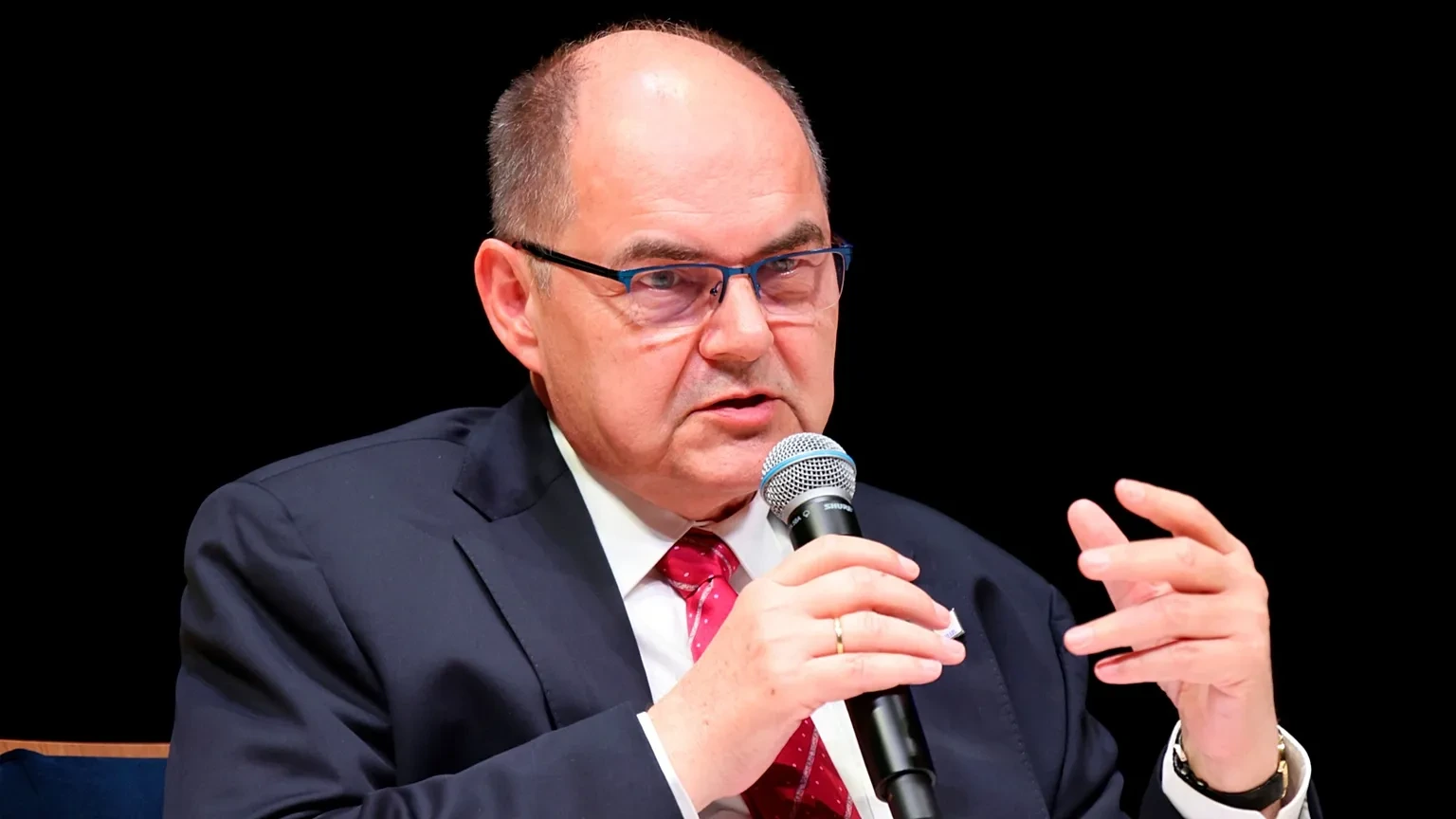
The social democrat Christian Schmidt recently resigned as High Representative and was replaced by the American Louis Chrishock
The Office of the High Representative (OHR), conceived as something temporary, mutated after the Bonn Powers of 1997 (the package of powers given to it by the supervising powers) into something very different: a shadow government with the capacity to directly intervene in the politics of a sovereign country. A foreign official, who answers to no Bosnian voter, accumulated powers that no democratic government in the world would accept for even a second. Thirty years later, foreign oversight remains firmly in place. At some point, a transitional arrangement becomes, plain and simple, a permanent colonial administration.
This is exactly how it is understood in the Republika Srpska, the Serbian-majority entity that, along with the Bosniak-Croat Federation, makes up the two halves of the Bosnian state. There, the OHR is not a peace-building institution: it is an occupying power. The grievance has legal weight. Christian Schmidt was never confirmed by the UN Security Council. Russia and China refused to endorse his appointment. Yet, he continued to enact binding laws and reorganize the country despite the objections of a large part of its population. In Banja Luka, the capital of that Serbian entity, this is not perceived as a defense of democracy, but as its pure and simple denial.
The Dodik case exposes the core contradiction of the Bosnian system. Dodik, the Serb-Bosnian leader allied with Moscow, was prosecuted and disqualified under a law imposed by Schmidt through decree. A foreign official wrote the law. An elected politician was persecuted for challenging it. That European progressives see this as ''the rule of law'' says more about them than about Dodik. That Washington lifted sanctions against Dodik and his associates in 2025 was the first sign of a shift: from isolation to dialogue with the Republika Srpska.
In the Republika Srpska, the episode is not read as a defense of the law, but as proof that the OHR can turn the legal system into a weapon against political adversaries. It confirmed a suspicion that never fully dissipated: that Bosnia is not a state born of the genuine consent of its peoples, but a construction imposed from the outside and sustained by force. That suspicion unsettles the architects of Dayton. But, in light of the facts, it is not entirely false.
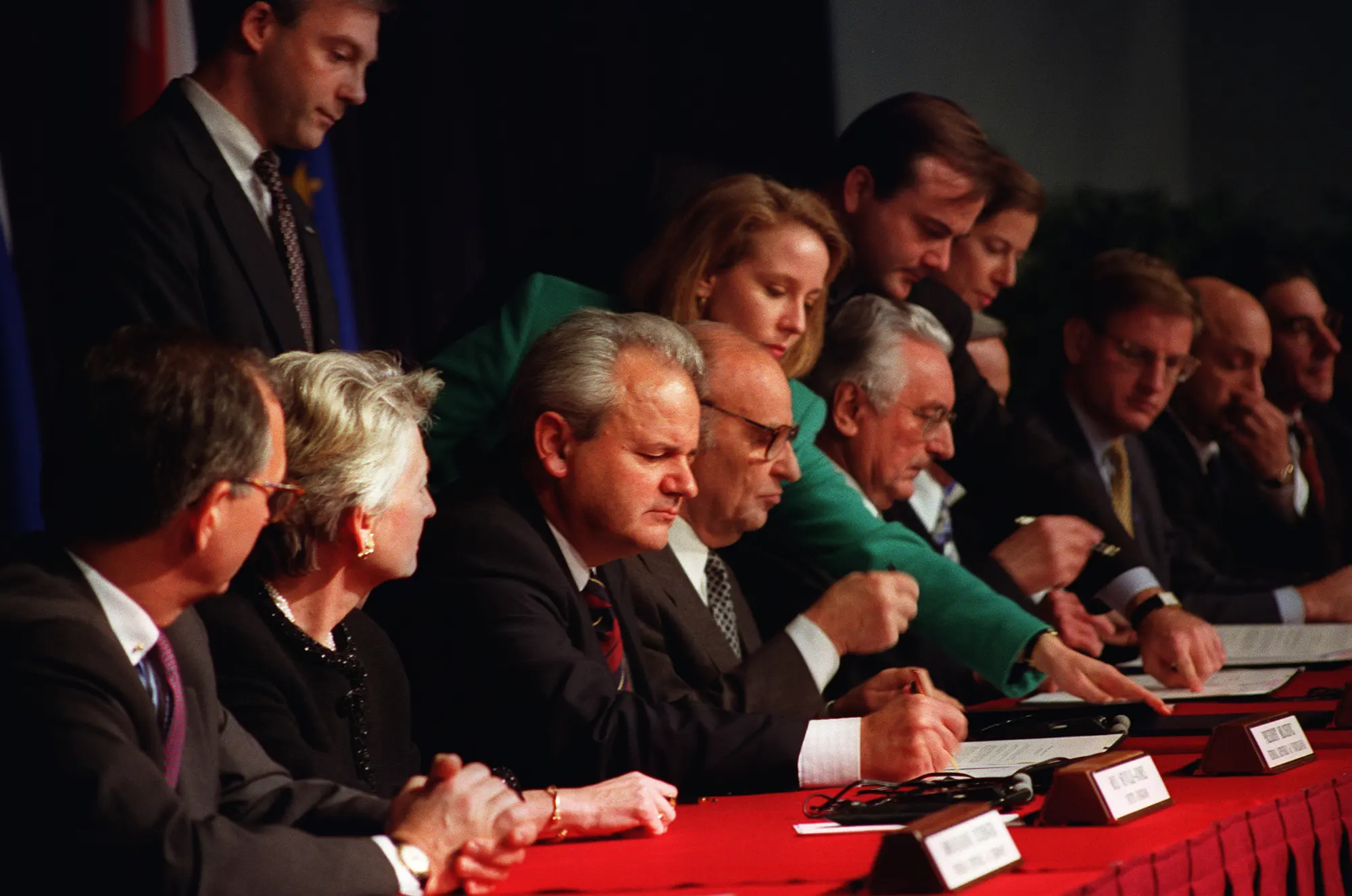
Signing of the Dayton Accords, which ended the war in the Balkans in 1995
It would be dishonest to ignore the other side, and here we do not engage in one-sided militant journalism. From the Bosniak perspective, that of the Muslim community concentrated around Sarajevo, the OHR is not an imperial imposition but a lifeline. For many there, it remains the guarantee of security against new secessionism. The rhetoric coming from the Republika Srpska is not theoretical, and Dodik's relationship with Moscow is not a minor detail. Those who fear that a premature Western withdrawal will blow up what little stability remains are not paranoid: they are people who have already seen their country collapse once. Here lies the crux of the matter: stabilizing and resolving are two different things. The OHR has delivered the former for 30 years while making the latter increasingly unlikely, and a legitimate fear is not enough to justify the latter. The right of a people to feel secure does not authorize keeping three peoples under indefinite tutelage.
Dissatisfaction with Dayton is not limited to the Serbs. The Croats, the smallest of the three communities in the country, are perhaps the biggest losers of the system: the post-war arrangement has drained their political voice to leave it little more than an ornament. The mechanism is as simple as it is scandalous. Croats and Bosniaks vote in the same constituency, so the much larger Bosniak electorate can impose and indeed imposes time and again who occupies the Croatian seat in the Presidency. Put bluntly: the ''Croatian'' representative of the State ends up being elected by votes that are not Croatian.
And the problem does not end at the Presidency. Croatian representatives have been denouncing for years that their people are also systematically underrepresented in the common institutions of the State. According to data presented by the Croatian side, in the six most important diplomatic missions of Bosnia and Herzegovina, Croats barely represent around ten percent of the staff. In Washington and at the United Nations, they claim, there is currently not a single Croatian diplomat. From this perspective, the election of the Croatian member of the Presidency is not an isolated anomaly, but the most visible manifestation of a broader pattern of political and institutional marginalization.
It is the very denial of what Dayton swore to guarantee, political equality among the constituent peoples, turned into an arithmetic farce. It is no surprise that a large part of the Croats in Bosnia have lost patience with the patchwork and have been calling for years for a fundamental solution: a third entity of their own, which finally puts them on equal footing with Serbs and Bosniaks, each with their territory and self-governance. It is not the only proposal on the table, but the insistence with which it is raised speaks volumes about the degree of accumulated frustration.
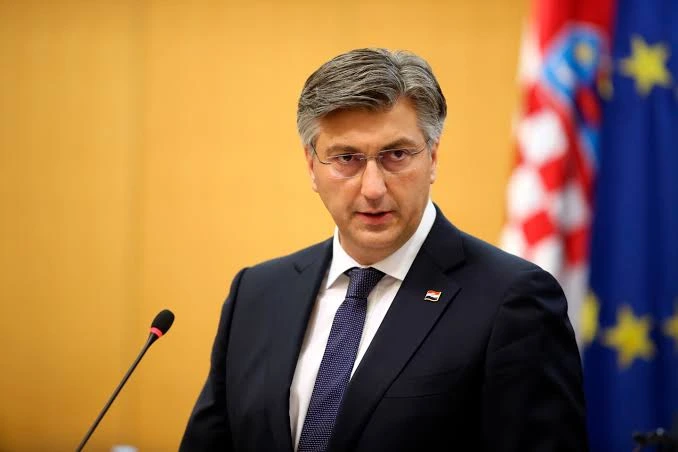
The Croatian Parliament has just taken a concrete step in that direction, although through a different route: not the creation of a third entity, but a federal redesign of the existing State. On July 15, 2026, on the last day of its spring session, the Sabor approved a resolution to strengthen the political position of Croats in Bosnia, jointly promoted by the Patriotic Movement (Domovinski pokret, a right-wing party that is part of the governing coalition) and the ruling HDZ, the party of Prime Minister Andrej Plenković. The text calls for, among other measures, a separate electoral constituency to elect the Croatian member of the Presidency and enshrines the principle of federalism as the appropriate framework for Bosnia. It was not an isolated gesture from a faction, but a full-fledged state act: the resolution was approved with 83 votes in favor, three abstentions, and only one against, with support that crossed the parliamentary spectrum from left to right.
A movement led by the Prime Minister of Croatia is pushing for greater Croatian presence in the political position of Bosnia
Even Plenković, identified for years with Croatia's most pro-European line, ended up supporting the resolution. This is significant: the defense of the political equality of Croats in Bosnia is no longer an exclusive demand of the national right, but a position assumed by a broad majority of the Croatian Parliament.
It is revealing that the only serious criticisms did not come from those who considered it excessive, but from the sovereignist right, which reproached it for falling short by not mentioning the third entity. From Sarajevo, however, the reaction was one of indignation: Bosniak leaders denounced an ''unacceptable interference'' in the internal affairs of the country, the very proof of how uncomfortable it is for someone to defend the equality of Croats. It is not an interference in the style of the High Representative, but rather the opposite: a State that is o