
The State Privilege That Destroyed the Argentine Economy

The State Privilege That Destroyed the Argentine Economy
porEditorial Team
Argentina

Why blocking imports turns the economy into a market for political favors.


There is an apparently technical scene that, however, reveals much more than an economic argument. When a government prevents importing a product — as was the case for years with tires in Argentina — the official argument is usually always the same: to protect the national industry. But behind that phrase hides a much deeper mechanism. It's not about protection. It's about privilege.

The difference is not semantic. It is moral, economic and political.

When political power decides to block imports, set quotas or impose artificial barriers to trade, it is not strengthening the market. It's altering the rules of the game. He's taking sides. And in doing so, it transforms the law—which should protect rights—into a tool for distributing benefits among specific groups

.

At that moment, something happens that is rarely discussed in public debate: the economy ceases to be a system of voluntary cooperation and becomes a system of political favors.

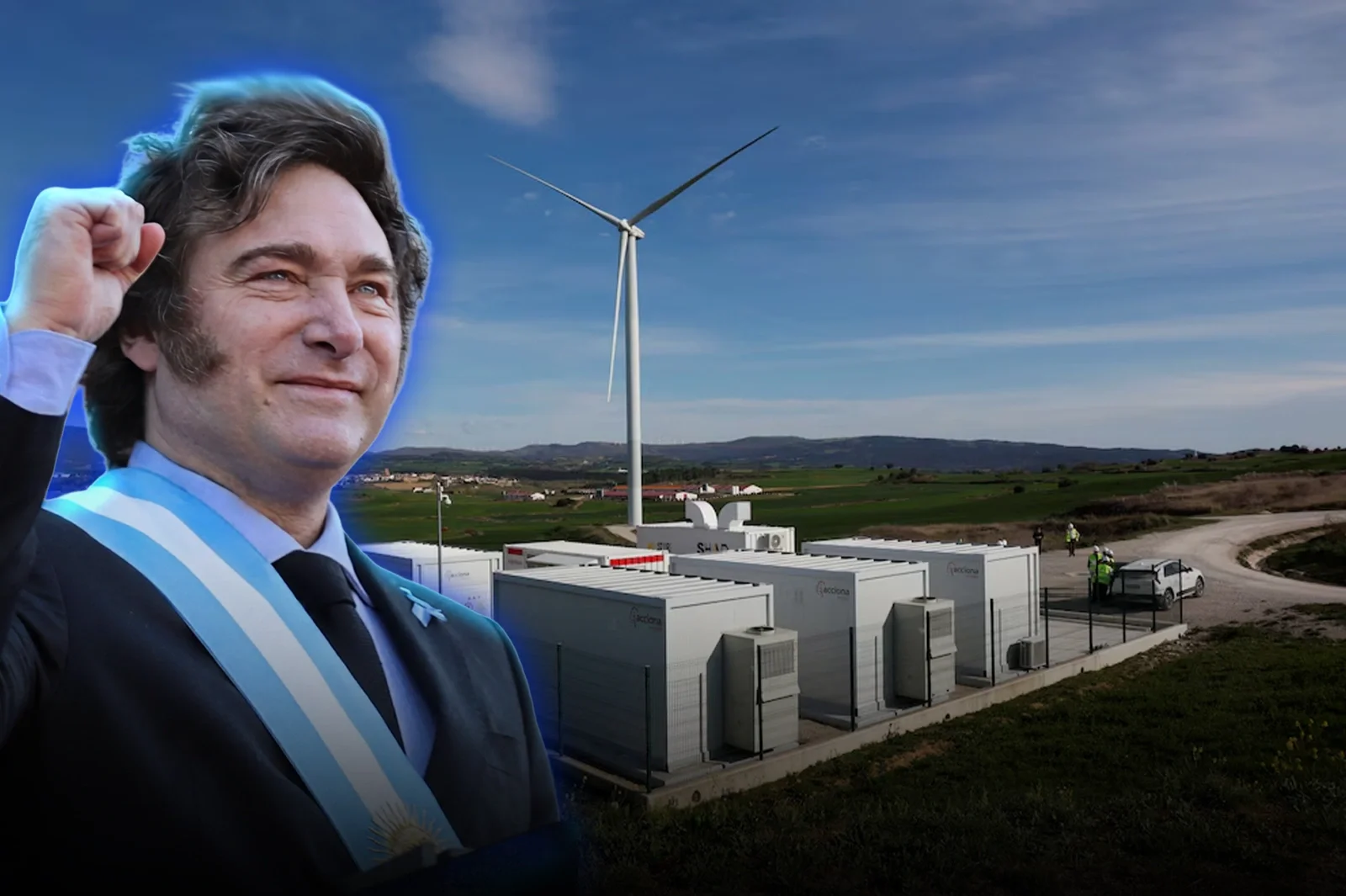
That is the point that Javier Milei made clearly in a recent interview. When the State erects barriers to prevent cheaper or better quality products from entering, it is not defending Argentines. It's creating artificial incomes. And where those rents appear, inevitably, there is an incentive to capture

them.

Argentine economic history offers countless examples of this phenomenon. For decades, the corporate model built by Peronism and deepened by Kirchnerism made the State the great distributor of privileges. Licenses, quotas, tariffs, subsidies, selective regulations. A whole framework designed not to promote competition, but to manage it from politics

.

The outcome was predictable.

When profitability depends on an administrative decision and not on consumer preference, incentives change. Instead of innovating, producing better or competing, many entrepreneurs discover that the real opportunity lies elsewhere: in the corridors

of power.

This is how a lobby economy is built.

The logic is simple. The politician creates the barrier. That barrier generates extraordinary income. And that income opens up a new business: negotiating access to privilege.

What should be a market for goods is transformed into a market for favors.

In that scheme, corruption is no accident. It's a logical consequence.

This is why hyperregulated economies end up always producing the same results: higher prices, lower quality, lower innovation and salaries that lose purchasing power. Consumers pay more, workers miss opportunities and growth stagnates. But some privileged sectors are able to preserve their income thanks to political protection

.

Argentina knew that system all too well.

For years, the same narrative was repeated: the State must intervene to “defend national production”. But the bottom line was devastating. Industries locked in captive markets, stagnant productivity, permanent inflation and an economy unable

to integrate into the world.

In that context, what appears to be a technical discussion about foreign trade is actually a much deeper discussion about the nature of political power.

Because the central question is not economic. It's moral.

If a person gets their money working, investing or producing value in the market, by what right does an official decide what products he can buy, from which country or at what price? At what point did politics acquire the power to intervene in decisions that belong exclusively

to the individual?

When the State establishes what can and cannot be imported, which company can compete and which one is protected, it ceases to act as an arbiter. He becomes a player. And a player with coercive power

.

That is the real problem of protectionism.

It doesn't just distort prices and destroy economic efficiency. It also breaks a fundamental principle of a free society: that each person is the owner of their property and the decisions they make with it

.

That is why the discussion about trade cannot be reduced to economic technicalities or to industrial production spreadsheets. In the end, what is at stake is something much more elementary: whether the wealth created by millions of individuals belongs to those who generate it or to those who temporarily occupy political power

.

For decades, Argentina chose the second path. The result was a system where politics organized the economy and where individual freedom was subordinated to

corporate interests.

To break with that logic is not simply to change an economic policy.

It is beginning to dismantle a regime of privileges that turned the State into the great administrator of legal looting.

And that change, rather than economic, is profoundly moral.


Noticias relacionadas

Argentina Week: Milei highlighted the country's investment potential and defended morality as a State policy

Argentina Week: Milei highlighted the country's investment potential and defended morality as a State policy

The United States anticipates the most intense day of attacks against Iran since the start of the military offensive

The United States anticipates the most intense day of attacks against Iran since the start of the military offensive

A former Big Brother confessed to a relationship with Alberto Fernández and revealed that she was awarded public works

A former Big Brother confessed to a relationship with Alberto Fernández and revealed that she was awarded public works

The coaching staff of the National Team made it clear where they want the Final to be played

The coaching staff of the National Team made it clear where they want the Final to be played

Trump warns that the US will hit Iran 20 times harder if it blocks the Strait of Hormuz

Trump warns that the US will hit Iran 20 times harder if it blocks the Strait of Hormuz

In the midst of the AFA scandals, Chiqui Tapia played it hot: 'Many are going to sweat in shame'

In the midst of the AFA scandals, Chiqui Tapia played it hot: 'Many are going to sweat in shame'

La Derecha Diario logo
ESX logoInstagram logoYouTube logoTikTok logo
ARGENTINABOLIVIAECUADORISRAELMEXICOURUGUAY
  • ESXInstagramYouTubeTikTok
  • Secciones
  • ARGENTINA
  • BOLIVIA
  • ECUADOR
  • ISRAEL
  • MEXICO
  • URUGUAY
  • Países
  • La Derecha Diario logoLA DERECHA DIARIO
  • La Derecha Diario México logoLA DERECHA DIARIO MÉXICO
  • La Derecha Diario Uruguay logoLA DERECHA DIARIO URUGUAY
  • La Derecha Diario Ecuador logoLA DERECHA DIARIO ECUADOR
  • La Derecha Diario Bolívia logoLA DERECHA DIARIO BOLÍVIA
  • La Derechadiario República Dominicana logoLA DERECHADIARIO REPÚBLICA DOMINICANA
  • La Derecha Diario Israel logoLA DERECHA DIARIO ISRAEL
  • El Diario
  • QUIENES SOMOS
  • AUTORES
  • PUBLICIDAD
  • DONAR
La Derecha Diario logo
TwitterInstagramYouTubeTikTok

Nosotros

  • Quienes Somos
  • Autores
  • Donar

Privacidad

  • Protección de datos
  • Canales
  • Sitemap

Contacto

  • info@derechadiario.com.ar
PUBLICIDAD