Brazil faces strong questions after allegations that a political opponent was persecuted on United States territory, in an action that goes against the Vienna Convention and the basic norms of international law.
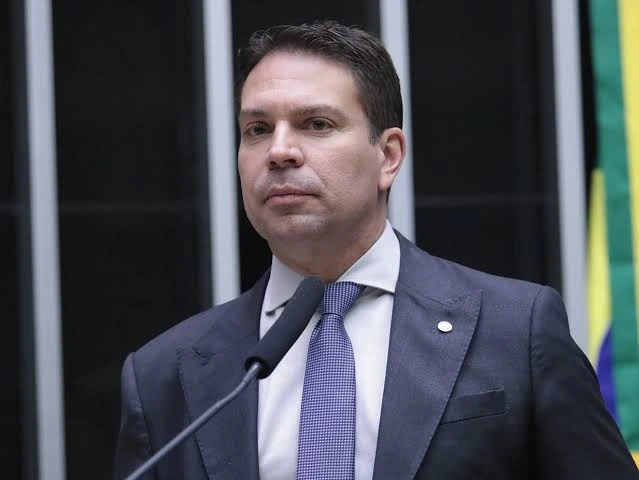
The episode was triggered after the brief arrest in the United States of Alexandre Ramagem, former Brazilian intelligence chief and critic of President Luiz Inácio Lula da Silva. According to different versions, the procedure was influenced by the intervention of a Brazilian official who sought to advance his extradition without respecting the corresponding diplomatic channels
.
Washington's reaction was immediate. The State Department made it clear that no foreign official can manipulate the U.S. immigration system for political purposes, and moved forward with the expulsion of the Brazilian agent involved in the
case. Alexandre Ramagem, former Brazilian intelligence chief
The central point of the controversy revolves around Article 41 of the Vienna Convention, which states that officials abroad must respect the laws of the host country and not intervene in its internal affairs. The alleged conduct of the Brazilian government, in attempting to operate outside formal mechanisms, the actions of Brazil is a serious violation
of these international norms.
In addition, the episode tensions the relationship with the United States at a delicate time, where bilateral ties were already facing friction. Washington's decision to act decisively marks a clear limit against this type of maneuver and reinforces the idea that external political interventions will not be tolerated
in its territory. Marcelo Ivo de Carvalho, Brazilian Police delegate involved in the arrest of Alexandre Ramagem
The political background is also evident. In the midst of a complex domestic scenario, Lula's government faces criticism for its management of the opposition and for signs that, for some sectors, reflect a tendency to prosecute and prosecute adversaries
.
In this context, the case not only opens up a legal debate, but also a political one: to what extent can a government advance against its opponents without compromising basic principles of international law. The situation leaves Brazil under scrutiny and raises doubts about the direction of its foreign policy and its respect for the rules that govern relations between States