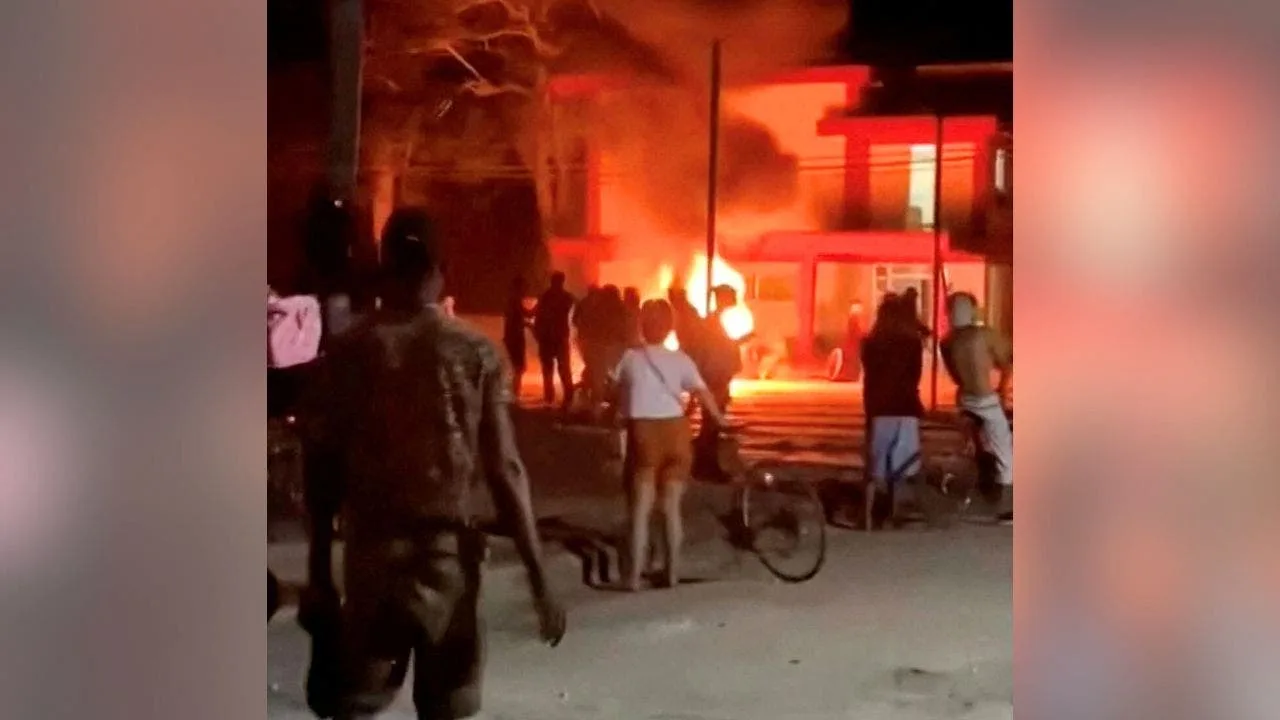
A headquarters of the Communist Party of Cuba was set on fire early Saturday morning by citizens protesting against the massive blackouts and food shortages that the country is experiencing because of the regime.
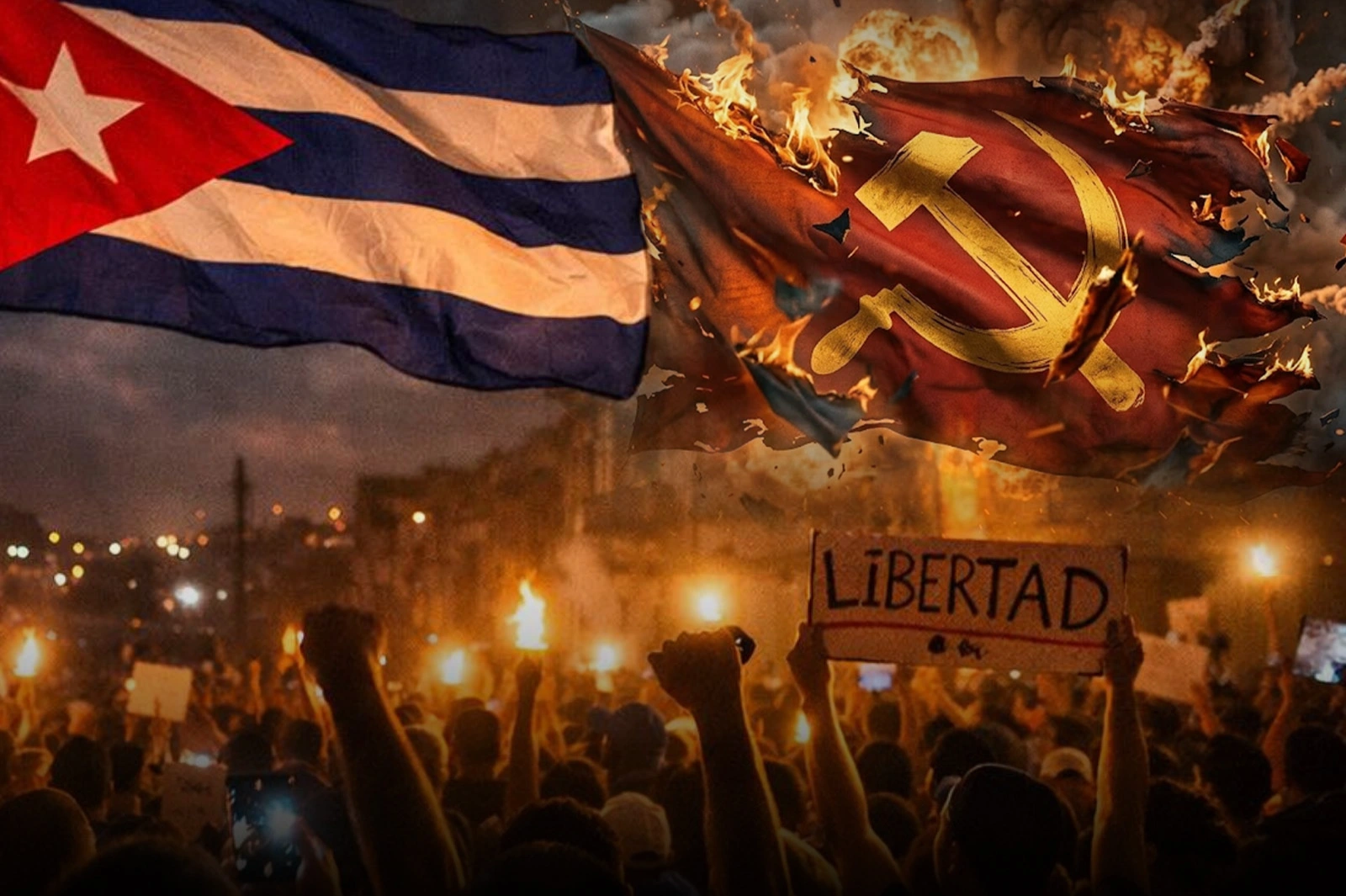
The episode occurred in the city of Morón, where a group of people broke into the building, took furniture, paintings and propaganda material out onto the street and set them on fire in a large bonfire while slogans against the communist dictatorship and cries of “freedom” were heard.
The images released on social networks show dozens of people participating in the episode, which quickly became one of the most visible symbols of growing social discontent against the island's political system.
In the videos, you can also hear pans being beaten and slogans against the communist regime as the fire consumes the objects removed from the building.
The headquarters burned down.
The event occurred in the midst of a massive wave of protests that spread to different areas of the country over the past few days. Cuba, with a population of approximately 9.6 million inhabitants, is going through a deep economic crisis that caused
strong social tensions.
One of the main triggers of citizen unrest is the energy crisis affecting the country. In several regions, power cuts can last up to 20 hours a day, which has a direct impact on the daily lives of the population
.
The deterioration of the electrical system is aggravated by the dependence on old thermal power plants and by the shortage of fuel needed to maintain energy generation.
The headquarters burned down.
In recent weeks, the situation worsened even more after the interruption of the supply of crude oil from Venezuela, following the arrest of Nicolás Maduro following a US military operation
.
Faced with growing social unrest, Cuban dictator Miguel Díaz-Canel publicly acknowledged the tension generated by the energy crisis and the lack of food, although he tried to damage the image of the protests by accusing them of generating riots.
Meanwhile, in different neighborhoods and cities of the country, night demonstrations continue to be recorded, which, in many cases, consist of cacerolazos carried out both in the streets and from inside homes.