China, Cuba, Nicaragua, Saudi Arabia and Sudan were elected to join the body that filters the access of human rights organizations to the UN. They denounce a plot to promote communist orgas financed by China.
The UN Economic and Social Council (ECOSOC) elected several States strongly questioned because of their repressive record to be members of the NGO Committee, the body responsible for examining which civil society organizations can obtain consultative status and formally participate in areas of the multilateral system. Among the countries elected for the period 2027-2030 are China, Cuba, Nicaragua, Saudi Arabia
and Sudan.
Elected with the support of countries such as the United Kingdom, Spain and France, these regimes managed to advance in a key UN body, which deepens criticism of the political criteria behind this type of designation and exposes the contradictions of the multilateral organization.
The image that circulated widely on social networks after the controversial appointments.
This is a permanent instance of ECOSOC created in 1946, composed of 19 members distributed by geographical representation, with the task of reviewing requests for accreditation, reclassification and monitoring of NGOs that seek to act within the UN. In fact, it functions as an institutional gateway: without that consultative status, many organizations are left out of debates, events and spaces for international advocacy
.
The International Service for Human Rights warned that 13 of the 19 elected States have a “problematic” relationship with civil society and that a large majority come from countries classified by CIVICUS as having “closed” or “repressed” civic space. The agency also noted that the vote was almost completely uncompetitive in several regions, which facilitated the arrival of governments marked by restricting basic freedoms within their own territories
.
Experts linked to the UN human rights system warned before the election that the committee has been used to delay, block or hinder the accreditation of independent organizations, especially those that denounce state abuses or work on sensitive issues. Human Rights Watch argued that authoritarian governments, with a majority within the panel, have turned it into a committee hostile
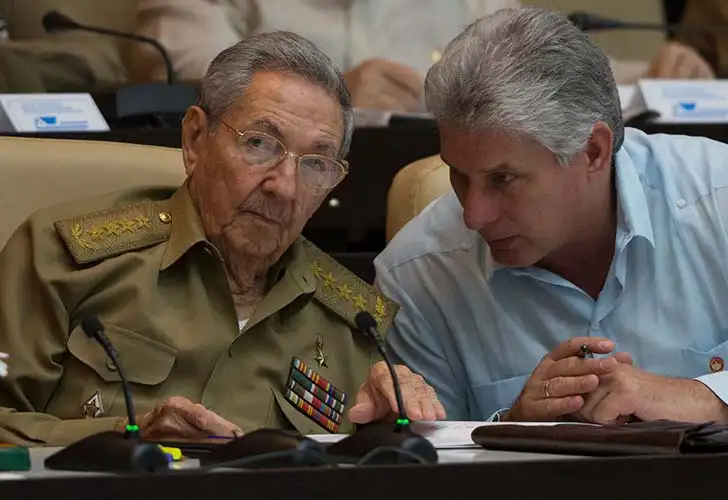
to NGOs. The Cuban dictatorship is widely favored by the UN.
The case of Cuba perfectly summarizes the organization's constant contradiction. The Castro regime was elected to join a body that oversees the access of civil organizations to the UN, despite the fact that civil society on the island has been under a dictatorship for decades, with
severe legal and political restrictions.
Nicaragua and China are also accumulating complaints of persecution of opponents, activists and organizations not aligned with power. The fact that these governments now have a voice in the accreditation of NGOs once again hits the credibility of the UN, which is increasingly distant between its discourse and its decisions