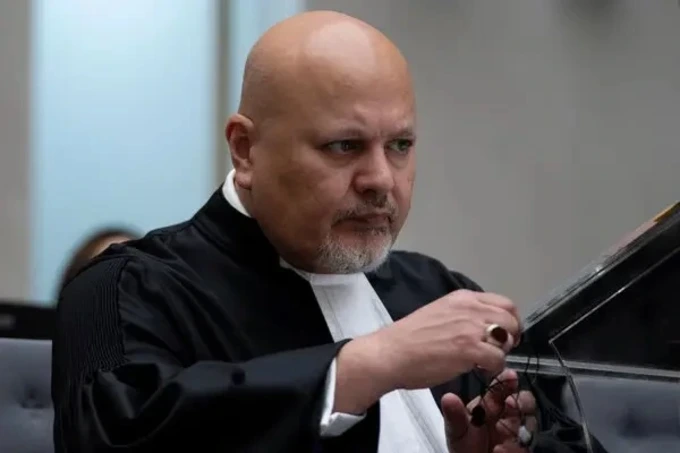
The dismissal of Karim Khan as chief prosecutor of the International Criminal Court marks one of the most significant episodes in the recent history of the Hague tribunal. The 125 member states of the institution voted overwhelmingly for his removal after concluding that he engaged in serious misconduct and a significant failure to fulfill his duties. Khan denies the allegations and announced that he will appeal the decision, but the damage to his credibility —and to that of the Court itself— already seems irreversible.
For Israel, the news has a meaning that transcends the personal scandal of the British prosecutor. It was precisely under his leadership that the Court issued arrest warrants against Prime Minister Benjamin Netanyahu and then-Defense Minister Yoav Gallant, in a decision that Jerusalem denounced as a deeply politicized process lacking solid foundations.
Since the beginning of the war against Hamas, Israel has maintained that the ICC abandoned the principle of impartiality by placing on the same level a democratic state exercising its right to defend itself and a terrorist organization responsible for the massacre of October 7. The arrest warrants against Israeli leaders were interpreted by numerous governments and legal experts as a dangerous equivalence that weakened the credibility of international justice.
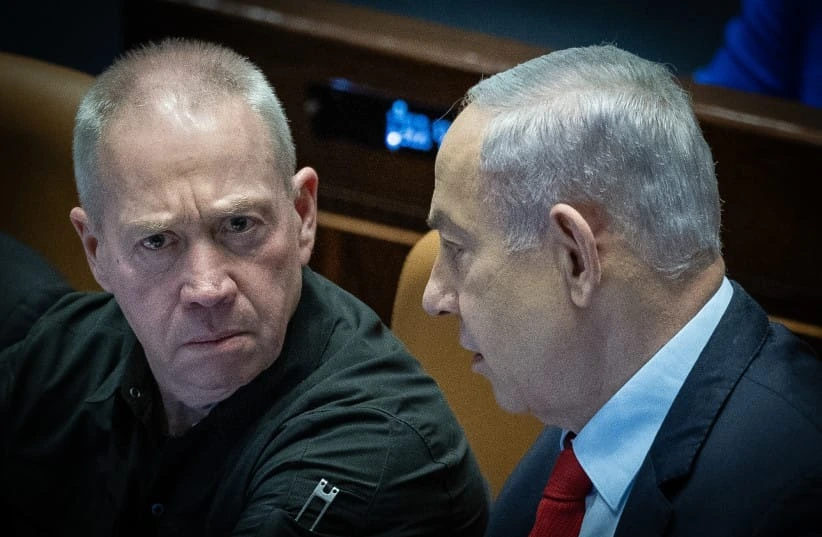
The Israeli PM, Benjamin Netanyahu, and who was then the Minister of Defense, Yoav Gallant
The Israeli ambassador to the United Nations, Danny Danon, went even further by stating that Khan attempted to make Israel a scapegoat to divert attention from the serious allegations against him. According to Danon, the prosecutor believed that a judicial offensive against the Jewish state would strengthen his international position, but he ended up losing the support of the very community that was supposed to uphold him.
Although the arrest warrants against Netanyahu and Gallant remain in effect —as only the Court judges have the authority to revoke them— Khan's departure inevitably reopens the debate on the legitimacy of the process that originated them. When the main driver of a case loses his position due to serious ethical breaches, it becomes inevitable that the trust placed in his decisions will also be examined more rigorously.
The crisis also deepened the confrontation between the Court and the United States. Secretary of State Marco Rubio reiterated that Washington considers the ICC a threat to its sovereignty and confirmed that it will continue to promote a diplomatic campaign to limit its influence. The State Department welcomed Khan's dismissal, although it stated that the problem exceeds a single official and described the institution as deeply discredited.
Khan's departure does not automatically invalidate the decisions made during his tenure. However, it does represent a significant setback for those who presented the accusations against Israeli leaders as the product of unquestionable moral authority. The International Criminal Court now faces the challenge of regaining credibility eroded by years of controversial decisions and, especially, by a leadership that ultimately collapsed under the weight of its own scandals.